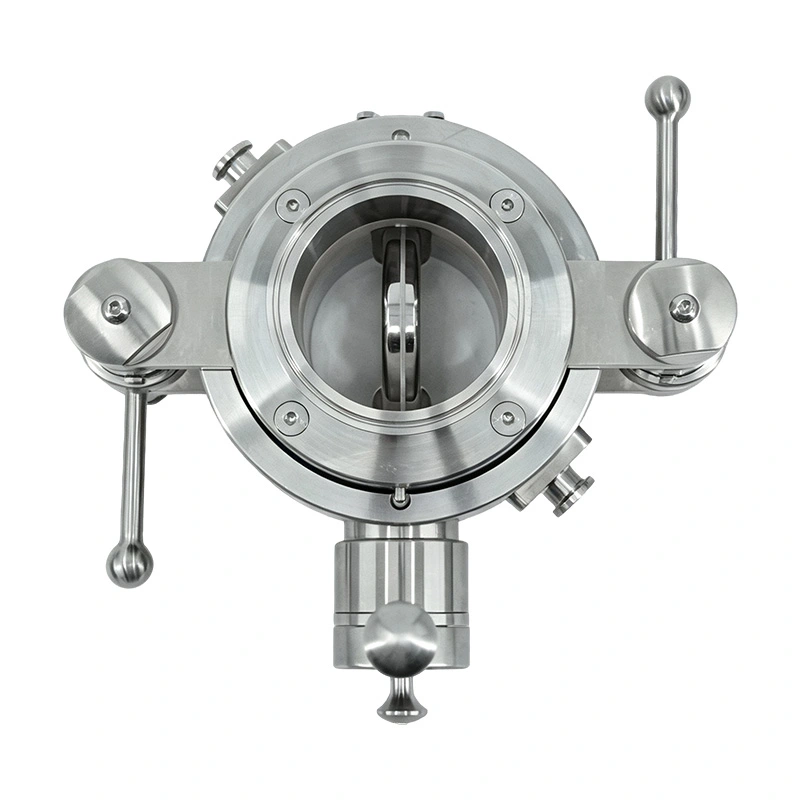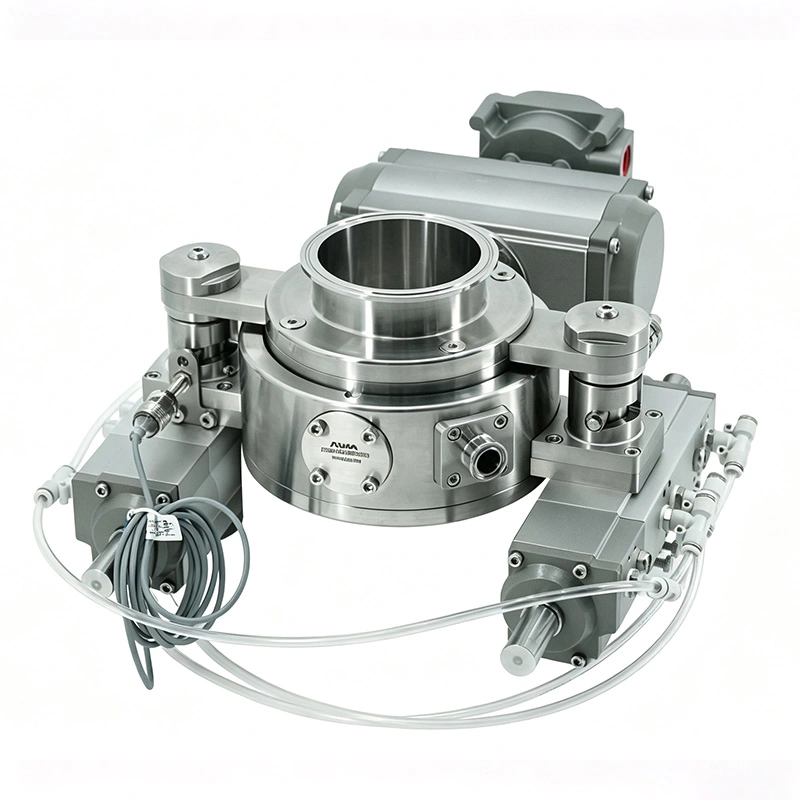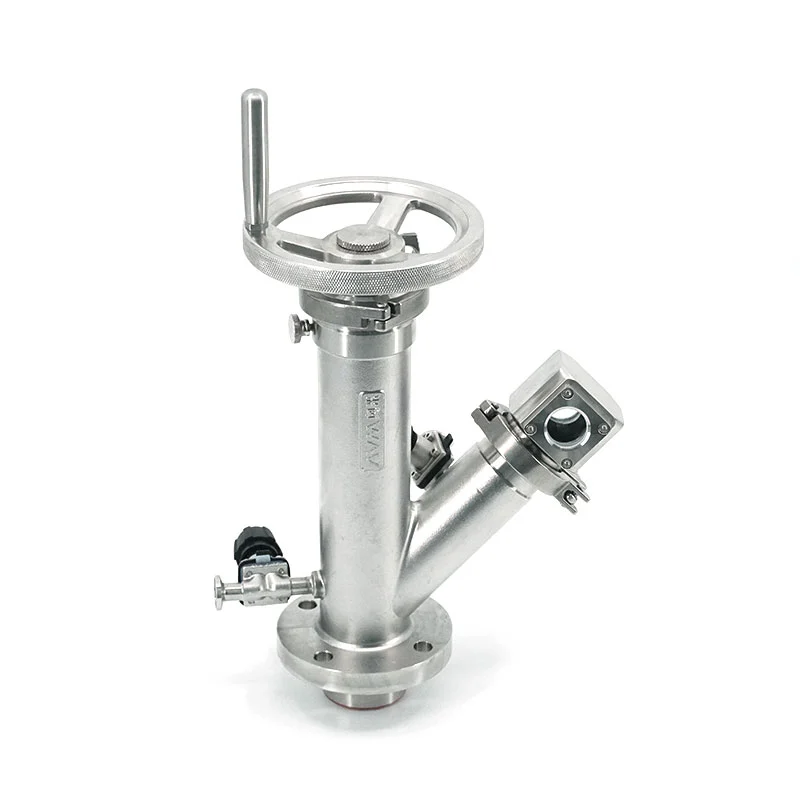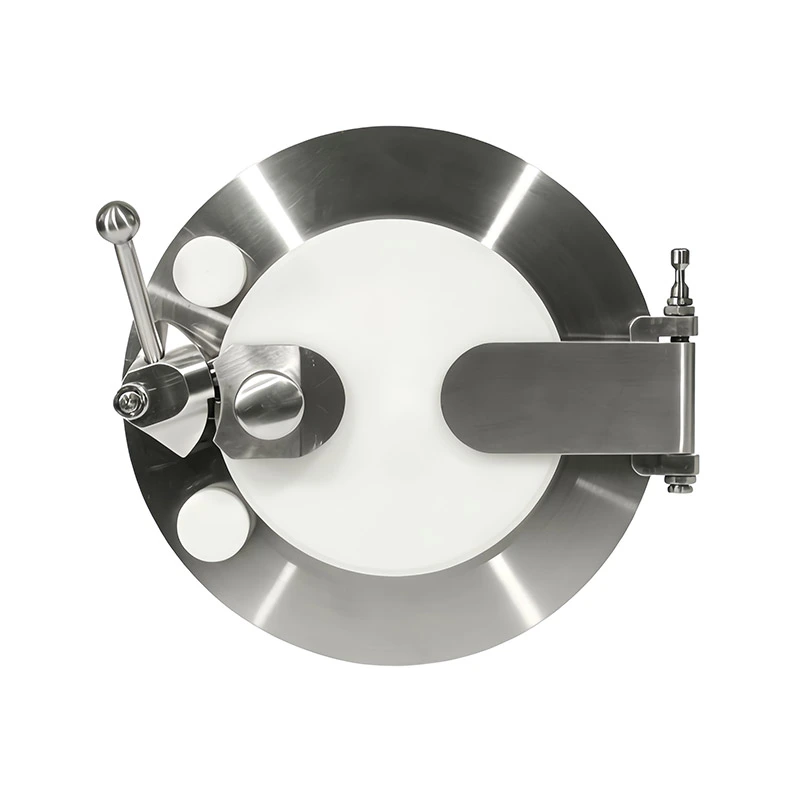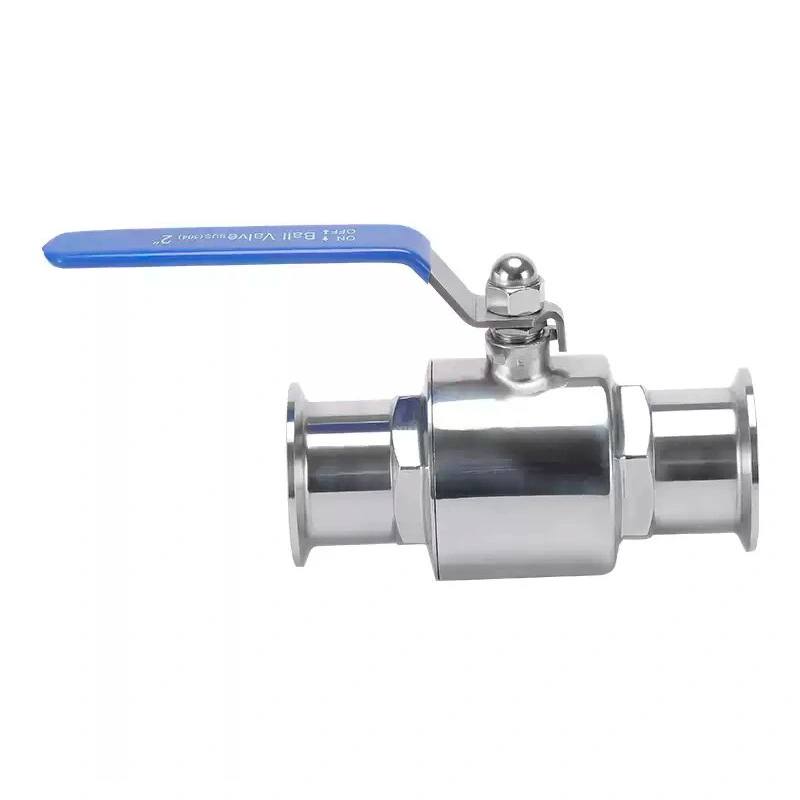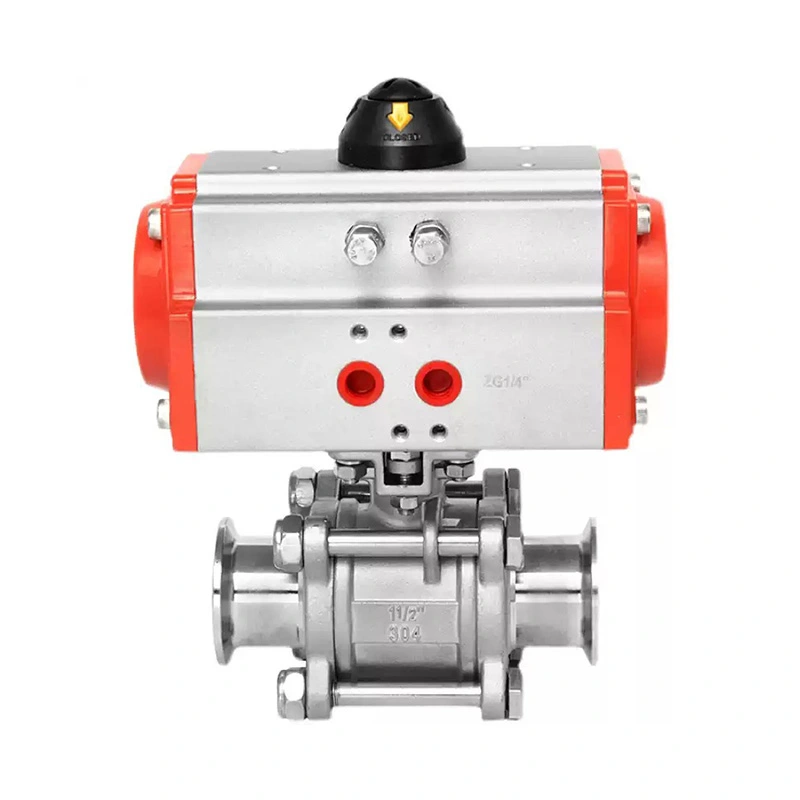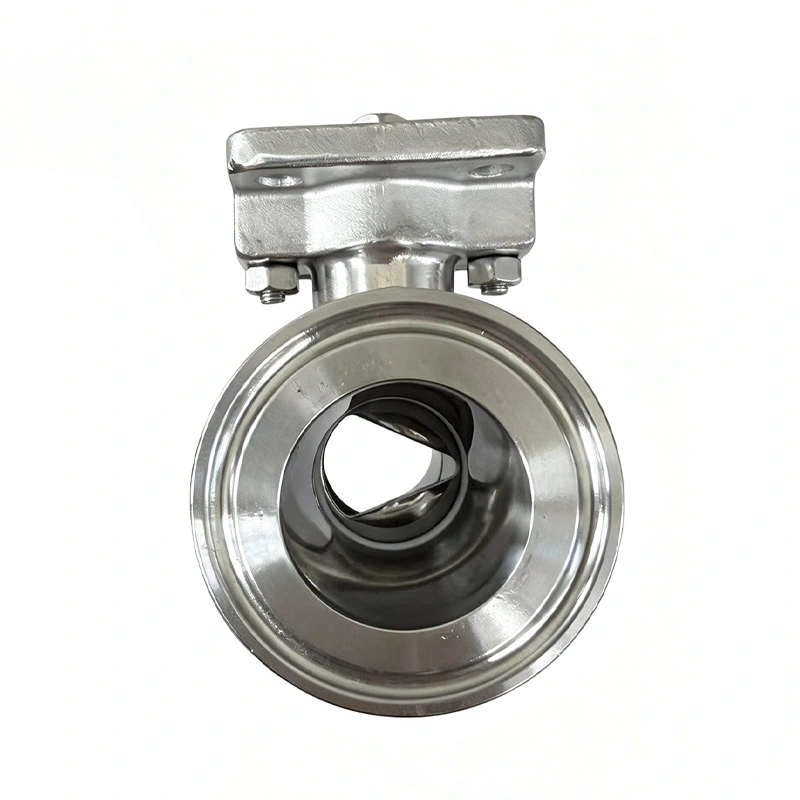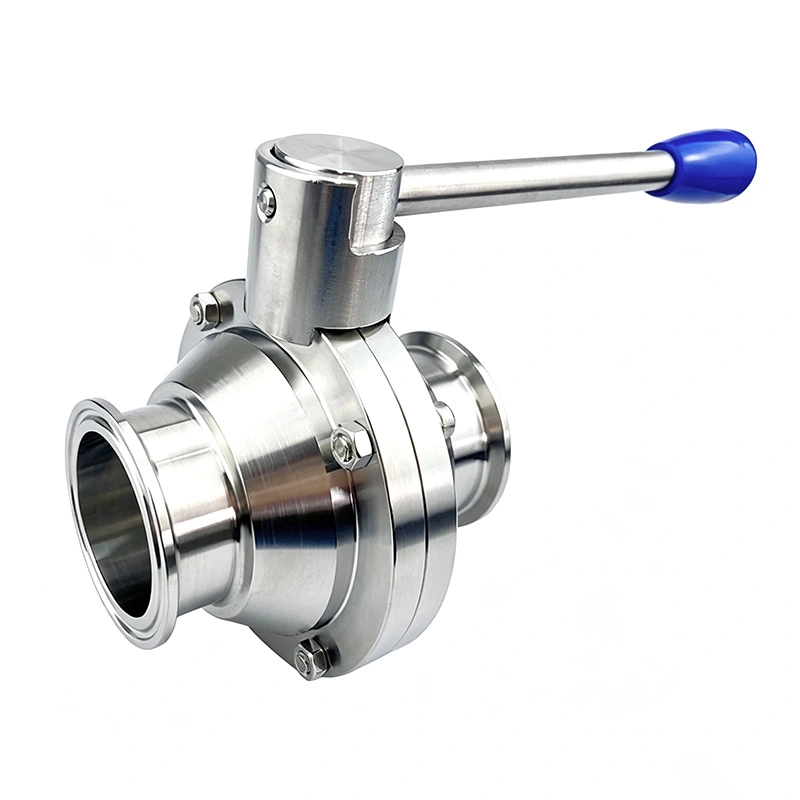
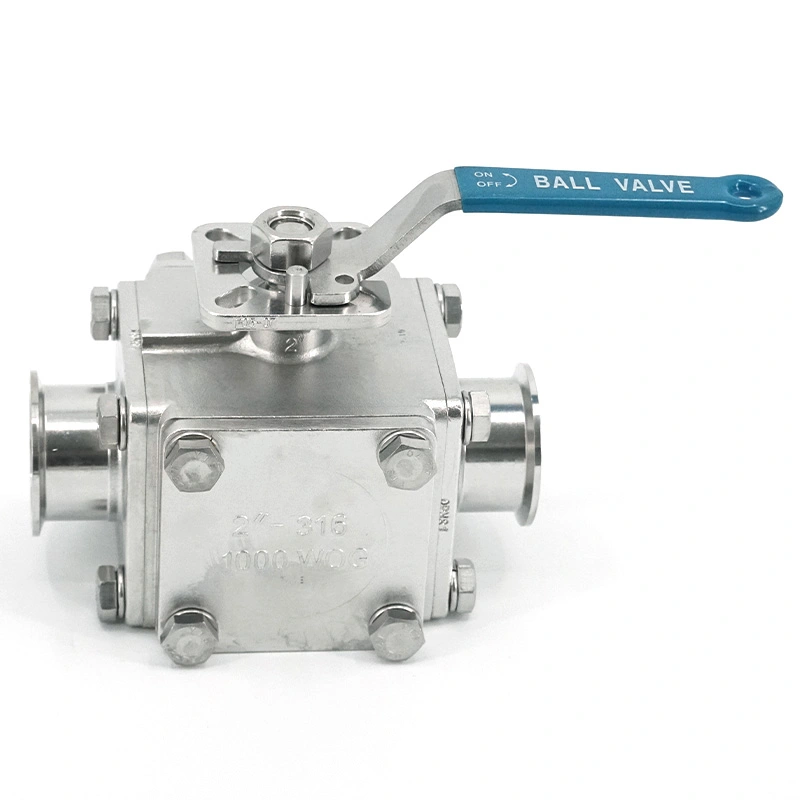
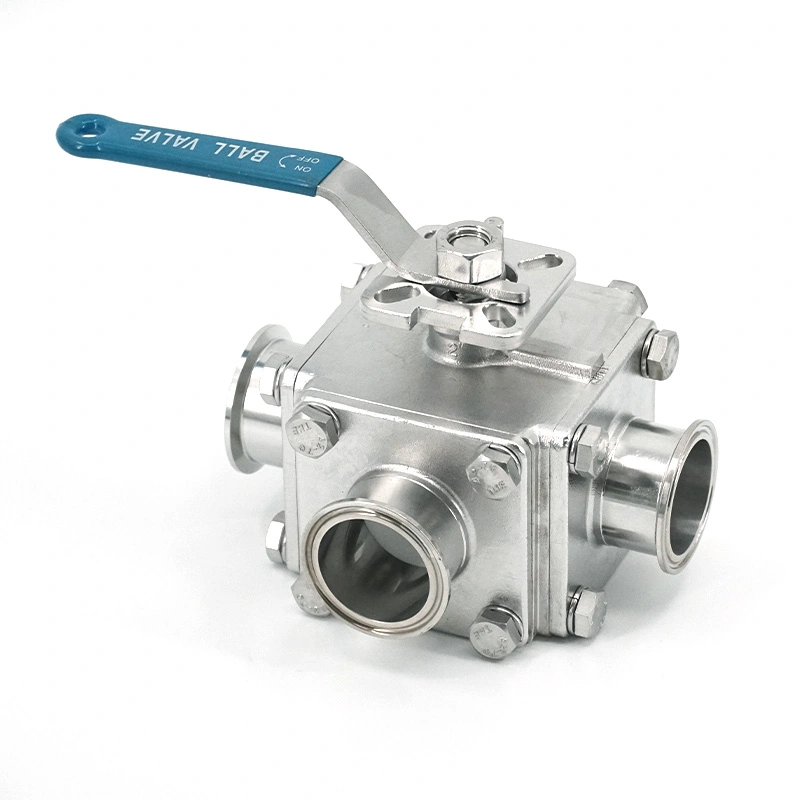
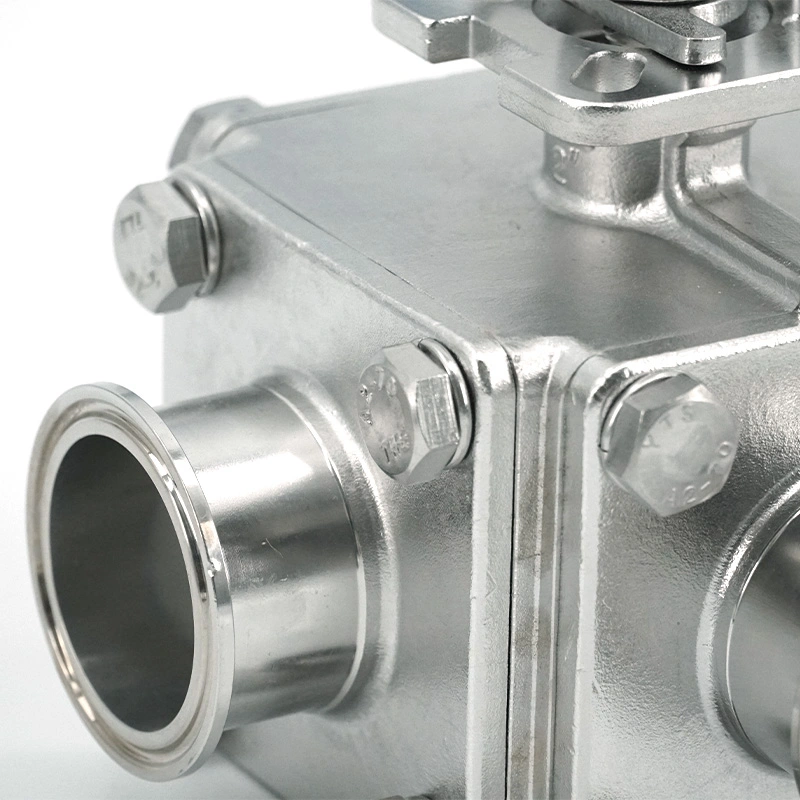
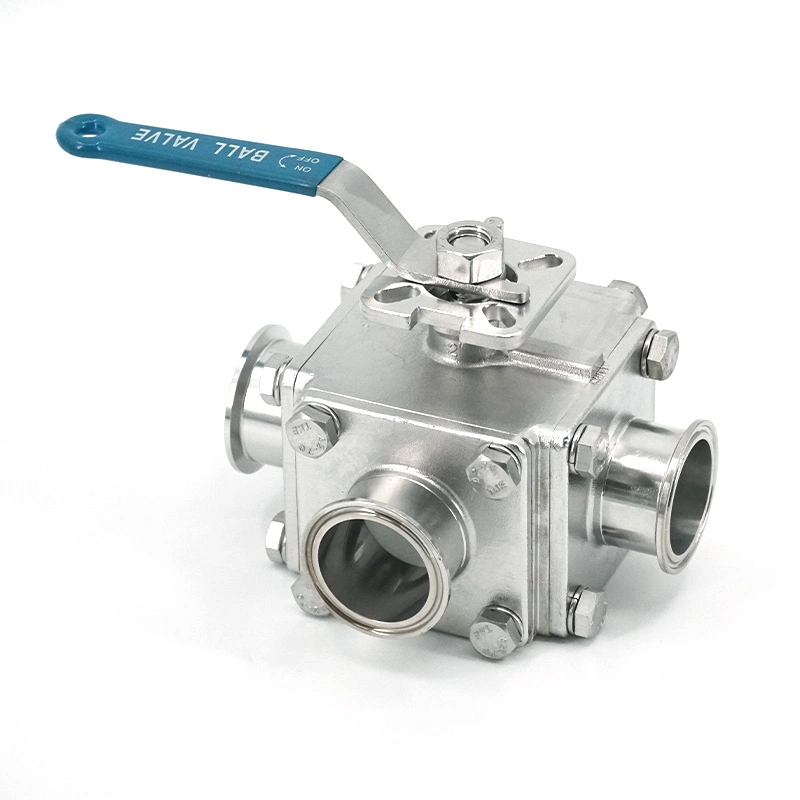
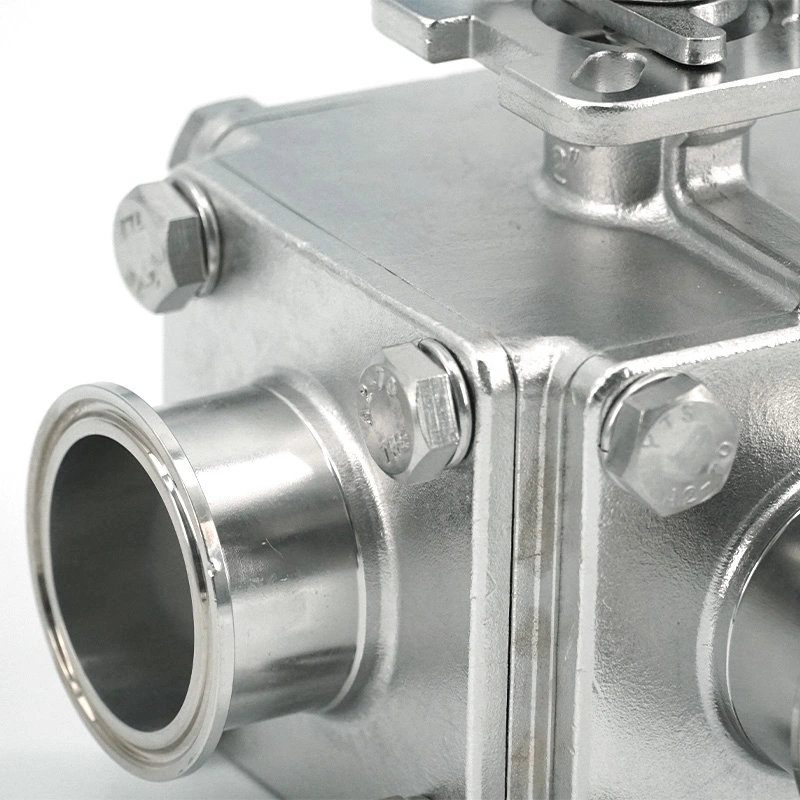
Available with L-Port and T-Port ball configurations, the Sanitary Pneumatic Square Three-Way Ball Valve can accommodate different flow-routing requirements. The stainless steel body, polished wetted surfaces, cavity-minimized seat structure, and pneumatic quarter-turn operation make it suitable for pharmaceutical, biotechnology, food, beverage, dairy, cosmetic, and other hygienic processing systems.
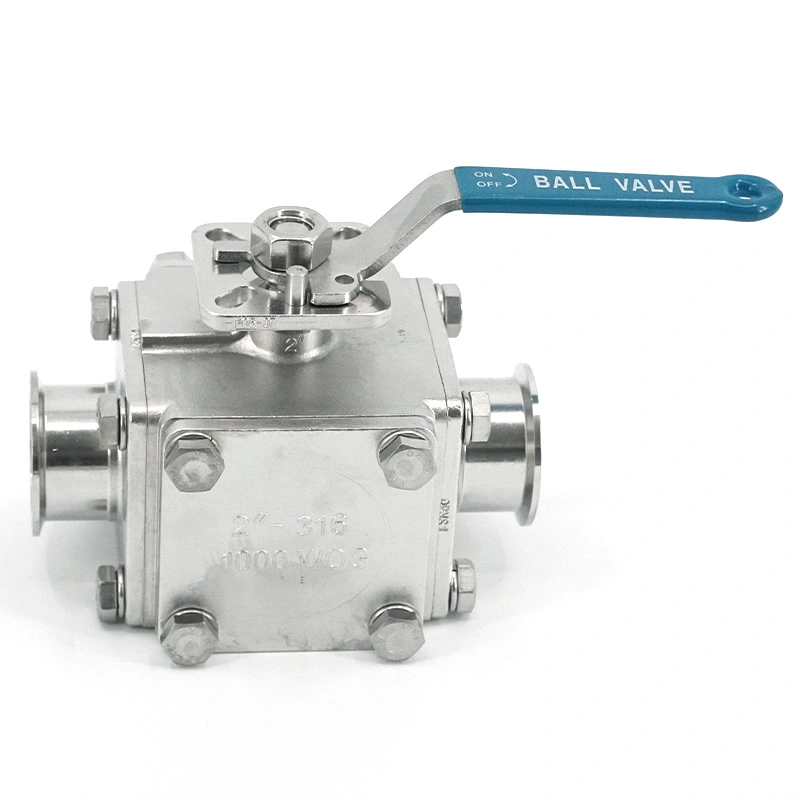
The L-Port ball connects two ports while isolating the third port. It is suitable when one process stream needs to be switched between two different pipelines, such as selecting between two tanks, transfer routes, or process outlets.
The T-Port ball provides more flexible communication between the three valve ports. Depending on the ball position, different pipelines can be connected or isolated, making it suitable for distribution, transfer, and multi-directional process routing.
The L-Port or T-Port configuration should be selected according to the actual pipeline arrangement and required switching positions. For complex systems, buyers can provide a process flow diagram so AVM can verify the required flow path before production.
The pneumatic actuator rotates the valve stem through 90° to change the position of the ball and redirect the process media. This quarter-turn mechanism provides straightforward switching between predefined flow paths.
The double-acting configuration uses compressed air for both opening and closing movement. It is suitable for automated systems where pneumatic control is required in both directions.
The spring-return configuration uses compressed air for one direction and spring force for the opposite movement. It can be selected when the process requires a defined default position after loss of air supply.
The pneumatic actuator can be combined with solenoid valves, limit switch boxes, positioners, and air filter regulators. These components allow the valve to be integrated with PLC or other process-control systems for remote switching.
The internal structure is designed to reduce unnecessary cavities around the ball and seat. This helps limit process-media retention during flow switching and supports hygienic operation where products are changed frequently.
The cavity-filled seat design reduces the available space around the sealing area where process residues could accumulate. This construction supports easier cleaning and helps reduce potential contamination points.
The standard internal surface finish is Ra ≤0.8 μm, with an optional Ra ≤0.4 μm electropolished finish. The smoother surface can reduce product adhesion and facilitate cleaning of the product-contact areas.
The Sanitary Pneumatic Square Three-Way Ball Valve is designed for integration into suitable CIP and SIP systems, allowing cleaning and sterilization procedures to be carried out while the valve remains installed. The actual CIP and SIP conditions should be checked against the selected seat and sealing materials.
AVM provides SUS304 and SUS316L stainless steel configurations. SUS316L can be selected for applications requiring higher corrosion resistance or more demanding product-contact conditions.
PTFE provides reliable sealing and chemical resistance for many compatible sanitary process applications. Its suitability should be confirmed according to the process medium, cleaning agents, and operating temperature.
EPDM and silicone can be selected for compatible sanitary processing applications according to the process medium, temperature, cleaning requirements, and sterilization conditions.
FKM is available for applications requiring suitable resistance to specific chemicals and operating conditions. Compatibility should be confirmed before selection.
The precision-machined ball and hygienic seat structure provide sealing between selected flow paths, helping prevent unwanted communication between isolated ports.
The elastic sealing structure allows the seat to accommodate normal changes in operating conditions, helping maintain contact between the ball and seat during repeated switching.
The precision-machined ball and seat are designed for smooth rotation with controlled operating torque, allowing the pneumatic actuator to operate the valve efficiently.
The 90° operating mechanism is suitable for process systems where flow paths need to be changed repeatedly during production, transfer, cleaning, or product changeover.
| Item | Specification |
| Product Name | Sanitary Pneumatic Square Three-Way Ball Valve |
| Brand | AVM |
| Valve Type | Sanitary Three-Way Ball Valve |
| Ball Configuration | L-Port / T-Port |
| Body Material | SUS304 / SUS316L |
| Seal Material | PTFE / EPDM / Silicone / FKM |
| Actuator | Pneumatic Double Acting / Spring Return |
| Rotation Angle | 90° |
| Operating Pressure | Up to 5 bar, depending on size |
| Operating Temperature | -20°C to +180°C, depending on seat material |
| Internal Surface Finish | Ra ≤0.8 μm Standard |
| Optional Surface Finish | Ra ≤0.4 μm Electropolished |
| Connection | Tri-Clamp / Butt Weld / Threaded / Flanged |
| Connection Standards | DIN / ISO / SMS / IDF / 3-A |
| Control Accessories | Solenoid Valve / Limit Switch Box / Positioner / Air Filter Regulator |
AVM provides this three-way configuration from 1/2" to 4", corresponding approximately to DN15–DN100. Actual connection dimensions depend on the selected valve size and sanitary connection configuration.
| Size | DN | L | Port | d | D | E | H | S | ISO 5211 |
| 1/2" | DN15 | 148 | 16.0 | 12.7 | 25.2 | 73.7 | 89.0 | 186.5 | F04 |
| 3/4" | DN20 | 155 | 20.0 | 19.05 | 25.2 | 77.9 | 98.0 | 218.0 | F05 |
| 1" | DN25 | 168 | 25.0 | 25.4 | 50.5 | 84.4 | 102.0 | 218.0 | F05 |
| 1 1/4" | DN32 | 198 | 32.0 | 31.8 | 50.5 | 98.95 | 118.5 | 135.0 | F05 / F07 |
| 1 1/2" | DN40 | 220 | 38.0 | 38.1 | 50.5 | 110.7 | 127.0 | 135.0 | F05 / F07 |
| 2" | DN50 | 245 | 50.0 | 50.8 | 64.0 | 122.3 | 139.0 | 250.0 | F07 / F10 |
| 2 1/2" | DN65 | 270 | 65.0 | 63.5 | 77.5 | 135.0 | 165.7 | 252.0 | F07 / F10 |
| 3" | DN80 | 290 | 80.0 | 76.2 | 91.0 | 146.1 | 170.0 | 252.0 | F07 / F10 |
| 4" | DN100 | 330 | 100.0 | 101.6 | 119.0 | 164.0 | 193.0 | 600.0 | F07 / F10 |
Tri-Clamp connections are suitable for sanitary process systems where convenient installation, removal, and inspection are required. They are commonly used in food, beverage, dairy, pharmaceutical, and biotechnology equipment.
Butt-welded connections provide a permanent connection between the valve and process pipeline. This configuration is suitable where hygienic pipeline continuity and reduced detachable joints are required.
Threaded versions provide an alternative connection method for compatible sanitary piping systems. The applicable thread standard should be confirmed according to the existing installation.
Flanged versions can be used where the valve needs to connect with compatible equipment or piping systems using bolted connections. Dimension and flange standards should be confirmed before ordering.
The Sanitary Pneumatic Square Three-Way Ball Valve can be used in compatible pharmaceutical systems for injectable production, vaccine manufacturing, buffer preparation, purified water systems, WFI systems, sterile liquid transfer, and CIP/SIP process lines.
Typical applications include cell culture, fermentation, biopharmaceutical production, sterile liquid transfer, and process skids where automated flow-path switching is required.
Applications include dairy processing, milk and yogurt production, fruit juice processing, brewery systems, beverage filling, and liquid food transfer where hygienic flow routing is required.
The valve can be applied to shampoo, lotion, cream, cosmetic ingredient transfer, and other compatible liquid processing systems requiring controlled pipeline distribution.
The first selection point is whether the system requires L-Port diversion or T-Port multi-directional flow. The required connection and isolation states should be confirmed before ordering.
The process medium should be provided when selecting the valve body and seat material. This is particularly important for systems involving cleaning chemicals, corrosive media, or high-purity fluids.
The actual operating pressure, process temperature, CIP temperature, and SIP conditions should be provided so the selected valve configuration can be checked against its applicable operating limits.
Buyers should specify the preferred actuator type, available air pressure, default valve position, and required control accessories when the valve will be connected to an automated process system.
The existing pipeline connection should be identified as Tri-Clamp, Butt Weld, Threaded, Flanged, DIN, ISO, SMS, IDF, or another applicable standard to avoid installation problems.
For a three-way valve, AVM verifies the actual ball configuration and switching positions to ensure the L-Port or T-Port flow path corresponds to the specified valve arrangement.
The assembled actuator and valve are checked for correct 90° movement, switching response, and operating condition before shipment.
The valve undergoes appropriate leakage and sealing checks, while stainless steel surfaces and sanitary connection ends are inspected for machining or surface defects.
Before packing, the sanitary connection ends are protected against contamination and impact. The pneumatic actuator and exposed components receive additional protection, and the complete valve is secured according to the selected transportation method.
It is used to redirect, distribute, or isolate process media between three connected pipelines. The three-port structure makes it suitable for process systems requiring multiple flow routes.
The L-Port configuration connects two ports while isolating the third, making it suitable for two-path diversion. The T-Port configuration provides more flexible communication between three ports for distribution and multi-directional routing.
The Sanitary Pneumatic Square Three-Way Ball Valve is designed for integration into suitable CIP and SIP systems. The actual cleaning and sterilization conditions must be checked against the selected seat and seal materials.
The supplied specification lists an operating pressure of up to 5 bar, with the actual allowable pressure depending on valve size and configuration.
The supplied specification gives an operating range of -20°C to +180°C, depending on the selected seat material.
Yes. Solenoid valves, limit switch boxes, positioners, and other control accessories can be configured for integration with automated process-control systems.
The selection depends mainly on the process medium, corrosion conditions, hygiene requirements, and product-contact requirements. SUS316L is generally selected for more demanding hygienic and corrosion-sensitive applications.
Provide the valve size, L-Port or T-Port requirement, process medium, operating pressure, temperature, connection standard, actuator type, available air pressure, and required control accessories. A piping diagram is recommended when multiple switching positions are involved.
Address
No. 373 Oufan Road, Dongtou District, Wenzhou City, Zhejiang Province, China
Tel