
A Rapid Transfer Port RTP provides a controlled interface for moving materials, components, tools, samples, or waste between an isolated process and its surrounding environment without unnecessarily exposing the critical zone. By combining an Alpha port, Beta container, mechanical interlocking structure, and controlled docking procedure, an RTP system can help reduce contamination, cross-contamination, operator exposure, and process interruption. This article explains how RTP technology works, where it is used, what performance factors matter, and how AVM Extraordinary Intelligent Control Equipment Co., Ltd. approaches aseptic and high-containment transfer applications.

Material transfer is one of the most sensitive operations in pharmaceutical, biotechnology, life-science and high-containment manufacturing. Even when an isolator or closed processing enclosure provides strong environmental separation, transferring something through the barrier can become a potential weak point.
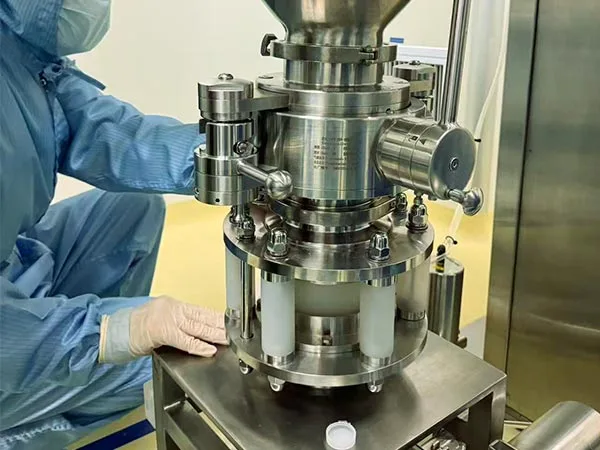
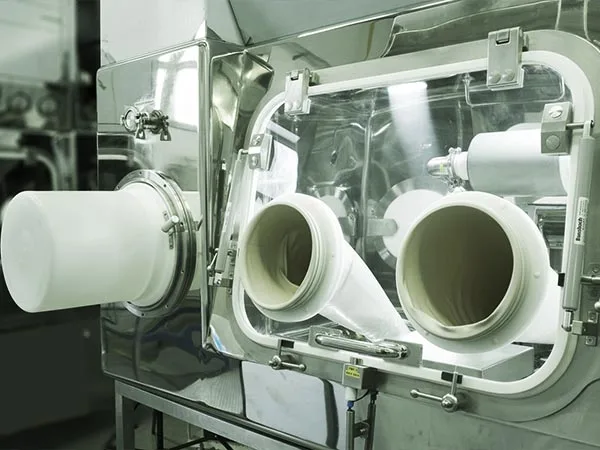
A Rapid Transfer Port RTP is designed to address this challenge. Rather than repeatedly opening the primary isolation barrier, an RTP creates a dedicated transfer interface between the controlled area and an external transfer container. Modern RTP systems commonly use an Alpha-Beta configuration in which the fixed Alpha component is integrated into the isolator or containment equipment and the Beta component carries or encloses the material being transferred.
The objective is straightforward: make material movement controlled, repeatable and easier to manage while protecting the integrity of the critical process.
A Rapid Transfer Port RTP is a mechanical transfer interface used to move materials between two separated environments while maintaining containment or aseptic conditions. It is particularly relevant when opening the main barrier would create an unnecessary contamination or exposure risk.
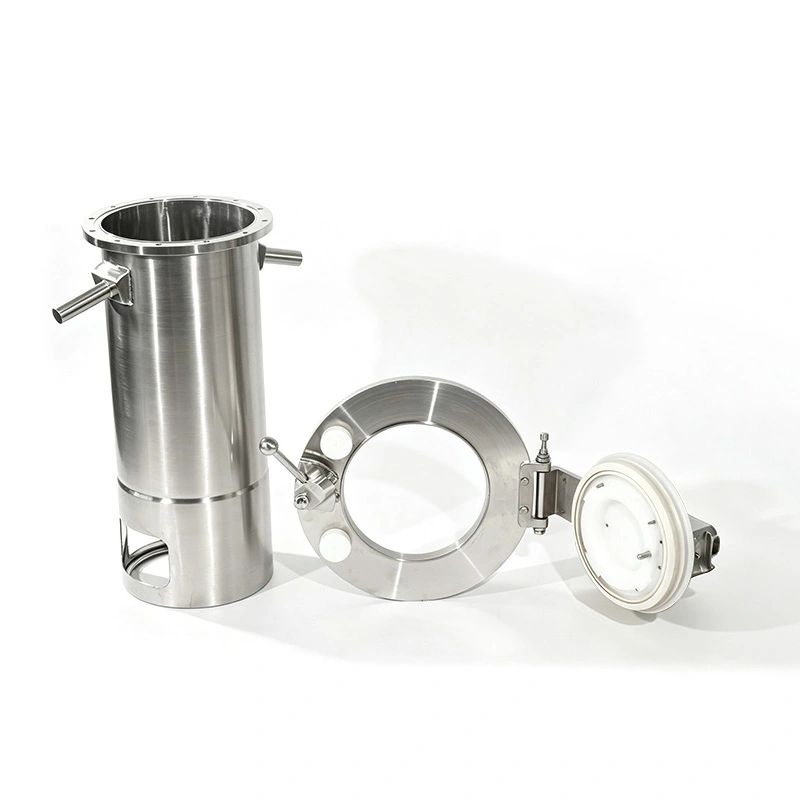
The basic system normally consists of two coordinated components:
This Alpha-Beta concept is widely associated with closed material transfer in pharmaceutical and life-science applications. The fundamental principle is that the two sides become connected through a controlled interface before the transfer pathway is opened.
Although exact operating procedures vary according to equipment design and application requirements, the transfer sequence can generally be understood as a controlled docking process.
This sequence is important because an RTP is not simply a door or opening. Its value comes from coordinating connection, sealing and opening operations so that the transfer itself becomes a controlled process.
Research into RTP chambers has also highlighted the importance of factors such as airflow, particle levels, pressure decay and decontamination when validating contamination-control performance.
Many manufacturing teams face the same fundamental dilemma: materials must enter or leave a controlled environment, but every unnecessary opening of the primary barrier can increase operational risk.
An RTP can help address several common challenges.
| Operational Challenge | Potential RTP Contribution |
|---|---|
| Repeated opening of an isolator | Provides a dedicated transfer interface for routine material movement |
| Risk of environmental contamination | Creates a controlled connection between separated environments |
| Operator exposure | Reduces the need for direct intervention during contained transfer |
| Cross-contamination | Supports closed and controlled material-transfer procedures |
| Process interruption | Allows designated materials to be transferred without dismantling the primary barrier |
| Complex material logistics | Provides a standardized transfer point for compatible containers and components |
The technology therefore addresses both product protection and operational protection. For high-potency or hazardous materials, maintaining containment is especially important because a transfer failure may affect not only the product but also operators and the surrounding facility.
The principal advantage of an RTP is its ability to create a controlled interface between isolated spaces. The Alpha-Beta configuration is specifically intended to maintain separation while material is transferred.
Traditional material-transfer procedures may require operators to manipulate doors, bags, containers or equipment directly inside a critical area. A dedicated RTP can simplify these operations and make the transfer sequence more repeatable.
For aseptic manufacturing, protecting the process from external contaminants is fundamental. RTP technology can provide a controlled route for bringing components, tools and other materials into an isolator without repeatedly exposing the main process environment.
Manufacturing environments often require frequent movement of materials. A properly integrated RTP can make these transfers part of the standard workflow rather than treating each transfer as an exceptional intervention.
Depending on the application, an RTP can be incorporated into isolators, gloveboxes, containment systems and other controlled enclosures. Different port sizes and Beta configurations can also support different transfer requirements.
RTP technology is particularly valuable in environments where cleanliness, containment and controlled handling are important.
Industry sources describe RTP applications across aseptic manufacturing, potent-product manufacturing and other critical life-science environments, while RTP technology is also used in containment applications involving hazardous materials.
Choosing a Rapid Transfer Port should begin with the actual transfer process rather than simply the physical diameter of the port. A technically suitable system needs to match the equipment, material and operating procedure.
| Specification Area | Questions to Consider |
|---|---|
| Application | Is the process aseptic, containment-focused, or both? |
| Transfer Material | What products, tools, components, samples or waste will be transferred? |
| Port Size | Can the selected opening accommodate the required transfer dimensions? |
| Compatibility | Does the Alpha port match the required Beta container or transfer component? |
| Material Construction | Are the selected materials appropriate for cleaning, sterilization and process conditions? |
| Interlock Design | Does the operating sequence provide appropriate protection against incorrect opening? |
| Cleaning and Decontamination | Can the port and contact surfaces be effectively cleaned or decontaminated? |
| Validation | Can the installed system be tested according to the site's process requirements? |
Port size is also not a purely dimensional issue. Different commercial RTP designs provide different sizes and configurations, so compatibility between the Alpha and Beta components should be confirmed before procurement.
| Feature | Conventional Transfer | RTP-Based Transfer |
|---|---|---|
| Primary transfer concept | Manual or conventional opening | Controlled Alpha-Beta interface |
| Barrier interruption | May require direct access | Designed to preserve the main containment boundary |
| Repeatability | Highly dependent on procedure | Defined docking and transfer sequence |
| Operator involvement | Potentially higher | Can reduce direct intervention |
| Contamination control | Depends heavily on transfer procedure | Dedicated closed transfer pathway |
| Integration | May require additional handling arrangements | Can be integrated into isolators and containment equipment |
The comparison does not mean that an RTP eliminates every contamination or containment risk. Its effectiveness depends on correct system design, compatible components, operating procedures, cleaning, testing and maintenance.
A high-quality RTP installation should be considered as part of the overall containment or aseptic process rather than as an isolated hardware component.
Validation studies have examined RTP performance through several measurable parameters, including airflow velocity, particle counts, pressure-decay leakage testing and decontamination performance.
For an operating facility, practical considerations may include:
For demanding pharmaceutical and biotechnology applications, traceable testing can also become an important part of lifecycle management. Specialized RTP testing equipment is available for checking leak-tightness and recording test results for controlled processes.
AVM Extraordinary Intelligent Control Equipment Co., Ltd. focuses on controlled transfer and containment equipment for applications requiring reliable material handling between isolated environments.
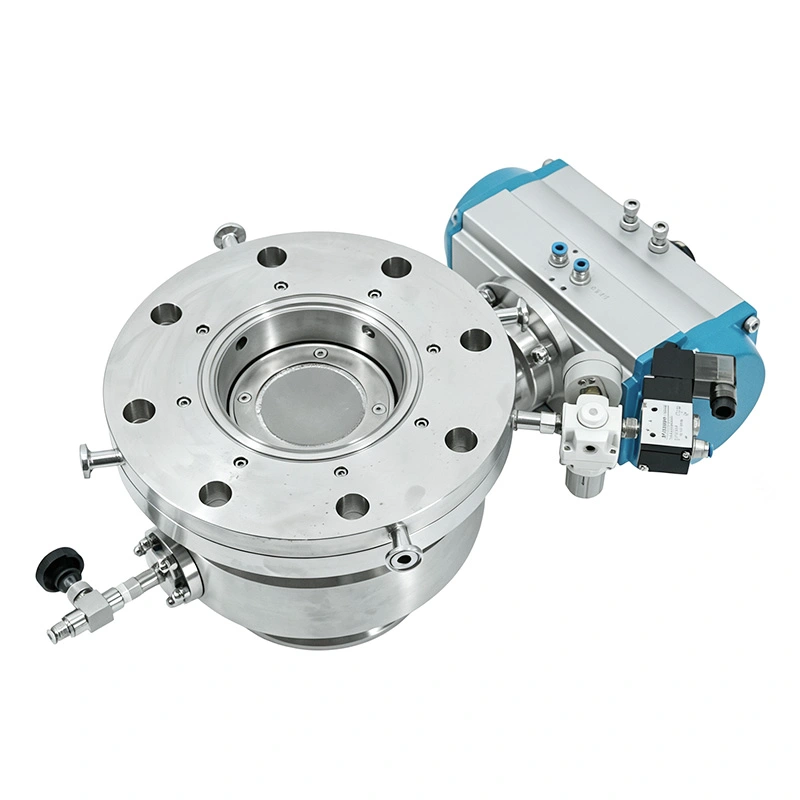
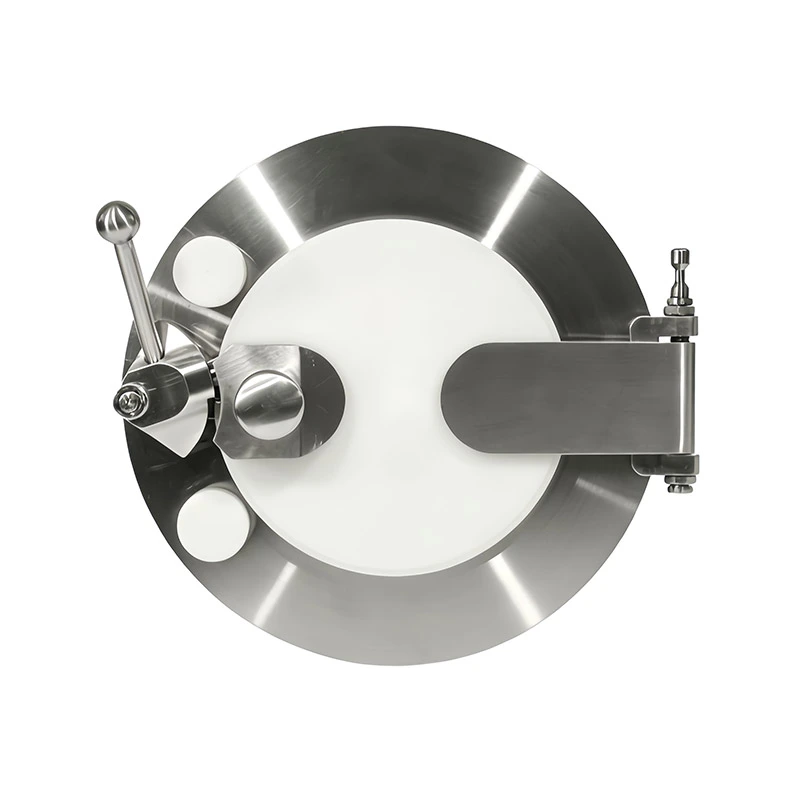
Its Aseptic High Containment Alpha Port RTP is designed as a fixed transfer interface for isolators, gloveboxes and other sealed processing equipment. The system is intended to work with compatible Beta components to support controlled material transfer while maintaining separation between the process environment and the surrounding area.
For pharmaceutical and biotechnology manufacturers, the practical value of an RTP depends on more than the port itself. Equipment compatibility, application requirements, transfer frequency, material characteristics, cleaning procedures and containment objectives all need to be considered together.
When selecting an RTP supplier, buyers should therefore evaluate:
RTP commonly stands for Rapid Transfer Port. It is a controlled transfer interface used to move materials into or out of isolated or contained environments while reducing the need to break the primary barrier.
The Alpha part is generally the fixed port installed on the isolator or containment equipment. The Beta part is the detachable mating component, often associated with a transfer container or bag. Together they form the controlled transfer interface.
Yes. RTP systems are widely used for controlled material transfer in aseptic and pharmaceutical environments. Their purpose is to support material movement while minimizing the risk of introducing external contamination into the protected process.
Yes. RTP systems can be applied to high-containment operations where protecting operators, products and the surrounding environment is important. The exact design must be matched to the material hazard and facility containment strategy.
No. An RTP is one component of a broader contamination-control or containment strategy. Its performance depends on correct installation, compatible components, validated procedures, cleaning, maintenance and operator practices.
Testing requirements depend on the application and system design. Potential evaluations can include leakage or pressure-decay testing, particle monitoring, airflow assessment, integrity checks and decontamination performance.
A material-transfer point should never be treated as a minor detail in an aseptic or high-containment process. It is precisely where materials cross the boundary between controlled and uncontrolled environments.
A well-designed Rapid Transfer Port RTP creates a dedicated pathway for this operation. Through Alpha-Beta docking, controlled interlocking and appropriate sealing, the technology can support cleaner, safer and more repeatable material transfer while reducing unnecessary intervention in the main isolation system.
For pharmaceutical, biotechnology and other critical manufacturing environments, the right RTP should be selected according to the complete process: what is being transferred, where it is being transferred, how frequently it moves, what containment level is required, how the system will be cleaned and how its performance will be verified.
Looking for a Rapid Transfer Port RTP solution for your isolator, glovebox or high-containment application? AVM Extraordinary Intelligent Control Equipment Co., Ltd. can help evaluate your transfer requirements and develop a suitable solution. Contact us to discuss your application, equipment configuration and material-transfer needs.
-