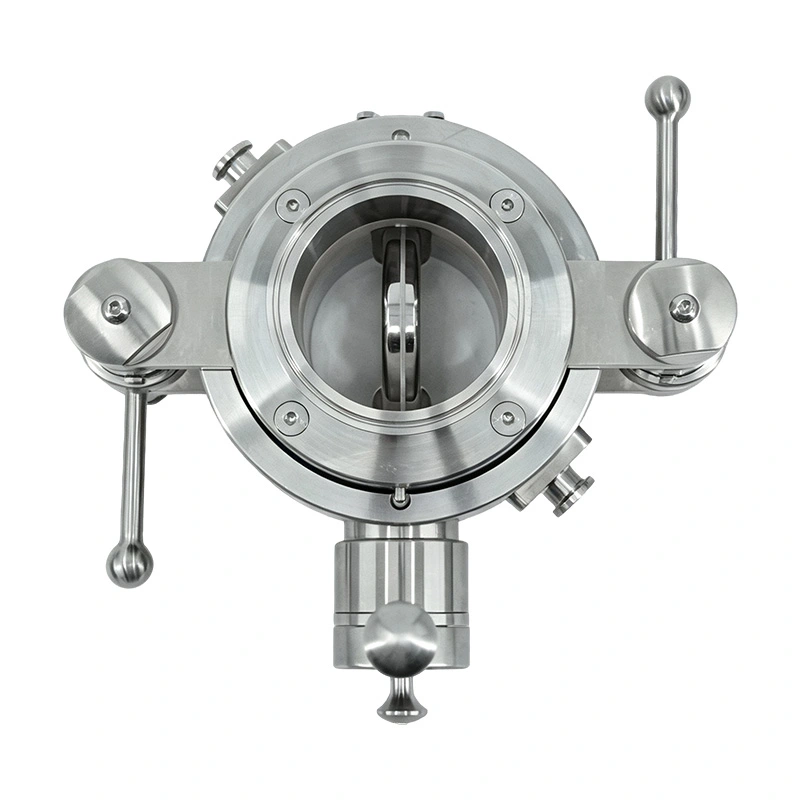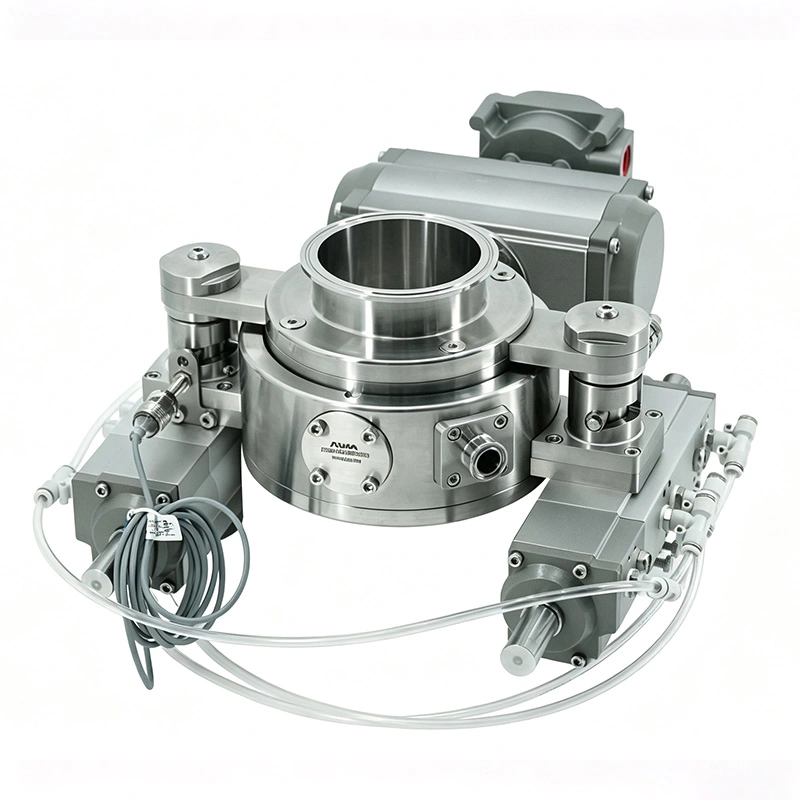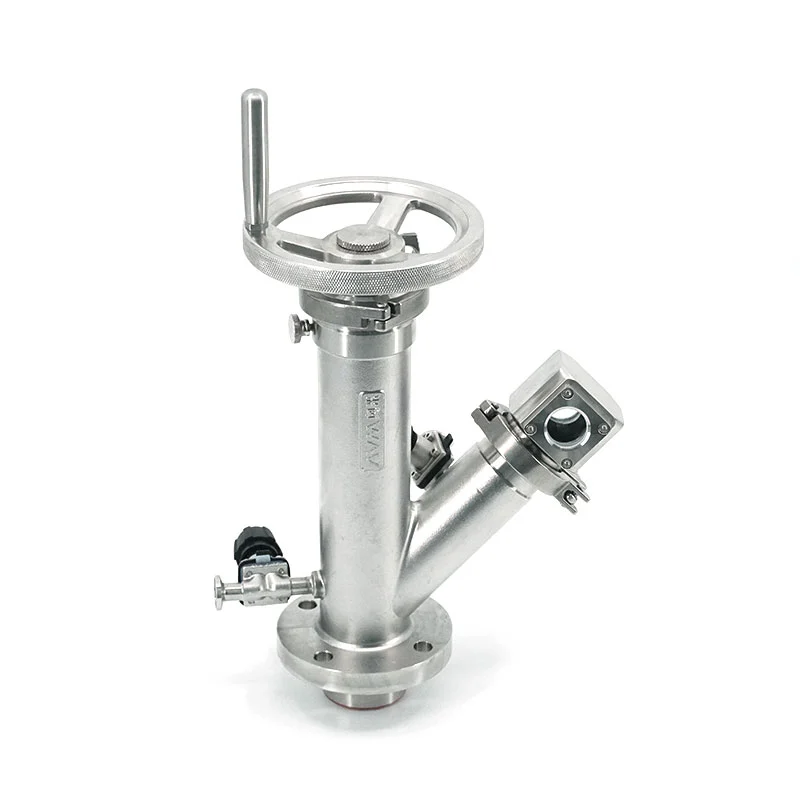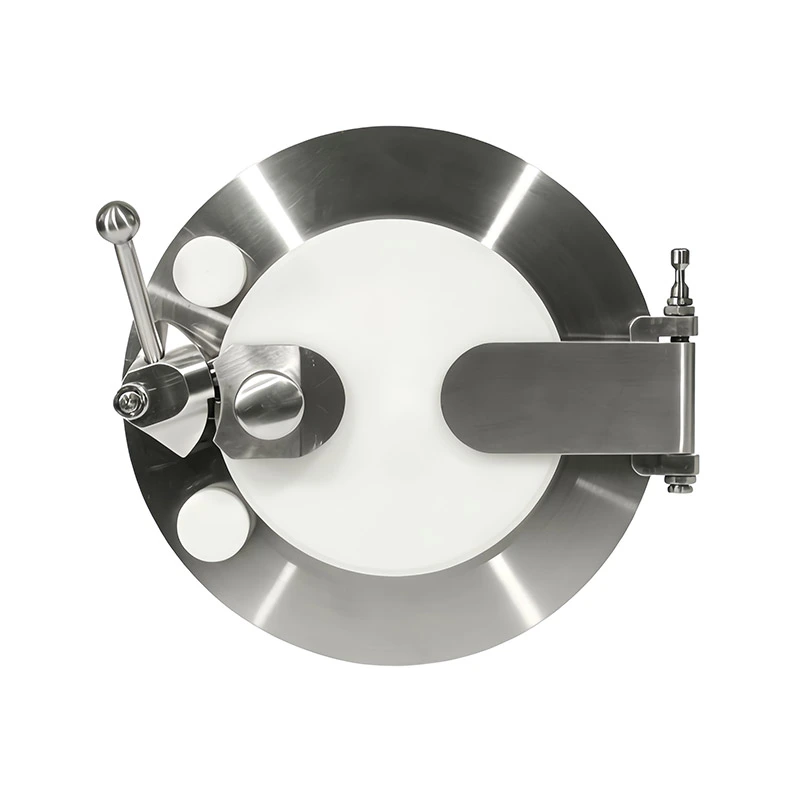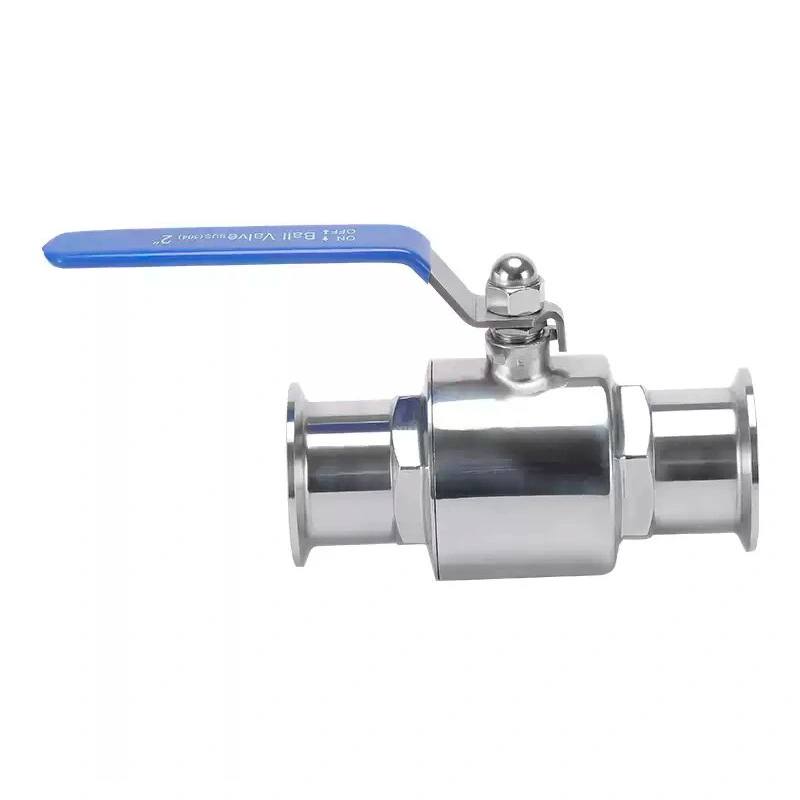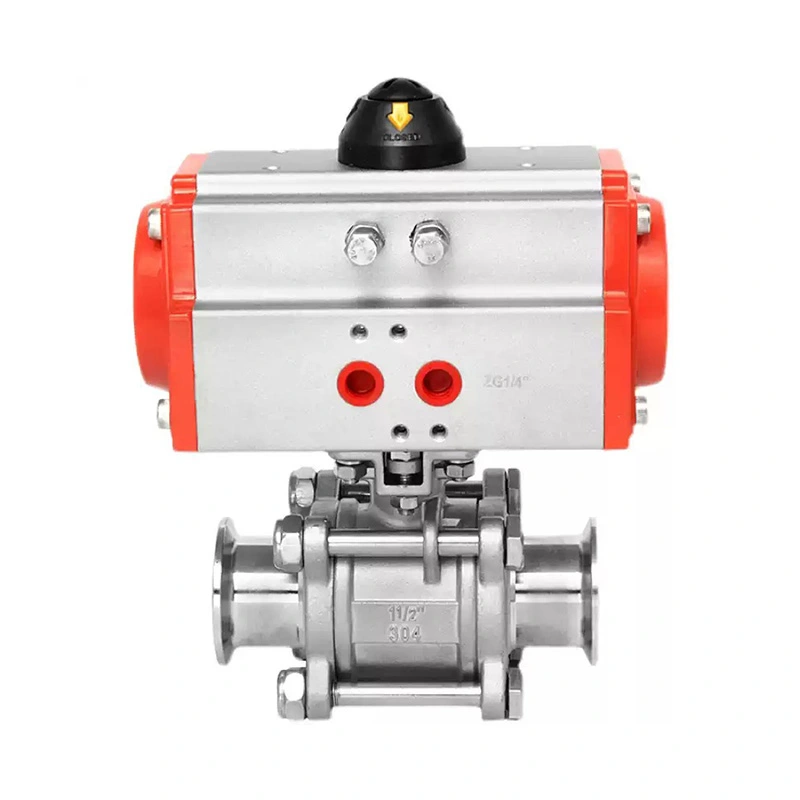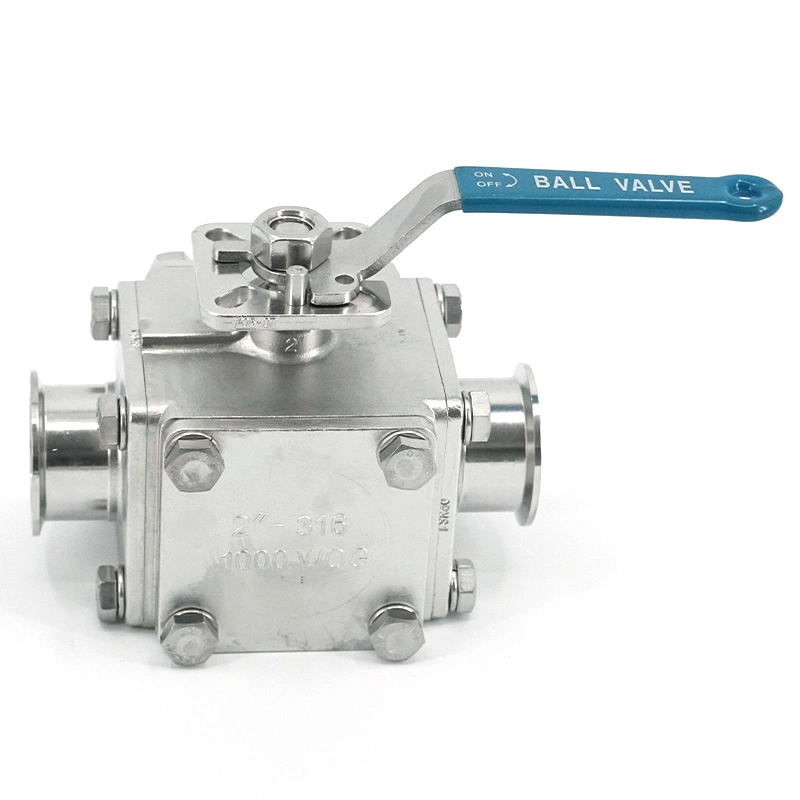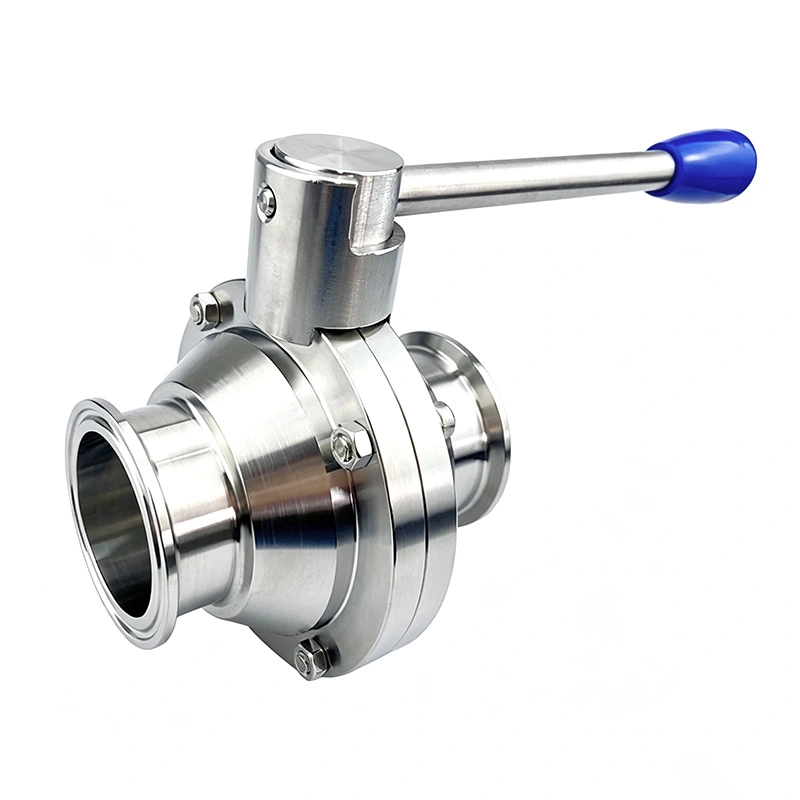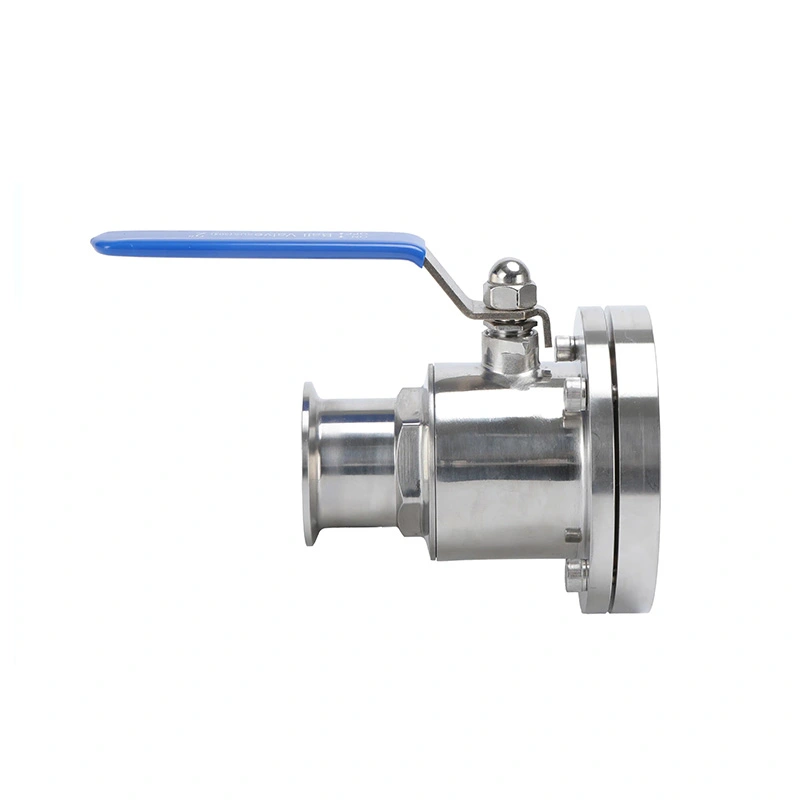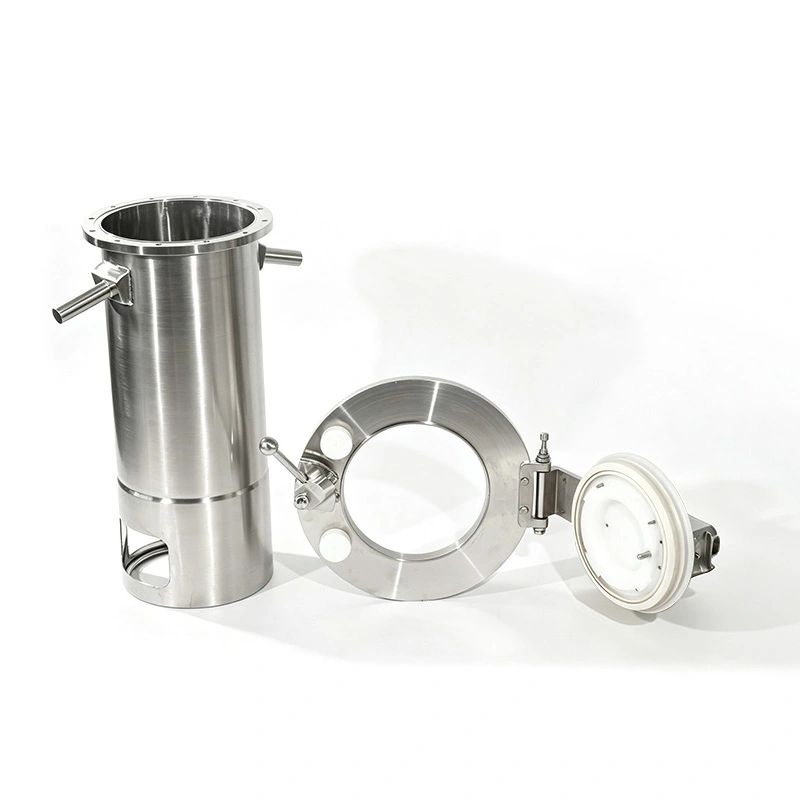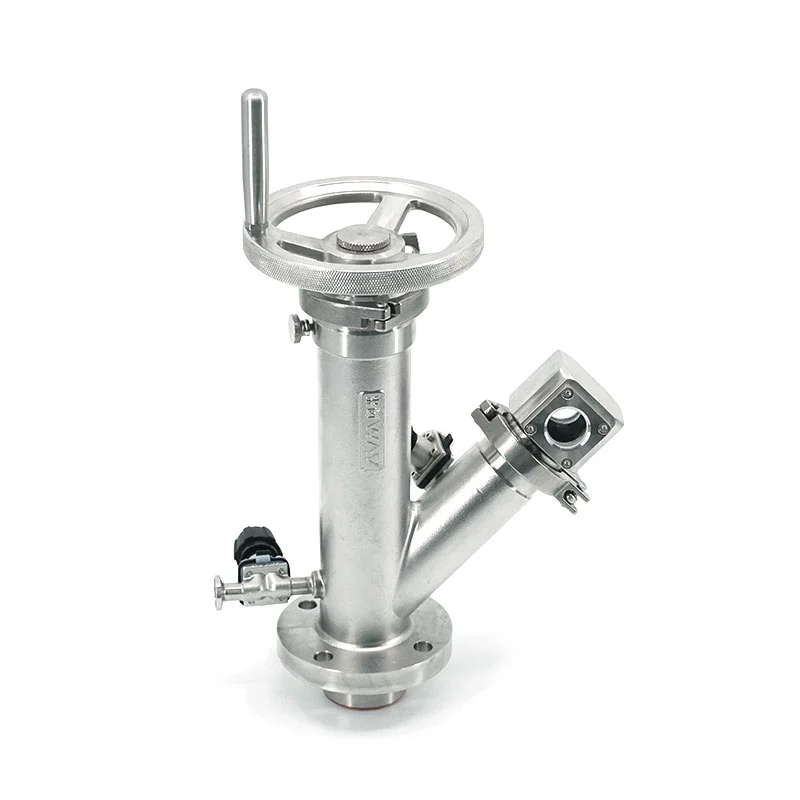
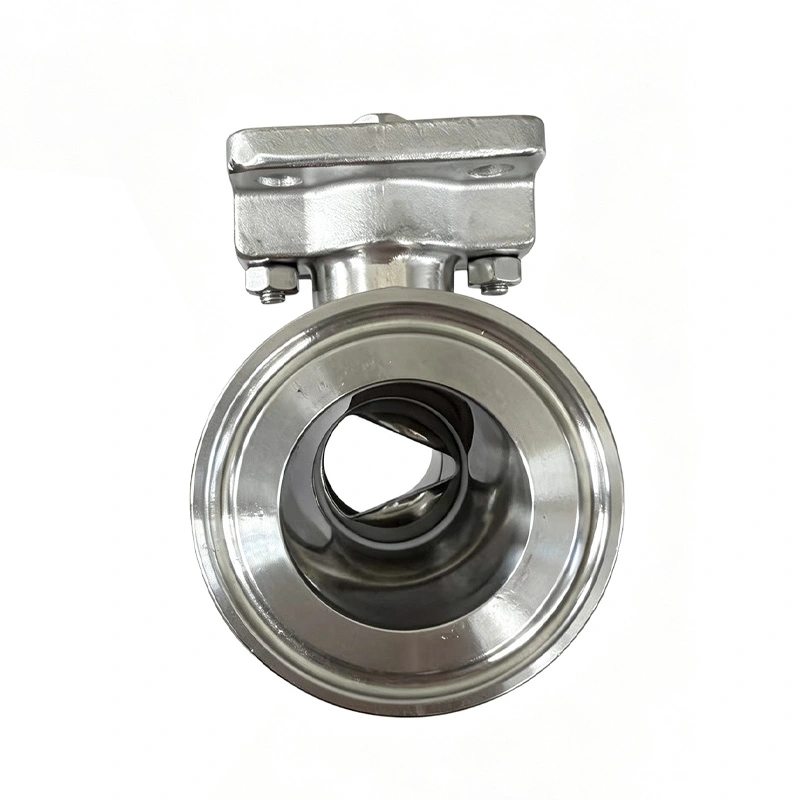
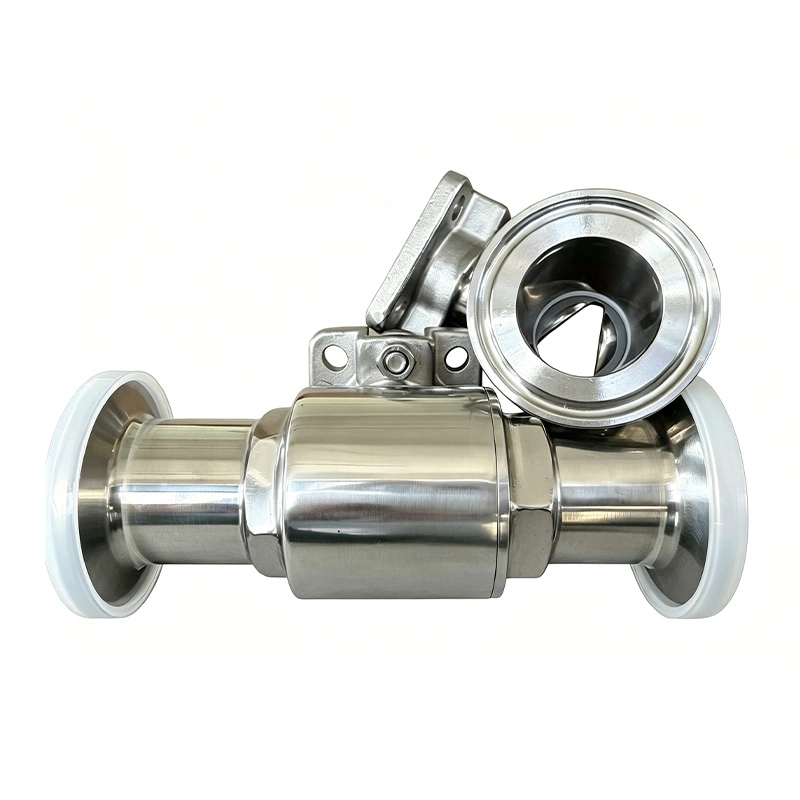
Unlike a conventional full-port ball valve, which is mainly used for on/off isolation, the V-port configuration is intended for manual flow regulation and process adjustment. AVM provides Sanitary Manual 30° 45° 60° V-Port Ball Valve, allowing buyers to select the ball opening according to required control sensitivity and flow capacity.
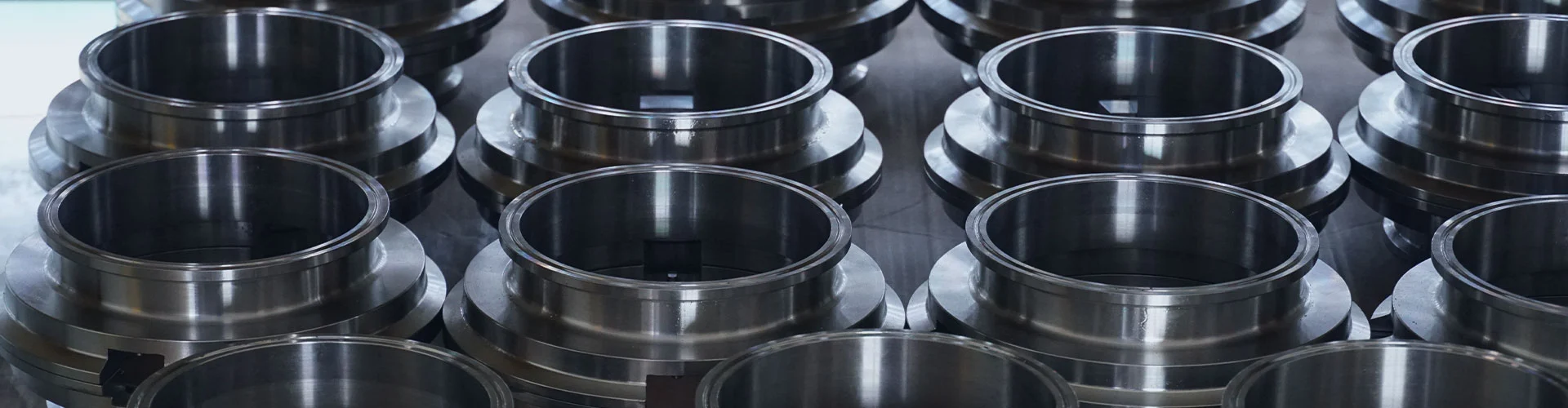
Manufactured from SS304 or SS316L stainless steel, the valve features polished wetted surfaces and sanitary connection options. It is suitable for pharmaceutical, biotechnology, food & beverage, dairy, cosmetic, and fine chemical processing systems where controlled flow and hygienic construction are both important.
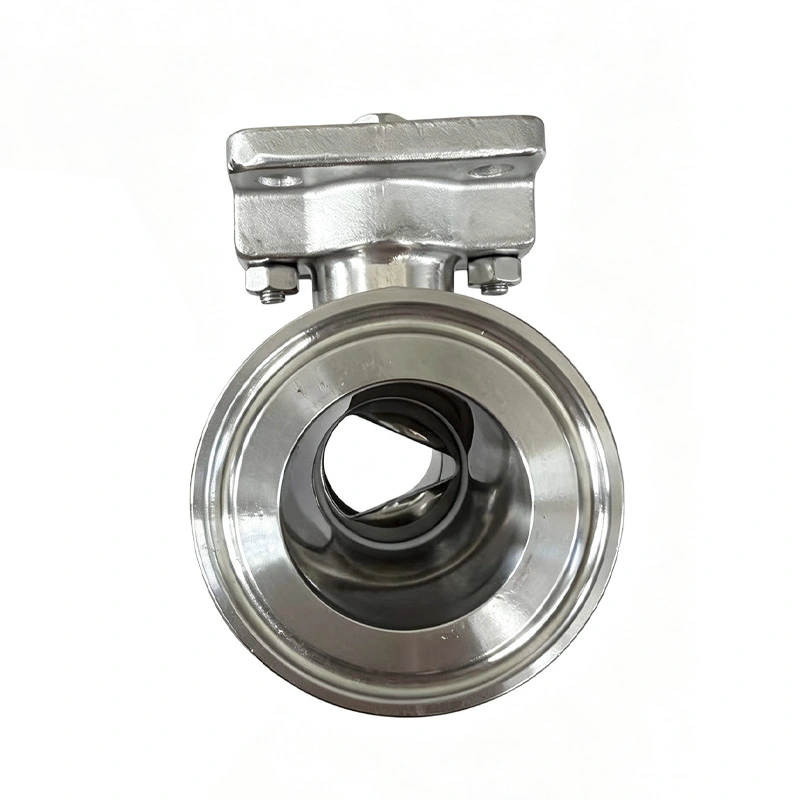
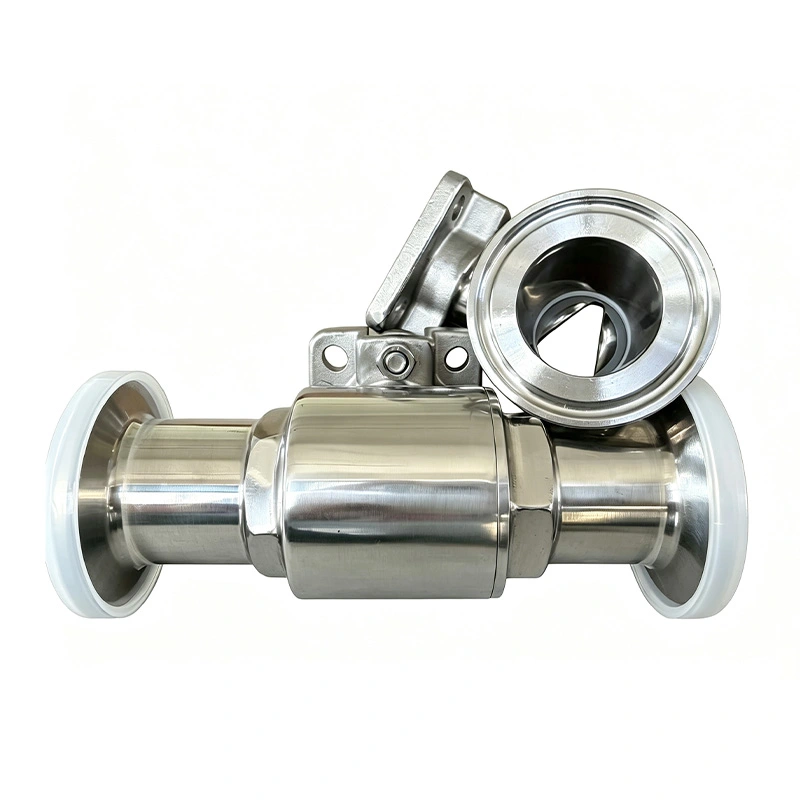
The 30° V-port provides a smaller initial flow opening, giving operators finer control at lower flow rates.
It is suitable when gradual flow adjustment is more important than maximum flow capacity, such as ingredient dosing, buffer preparation, and chemical injection.
The 45° V-port provides a middle ground between control sensitivity and flow capacity.
It can be selected for general process control where the system requires reasonably accurate adjustment across a wider operating range without prioritizing either very low-flow control or maximum throughput.
The larger 60° opening provides a greater flow area and higher potential flow capacity.
It is better suited to applications such as tank discharge, process liquid transfer, utility lines, and other systems where higher flow is a priority.
Choose the 30° V-port when the process requires gradual adjustment and precise control at relatively low flow rates.
Typical applications include pharmaceutical ingredient dosing, laboratory systems, buffer preparation, and CIP chemical dosing.
Choose the 45° V-port for general hygienic process regulation where both control performance and flow capacity are important.
This configuration can be used in food & beverage, biotechnology, pharmaceutical, and compatible chemical processes.
Choose the 60° V-port when the process requires a larger flow passage and higher flow capacity.
Typical applications include tank outlet control, transfer pipelines, utility services, and process-liquid distribution.
| V-Port Ball | Flow Characteristic | Control Accuracy | Relative Flow Capacity | Typical Applications |
| 30° V-Port | Fine flow regulation | Highest | Low | Precise dosing, pharmaceutical processes, CIP chemical dosing |
| 45° V-Port | Balanced regulation | High | Medium | Food & beverage, biotechnology, general process control |
| 60° V-Port | Higher flow capacity | Moderate | High | Tank discharge, transfer lines, utility services |
The actual flow characteristic and Cv value depend on valve size, pressure differential, medium properties, and the complete valve configuration. Buyers should therefore select the V-port angle together with the required flow rate and operating conditions rather than choosing the angle alone.
The manual handle allows operators to adjust the valve opening directly according to the required process flow.
This provides a simple solution for process lines that do not require PLC-controlled automatic modulation.
Unlike a conventional on/off ball valve, the Sanitary Manual 30° 45° 60° V-Port Ball Valve can be positioned between fully closed and fully open states to regulate the flow.
The operator can select an intermediate opening according to process requirements.
The quarter-turn ball structure provides a straightforward operating mechanism without complicated control components, making it suitable for manually controlled process equipment.
AVM provides SS304 and SS316L configurations. SS316L can be selected for demanding product-contact applications where improved corrosion resistance is required.
The standard surface finish is Ra ≤0.8 μm, with an optional Ra ≤0.4 μm finish for applications requiring a smoother internal surface.
A smoother surface can help reduce product adhesion and facilitate cleaning.
The sanitary internal configuration is designed to reduce unnecessary spaces where process residues could accumulate.
This is particularly relevant for applications involving frequent product changes or strict cleaning procedures.
The Sanitary Manual 30° 45° 60° V-Port Ball Valve can be integrated into suitable CIP systems, allowing the process line to be cleaned without routine valve removal.
For SIP applications, the selected seat and sealing materials should be verified against the actual sterilization temperature and duration.
PTFE is suitable for many sanitary process applications requiring chemical resistance and reliable sealing performance.
RPTFE can be selected where enhanced mechanical characteristics are required compared with standard PTFE, subject to process compatibility.
PEEK is available as an optional seat material for applications requiring higher mechanical and temperature performance. The actual operating conditions should be confirmed before selection.
Tri-Clamp connections allow convenient installation and removal and are commonly used in sanitary processing systems.
Butt-welded connections provide a permanent connection suitable for hygienic piping systems where detachable joints need to be minimized.
These sanitary connection standards allow the valve to be matched with different international process piping configurations.
Buyers should provide the existing pipe standard, size, and connection dimensions when replacing an existing valve to avoid installation incompatibility.
| Item | Specification |
| Product | Sanitary Manual 30° 45° 60° V-Port Ball Valve |
| Brand | AVM |
| Valve Configuration | 2-Piece Ball Valve |
| Ball Options | 30° V-Port / 45° V-Port / 60° V-Port |
| Body Material | SS304 / SS316L |
| Seat Material | PTFE / RPTFE / PEEK |
| Operation | Manual Handle |
| Optional Operation | Pneumatic / Electric Actuator |
| Surface Finish | Ra ≤0.8 μm Standard |
| Optional Surface Finish | Ra ≤0.4 μm |
| Connection | Tri-Clamp / Butt Weld / SMS / DIN / RJT / IDF |
| Main Applications | Pharmaceutical, Biotechnology, Food & Beverage, Dairy, Cosmetics, Fine Chemicals |
The 30° and 45° V-port configurations can be used for compatible pharmaceutical processes requiring controlled addition or adjustment of process liquids.
Typical applications include ingredient dosing, buffer preparation, and process-liquid regulation.
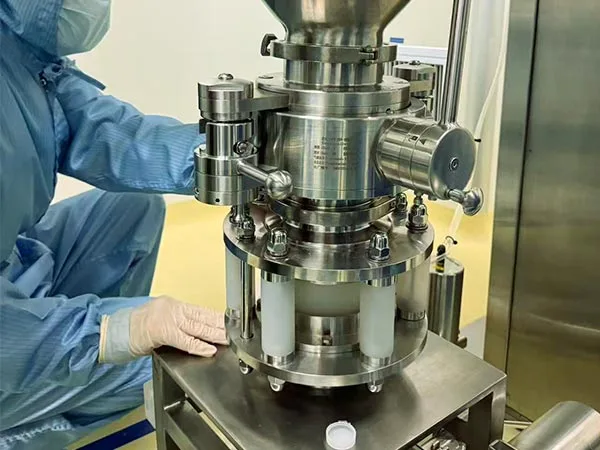
The valve can be used in compatible bioprocessing equipment where manual flow adjustment is required for process liquids and supporting systems.
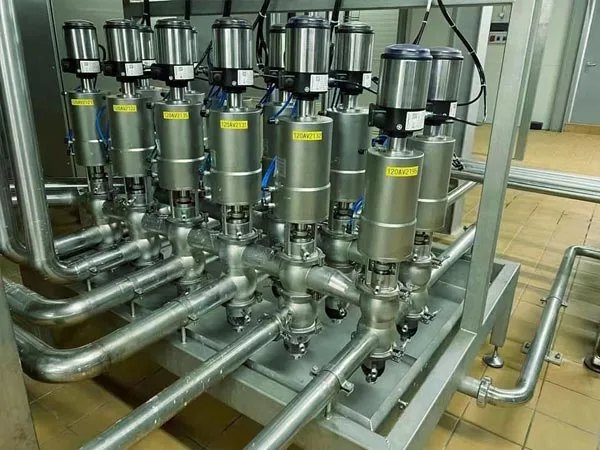
The 45° V-port is suitable for general flow adjustment in food and beverage processing, particularly where operators need to regulate product transfer manually.
The sanitary construction and polished internal surfaces make the valve suitable for compatible dairy processing systems requiring controlled product flow.
The valve can be used for controlled transfer of compatible cosmetic liquids such as creams, lotions, and liquid ingredients.
For compatible fine chemical applications, the appropriate valve body and seat material should be selected according to the chemical medium and operating temperature.
The required flow rate is one of the most important factors when selecting a V-port angle. Higher required flow capacity may favor a 60° configuration, while low-flow control may favor 30°.
If small changes in handle position need to produce gradual flow changes, a smaller V-port angle may be more appropriate.
Provide the exact process medium so the stainless steel grade and seat material can be evaluated for compatibility.
The pressure difference across the valve directly affects actual flow behavior and should be considered when determining the required valve size and V-port configuration.
Confirm the required CIP and cleaning conditions before selecting the seat material, particularly where aggressive cleaning chemicals or elevated temperatures are involved.
Confirm whether the process line uses Tri-Clamp, Butt Weld, SMS, DIN, RJT, or IDF connections before ordering.
Choose 30° when the primary requirement is precise low-flow regulation, dosing, or gradual process adjustment.
Choose 45° when the application requires a practical balance between flow control and flow capacity.
Choose 60° when higher flow capacity is more important than maximum low-flow sensitivity.
For pharmaceutical and biotechnology applications, 30° and 45° configurations are generally more suitable when precise regulation is required. For higher-flow transfer applications, the 60° configuration can provide a larger flow opening.
A V-port ball valve is used to regulate process flow by positioning a V-shaped opening between fully closed and fully open positions. It provides more practical flow adjustment than a conventional full-port on/off ball valve.
The primary difference is the size of the V-shaped opening. 30° provides finer low-flow control, 45° balances control and capacity, and 60° provides greater flow capacity.
Yes. The valve uses sanitary stainless steel construction, polished wetted surfaces, and sanitary connection options for compatible hygienic processing systems.
A 30° V-port is generally the preferred option when precise low-flow adjustment and gradual regulation are the main requirements.
Among the three configurations, the 60° V-port provides the largest opening and is generally selected when higher flow capacity is required.
The standard product described here uses a manual handle. Pneumatic or electric actuation can also be considered where automated flow control is required.
The standard surface finish is Ra ≤0.8 μm, with Ra ≤0.4 μm available as an option.
Provide the pipeline size, process medium, required flow rate, inlet and outlet pressure, operating temperature, connection standard, cleaning conditions, and preferred V-port angle. These parameters allow the appropriate valve configuration to be determined.
The standard production lead time is 2–4 weeks, depending on order quantity, specifications, and material availability. Urgent orders should be confirmed with AVM in advance.
Standard payment terms are 30% deposit with the remaining 70% paid before shipment by T/T or L/C. Small-value orders may require full payment before production.
The valves are securely packed in suitable paper and wooden cases for international transportation, helping protect the valve body, handle, and connection surfaces during shipment.
The AVM Sanitary Manual 30° 45° 60° V-Port Ball Valve provides three flow-control configurations for different process requirements: 30° for finer low-flow adjustment, 45° for balanced control, and 60° for higher flow capacity.
When requesting a quotation, provide the valve size, required flow rate, process medium, pressure differential, operating temperature, V-port angle, seat material, and connection standard so the valve can be configured according to the actual process conditions.
Address
No. 373 Oufan Road, Dongtou District, Wenzhou City, Zhejiang Province, China
Tel