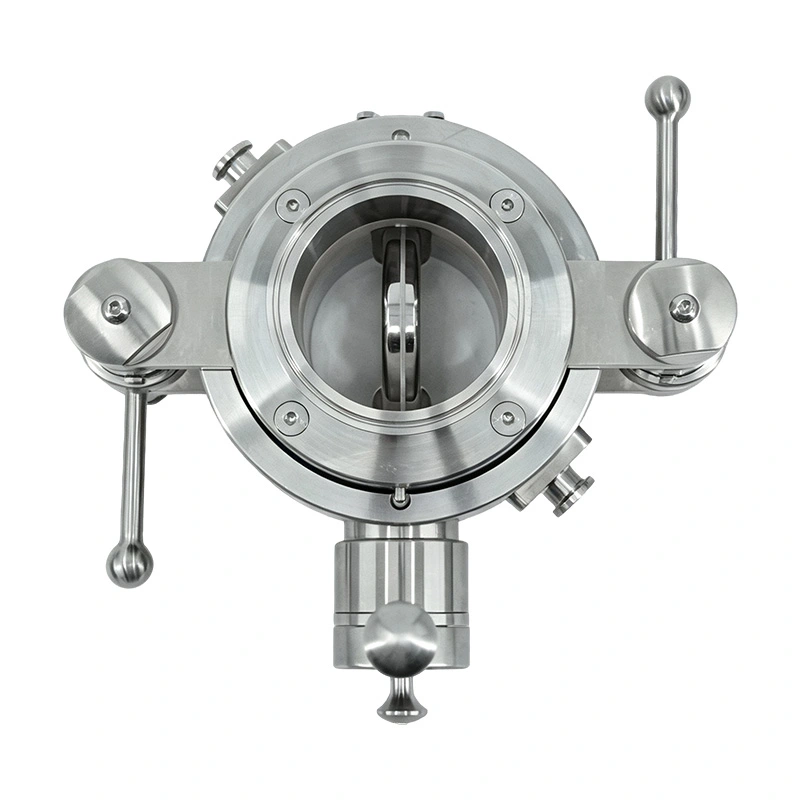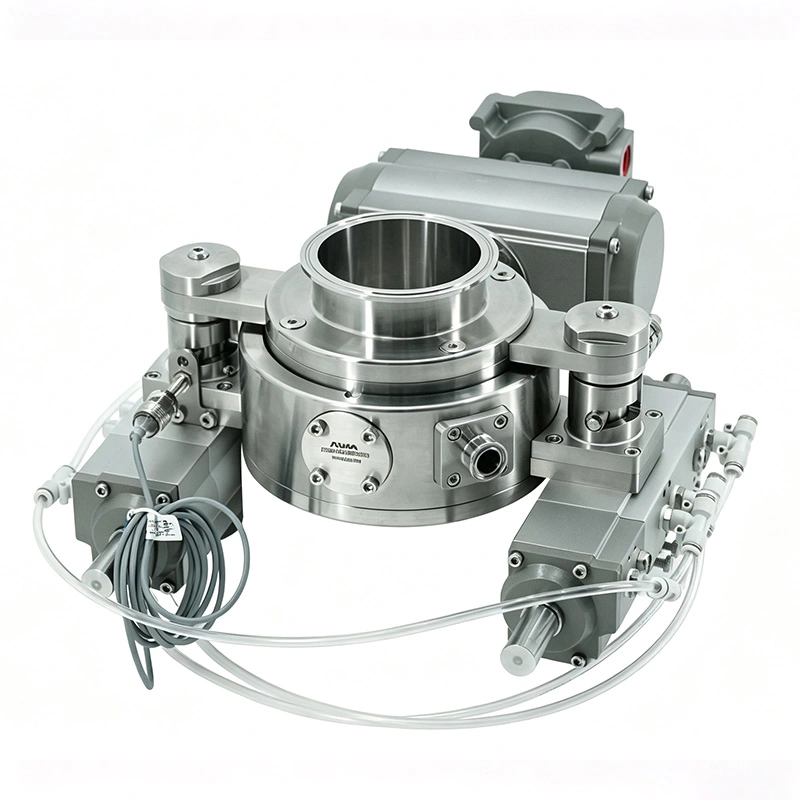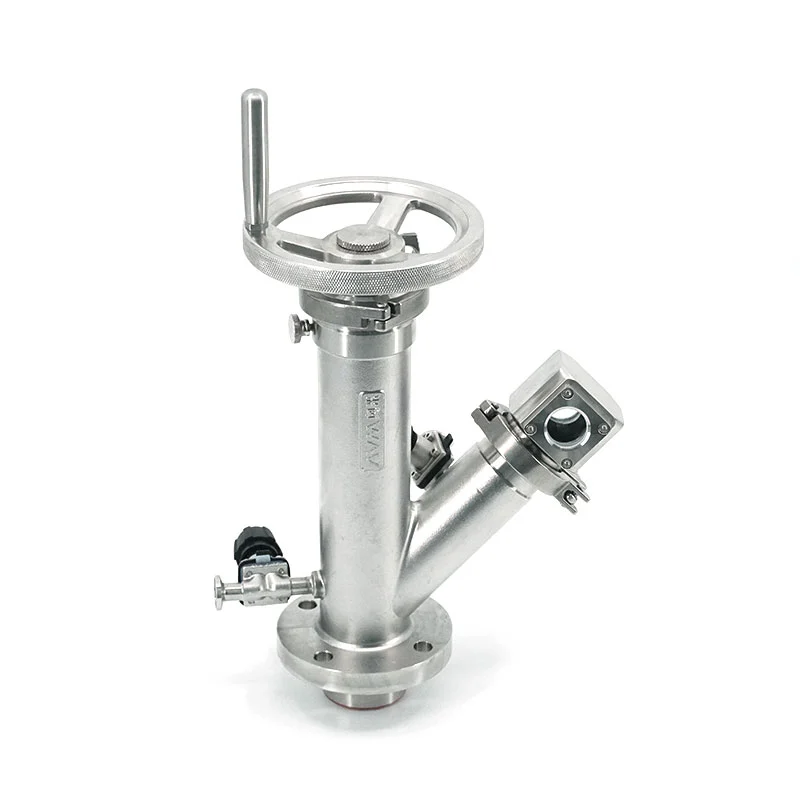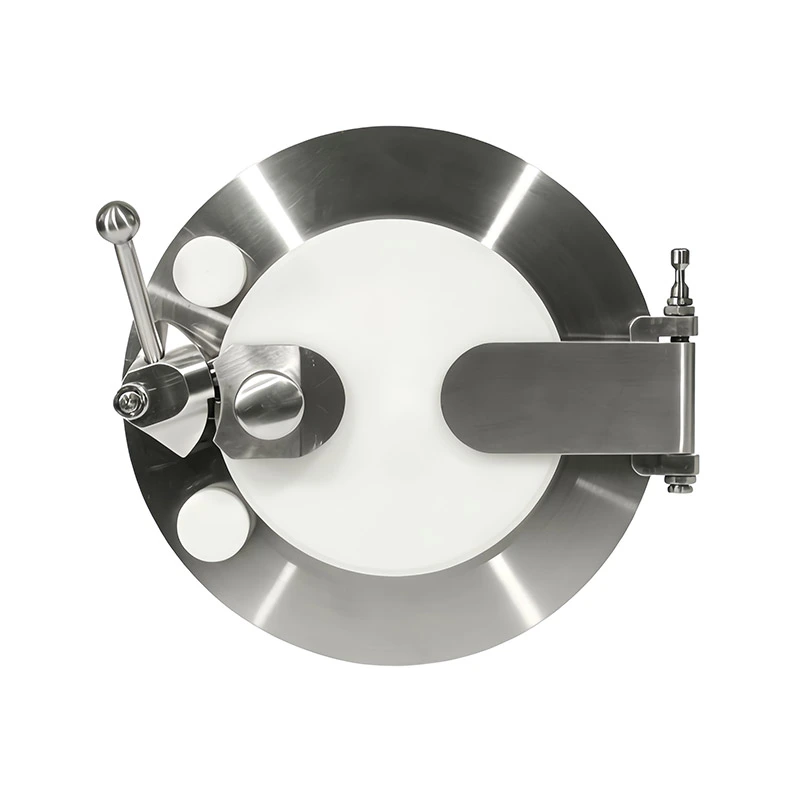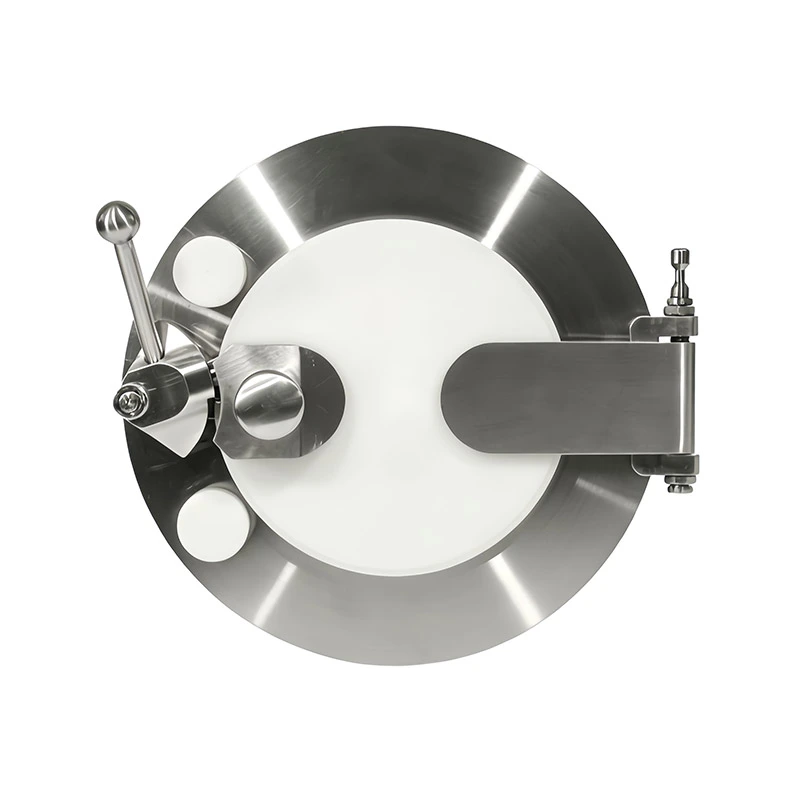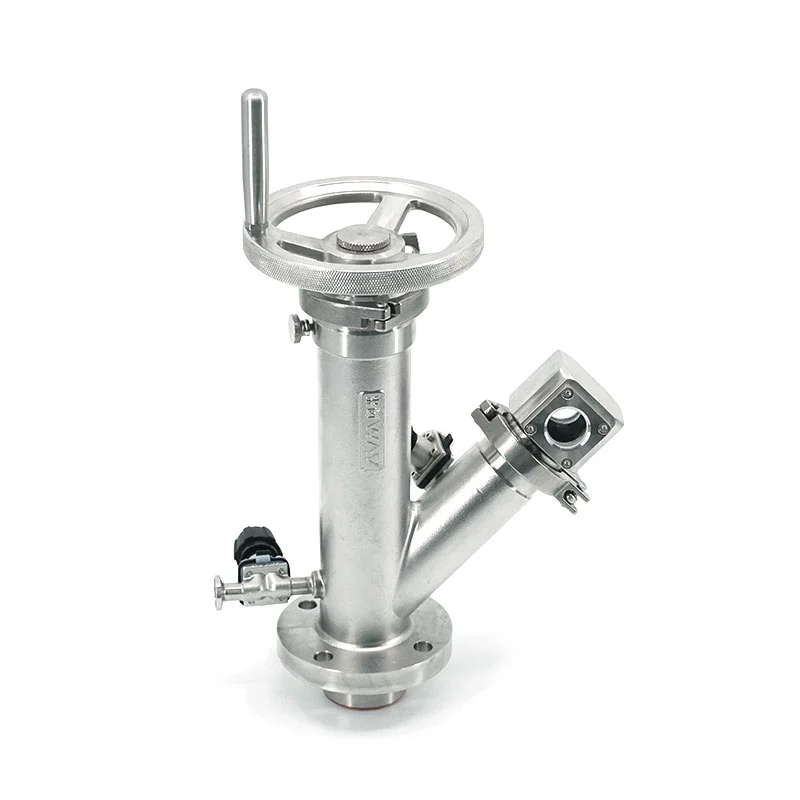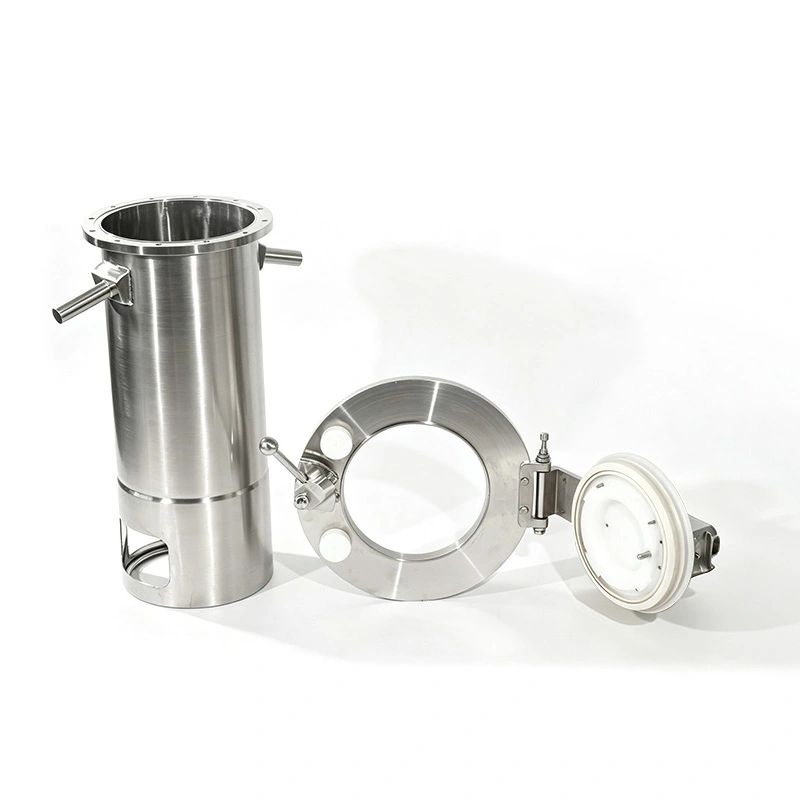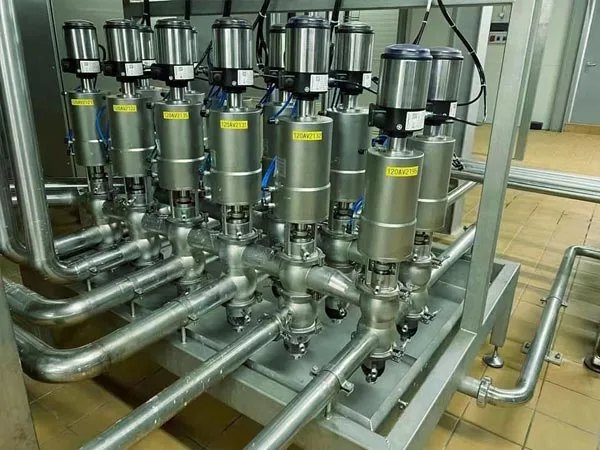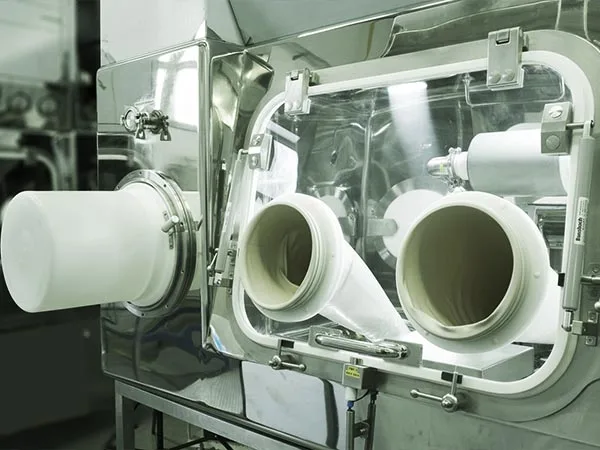
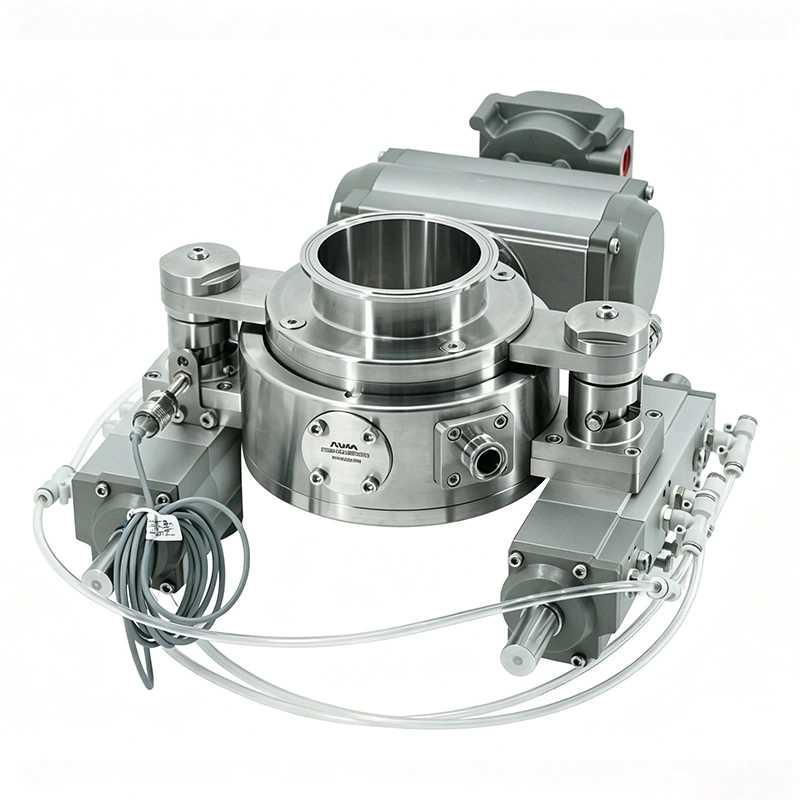
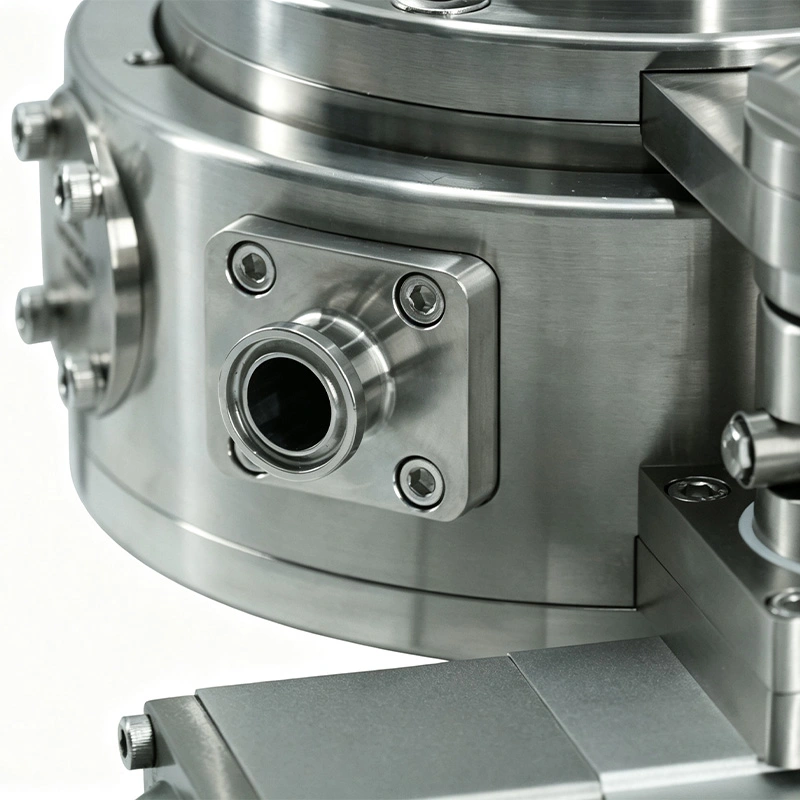
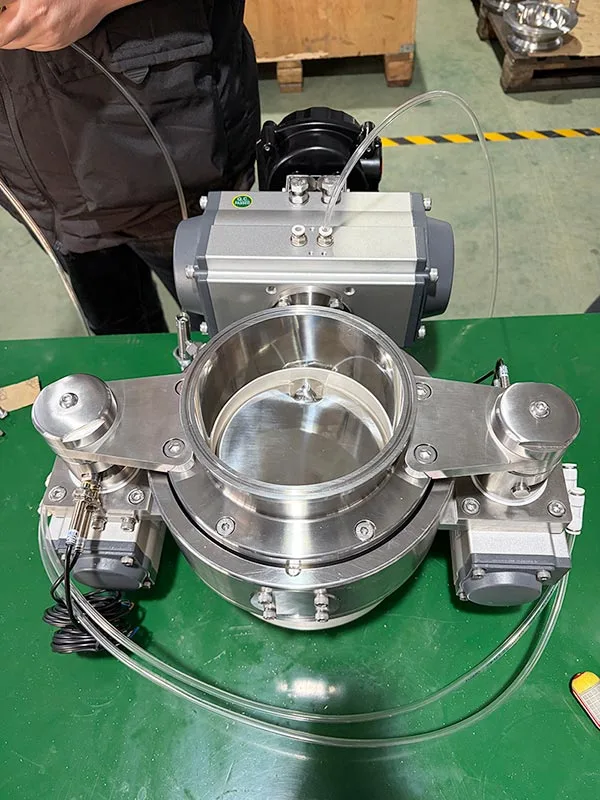
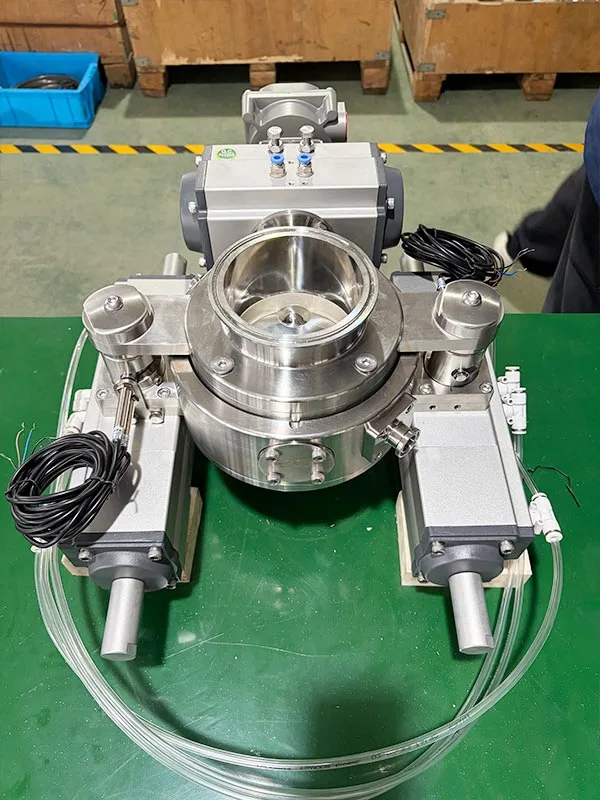
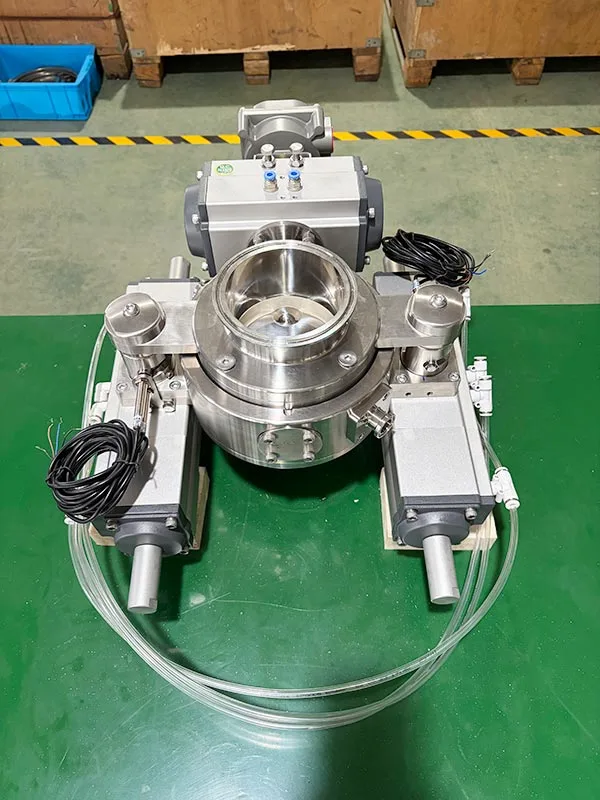
The AVM Pneumatic Automated Sanitary Split Butterfly Valve is designed for enclosed powder transfer in pharmaceutical, biotechnology, and other controlled production environments. It is used between process equipment and mobile or fixed containers for powder feeding, unloading, and transfer. The pneumatic actuator automates docking, locking, valve opening, closing, and separation, reducing manual intervention during repeated transfer cycles.
The split valve structure is designed for high-containment applications involving toxic, allergenic, or highly active powders. It can provide OEB 4 containment in the standard configuration and can be combined with a dust extraction system for OEB 5 applications with an OEL of ≤1 μg/m³. AVM provides the valve under an ISO 9001 quality management system, with CE and FDA-compliant material options available for applicable configurations.
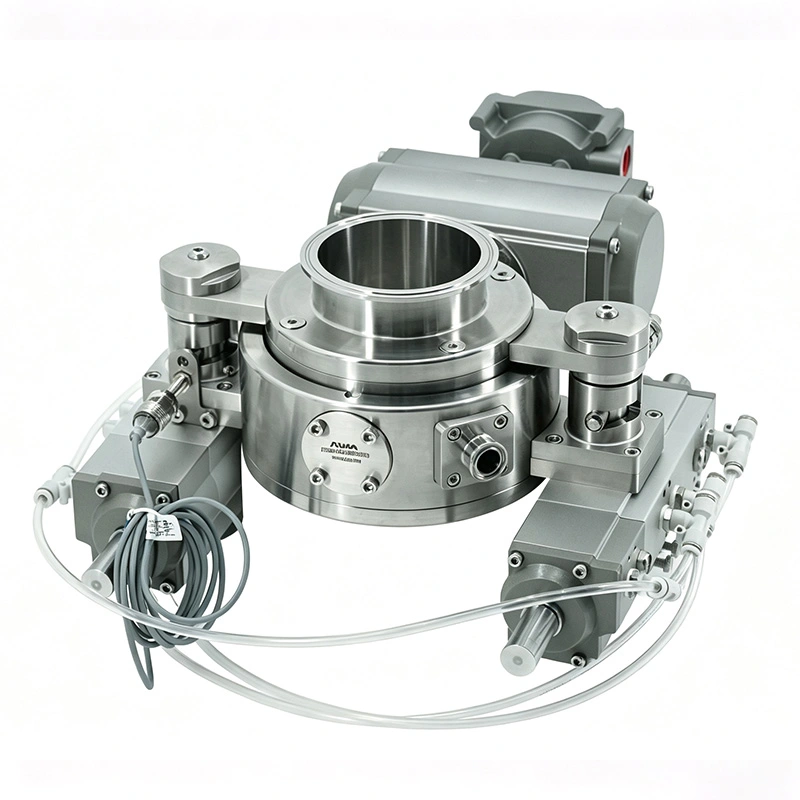
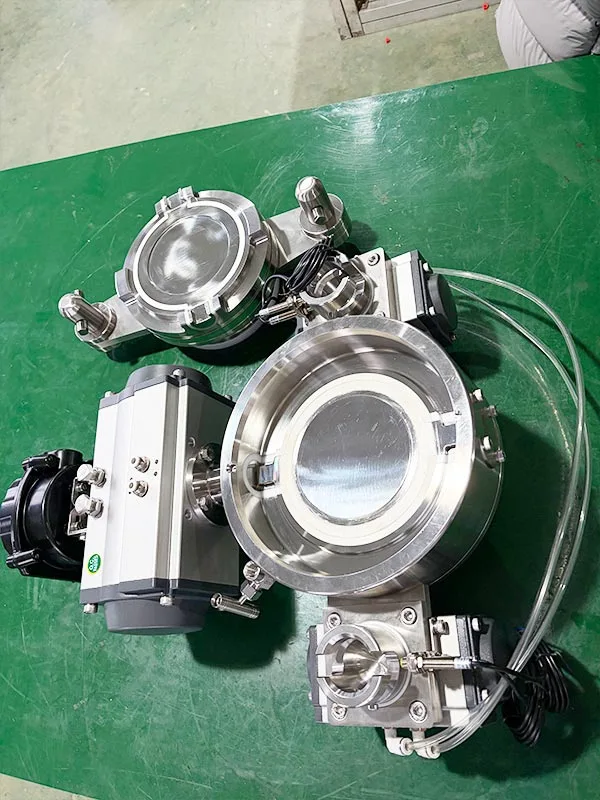
The active valve is normally installed on fixed process equipment such as reactors, dryers, mixers, storage tanks, and other powder handling equipment. It contains the pneumatic operating mechanism and controls the main valve sequence during material transfer.
The passive valve can be installed on IBCs, drums, transfer silos, and receiving containers. Its configuration allows mobile containers to connect to fixed process equipment while maintaining an enclosed material path during transfer.
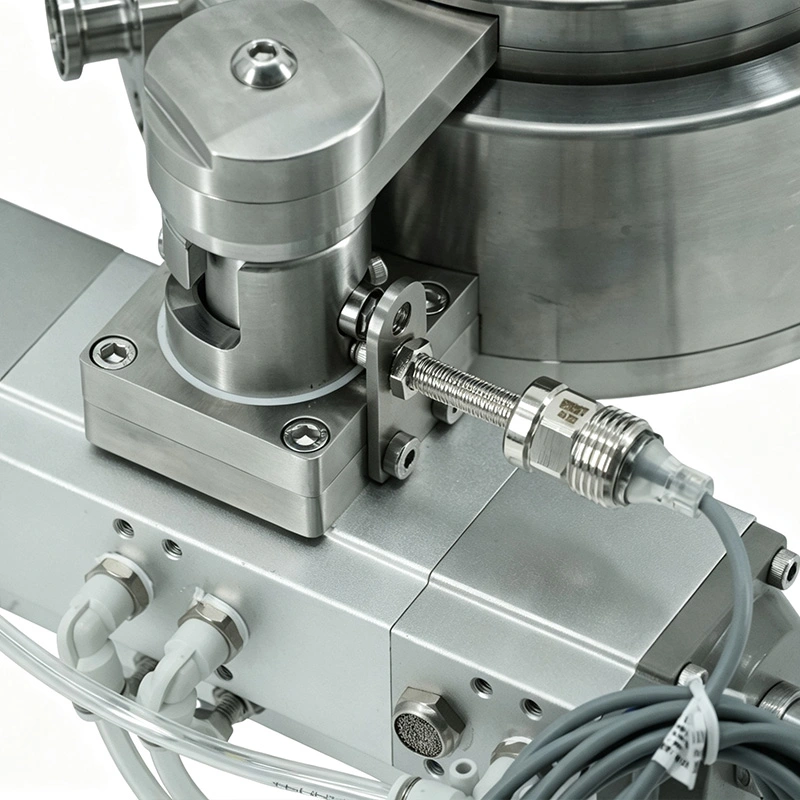
Three pneumatic actuators are integrated into the active valve. They operate the locking mechanism and valve plate according to the programmed sequence. This arrangement allows the valve to be incorporated into automated powder handling equipment without requiring continuous manual operation.
The active and passive halves are positioned together before material transfer. The pneumatic system operates the mechanical locking mechanism after the two halves are correctly aligned, creating the required sealed connection between the process equipment and receiving container.
Once the docking and locking conditions are confirmed, the pneumatic actuator moves the valve plate to the open position. The connected halves then form an enclosed transfer channel for powder movement.
After material transfer, the valve plate closes before the locking mechanism is released. The two halves can then be separated from each other. Position feedback devices can be added to confirm the operating state to the plant control system.
The split structure is designed to limit powder release during connection, transfer, and separation. The standard configuration can support OEB 4 containment without an external dust extraction system, subject to the complete system design and applicable testing requirements.
For applications involving highly active pharmaceutical ingredients or highly toxic powders, the valve can be configured with an extraction port and compatible dust collection equipment. This configuration is intended for applications requiring OEB 5 containment with an OEL of ≤1 μg/m³.
The extraction system is an optional configuration rather than a standard component. It can be considered when the customer's process requires a higher containment level than the basic valve configuration provides. Final selection should be based on the material properties, process conditions, and containment assessment.
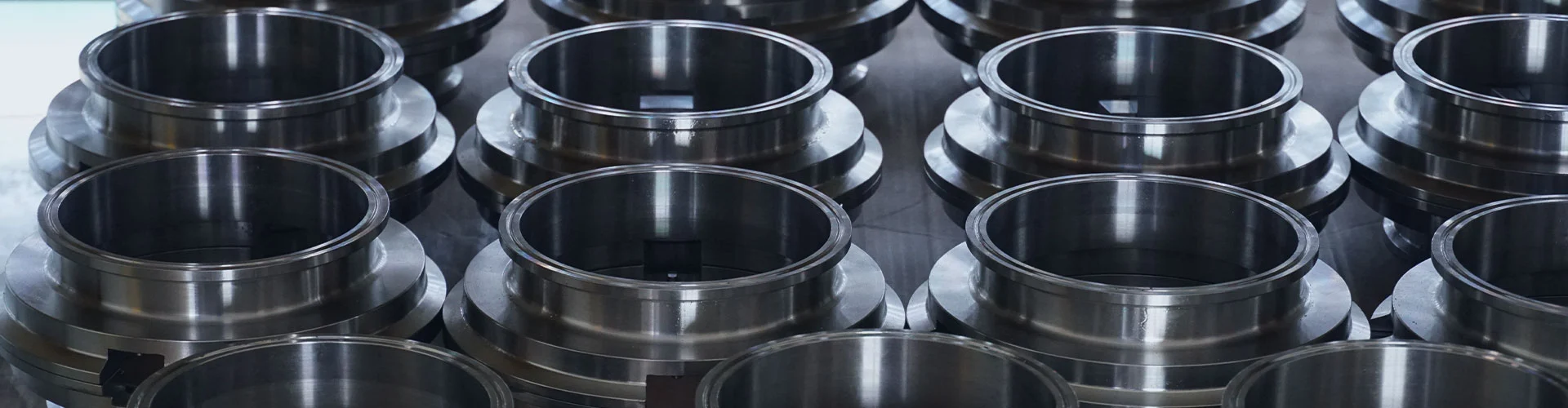
Product-contact components are manufactured from 316L stainless steel. This material provides corrosion resistance and is widely used in pharmaceutical and sanitary processing equipment where cleanability and material compatibility are important.
Available sealing materials include EPDM, silicone, and FKM (Viton). FDA-compliant material options can be specified according to the application. Seal selection should consider product compatibility, cleaning chemicals, operating temperature, and sterilization conditions.
The product-contact surface can be finished to Ra ≤ 0.4 μm, while the external surface can reach Ra ≤ 0.8 μm. The smooth contact surface helps reduce powder retention and supports cleaning and inspection procedures.
The equipment can be configured for WIP (Wash-In-Place) processes. The cleaning method should be selected according to the powder characteristics, cleaning agent, flow conditions, and validation requirements of the production line.
The valve can support SIP (Steam-In-Place) applications when the selected materials, seals, and configuration are suitable for the required sterilization conditions. Process temperature and exposure time should be confirmed during system design and validation.
The split structure allows the passive side to be separated from the active side after the transfer cycle. Its sanitary construction and reduced material retention help simplify cleaning and inspection between batches, particularly where different powders are processed on the same production line.
The pneumatic configuration can be integrated with PLC, DCS, and SCADA systems through suitable solenoid valves and control components. This allows valve operation to become part of the overall material transfer sequence.
Optional position feedback devices can provide information about valve status. The control system can use these signals to confirm whether the valve is correctly positioned before allowing the next process step.
The control sequence can be configured so that valve opening is permitted only after the docking and locking conditions are satisfied. Closing and separation can also be coordinated with the production system to reduce the possibility of incorrect operation.
Available sizes range from DN50 to DN250, covering approximately 2 to 10 inches. The appropriate size should be selected according to the transfer line diameter, powder flow requirement, vessel outlet, and existing process connection.
The valve uses sanitary Tri-Clamp connections and can be configured for connection standards including DIN, BS 4825, 3-A, and JIS. Connection selection should match the customer's existing piping and process equipment.
Available accessories include an active cleaning cap, active valve plug, passive valve protector, POM passive valve, automatic position feedback device, control unit, and solenoid valve. Dust extraction components can also be added when a higher containment level is required.
Closed-Loop Transfer of Antitumor HPAPI
A high-tech pharmaceutical company in China produces highly active antitumor raw materials (HPAPI). Because the powders are toxic and allergenic, its existing transfer process presented concerns related to dust leakage, operator exposure, cross-contamination, and production efficiency. The project required an enclosed transfer solution suitable for OEB 5 protection and GMP-oriented production.
The company selected the AVM DN100 Pneumatic Automated Sanitary Split Butterfly Valve for powder transfer between a reactor and an IBC tank. The pneumatic control system was connected to the factory PLC, allowing docking, opening, material transfer, closing, and separation to be included in the automated production sequence. A dust extraction component was also installed to improve containment performance.
After 18 months of operation, the system maintained the reported OEB 5 containment standard, with workshop dust concentrations consistently below 1 μg/m³. Automated operation increased production efficiency by more than 40%, while batch cross-contamination was eliminated and the reported product qualification rate reached 100%.
The system also passed the customer's FDA and GMP compliance verifications and supported the company's continuous production process. Automated valve operation reduced manual intervention during material transfer and helped lower operating, maintenance, and compliance-related workload.
| Item | Specifications |
| Valve Size | DN50 (2"), DN80 (3"), DN100 (4"), DN150 (6"), DN200 (8"), DN250 (10") |
| Containment Performance | OEB 4 without extraction system; OEB 5 with extraction system, OEL ≤ 1 μg/m³ |
| Operation Mode | Manual operation, pneumatic actuation, full automatic intelligent control |
| Cleaning & Sterilization | WIP (Wash-In-Place), SIP (Steam-In-Place), validated process temperature sterilization |
| Product Contact Material | Stainless Steel 316L |
| Sealing Material | EPDM, Silicone, FKM (Viton), with FDA 21 CFR-compliant options |
| Surface Finish | Product contact surface: Ra ≤ 0.4 μm; External surface: Ra ≤ 0.8 μm |
| Connection Type | Tri-Clamp |
| Connection Standards | DIN, BS 4825, 3-A, JIS |
| Optional Accessories | Active cleaning cap, active valve plug, passive valve protector, POM passive valve, automatic position feedback device, control unit, solenoid valve |
| Certifications | ISO 9001, CE, FDA-compliant material options |
Yes. The AVM Pneumatic Automated Sanitary Split Butterfly Valve can be equipped with solenoid valves, limit switches, and position feedback devices for connection with PLC, DCS, or SCADA systems. The exact interface and signal configuration should be confirmed according to the customer's control system.
The standard configuration can be used for OEB 4 applications without an extraction system. For processes handling highly potent or highly toxic powders that require OEB 5 containment and an OEL of ≤1 μg/m³, a suitable extraction and dust collection system can be added.
The manual configuration is suitable for applications where operators perform the transfer sequence directly and production frequency is relatively low. The pneumatic version is more suitable for repeated or continuous production because docking, opening, closing, and separation can be incorporated into an automated control sequence.
EPDM, silicone, and FKM (Viton) are available. Selection depends on the powder, cleaning chemicals, operating temperature, and sterilization conditions. For pharmaceutical applications, the selected material should also be checked against the customer's FDA and validation requirements.
The available range is DN50 to DN250. The correct size depends on the process connection, transfer capacity, powder characteristics, and existing equipment. AVM can configure the active and passive valve halves according to the customer's installation requirements.
AVM manufactures under an ISO 9001 quality management system. CE and FDA-related compliance options are available according to the selected valve configuration, materials, and project requirements. Specific certificates and documentation should be confirmed during technical specification and quotation.
Address
No. 373 Oufan Road, Dongtou District, Wenzhou City, Zhejiang Province, China
Tel