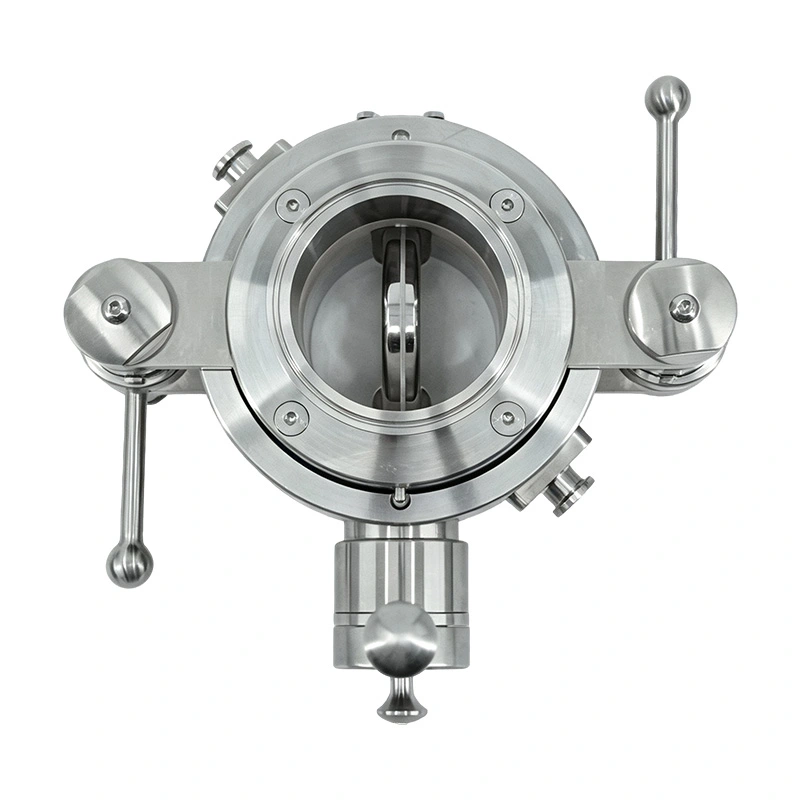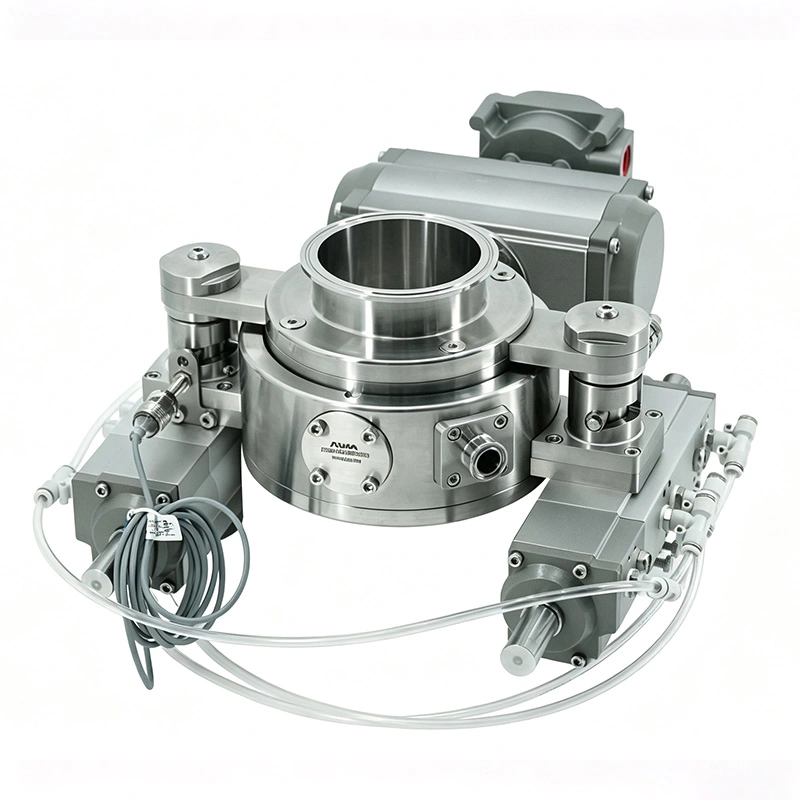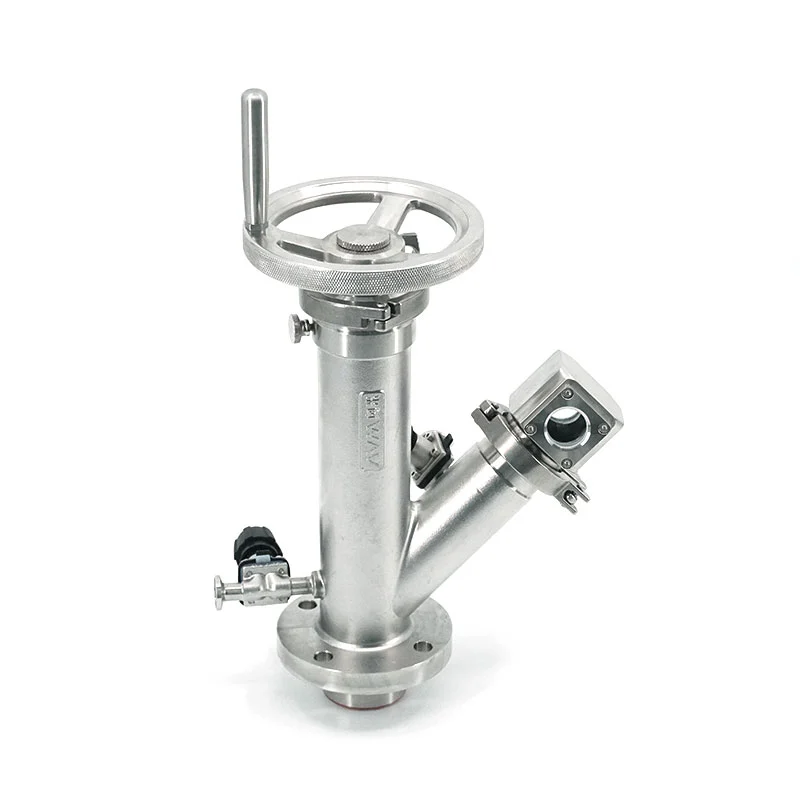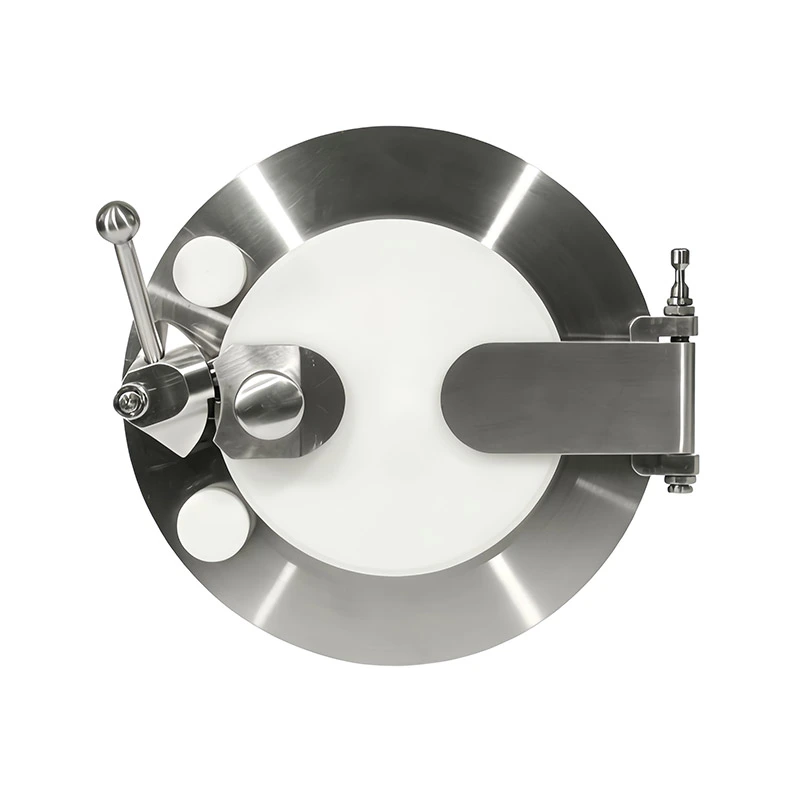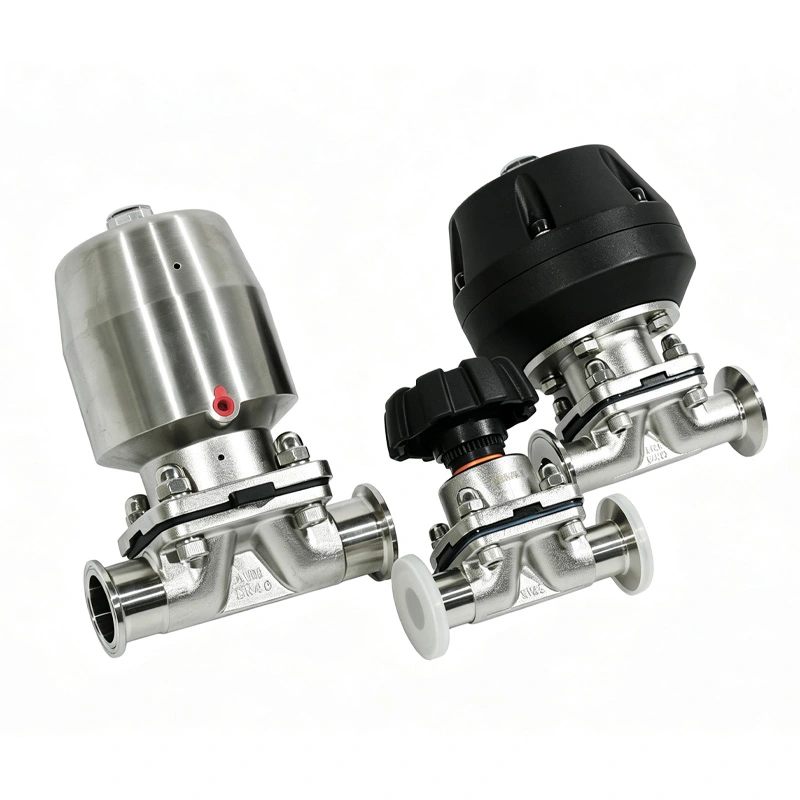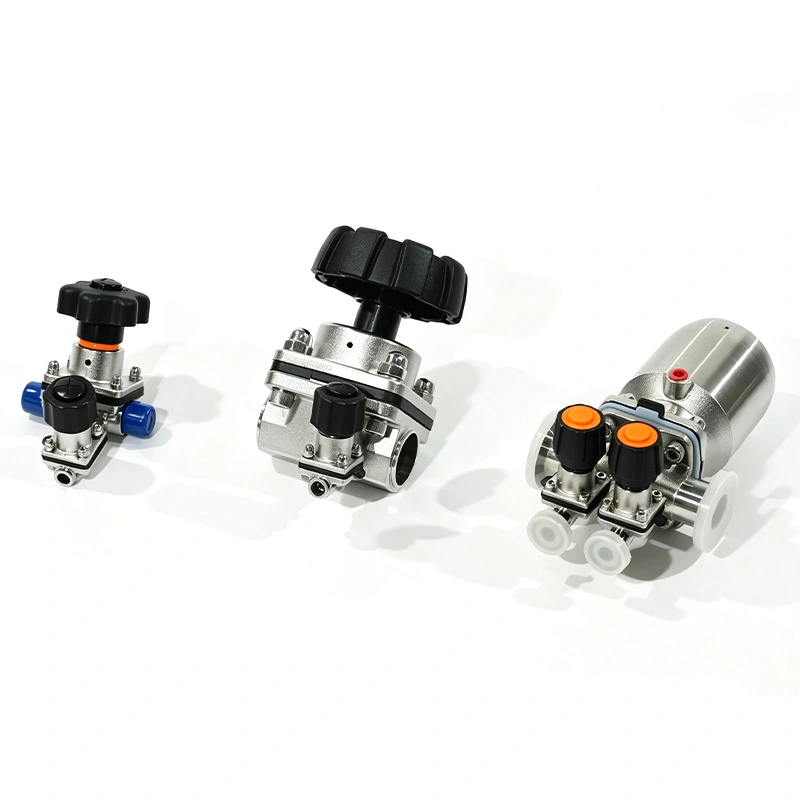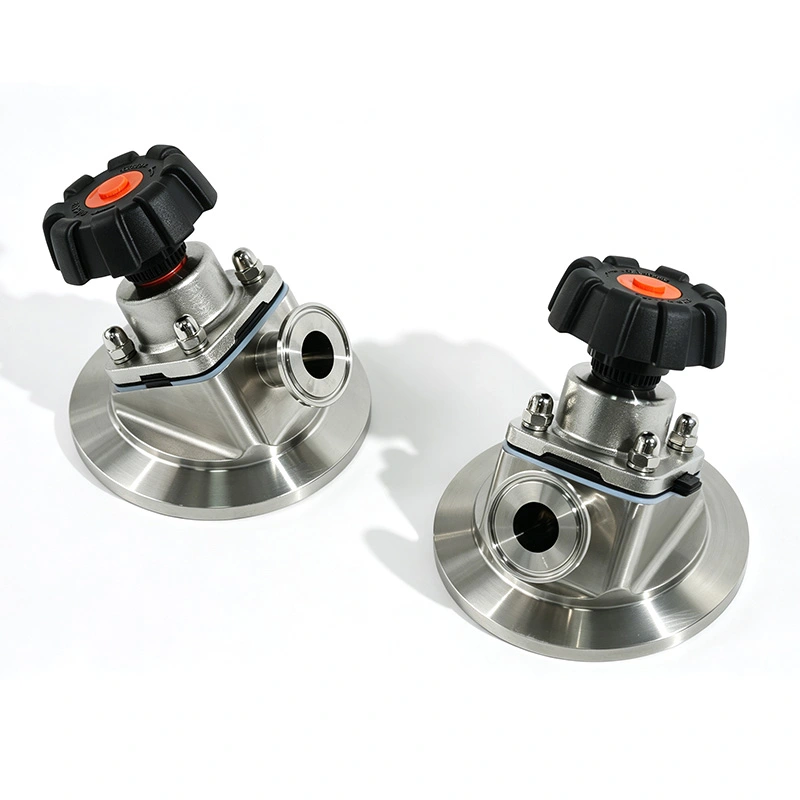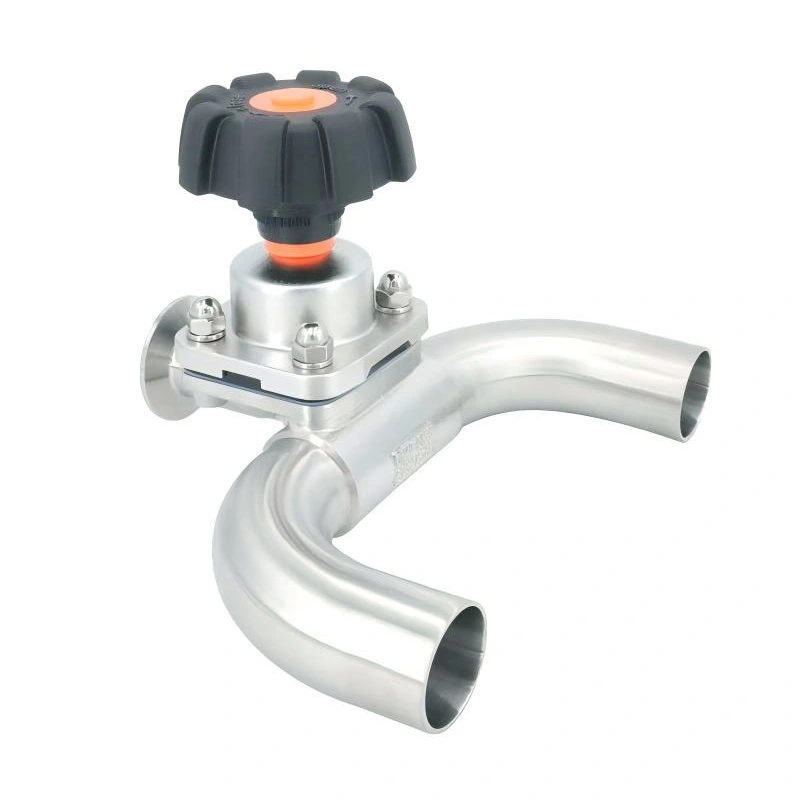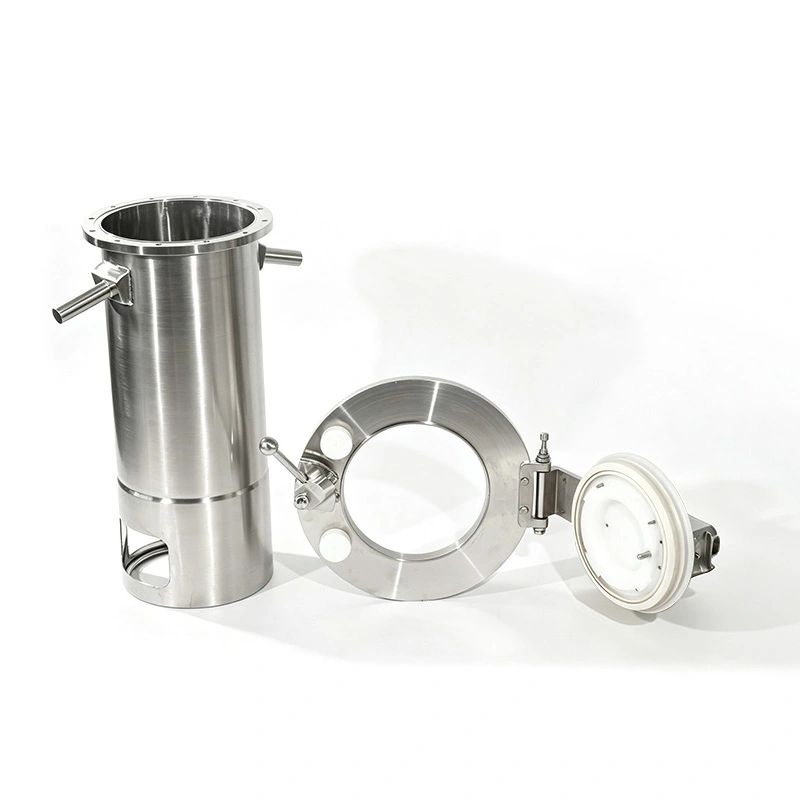
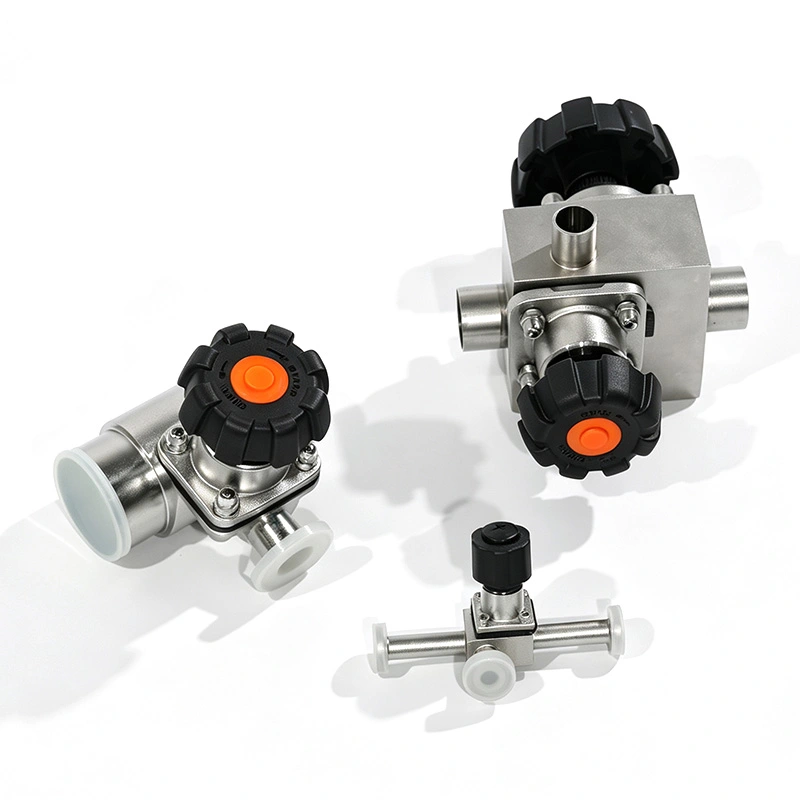
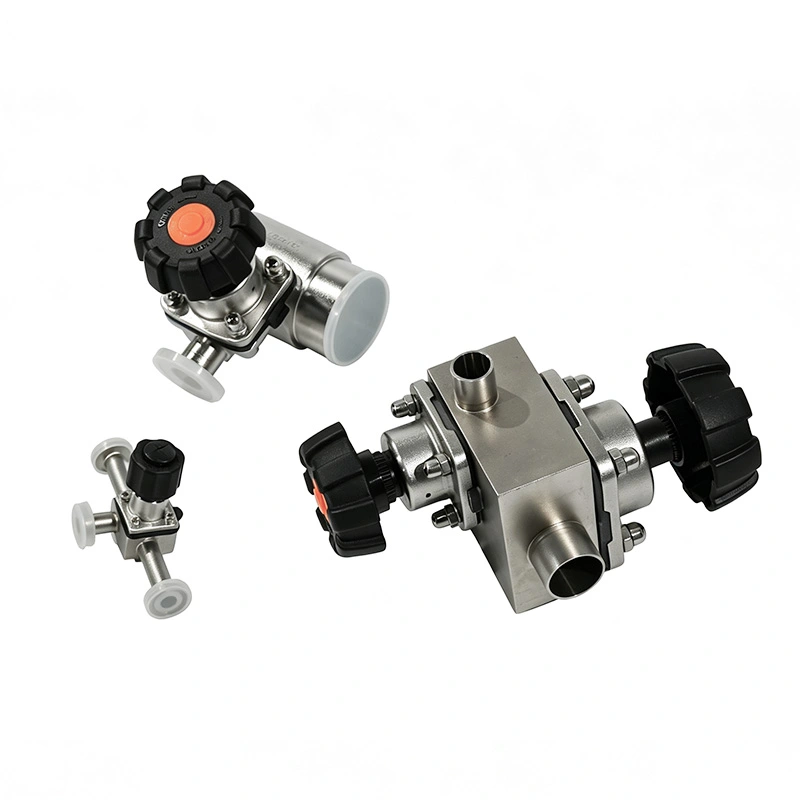
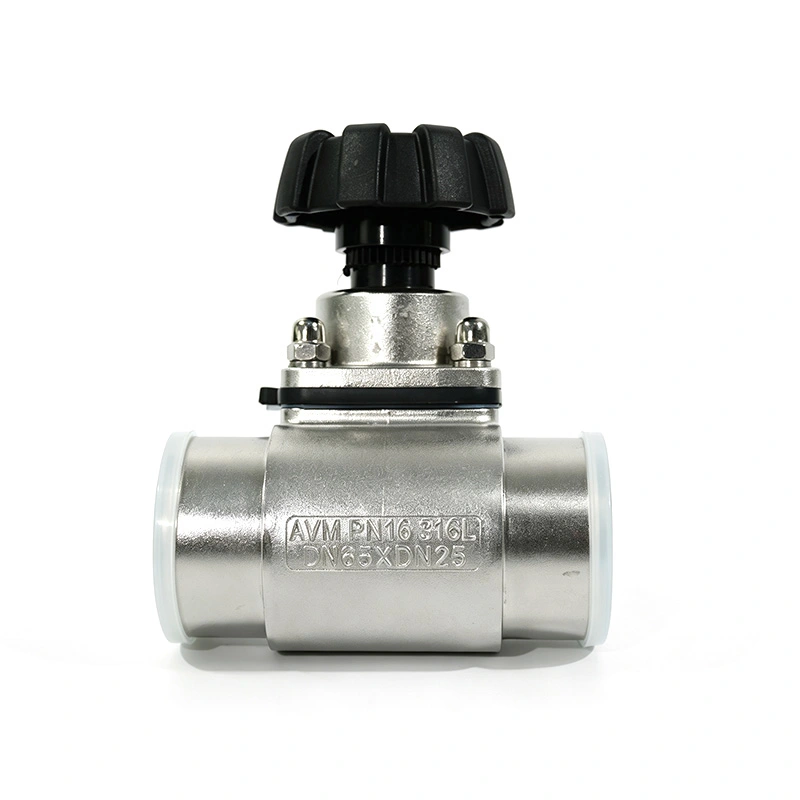
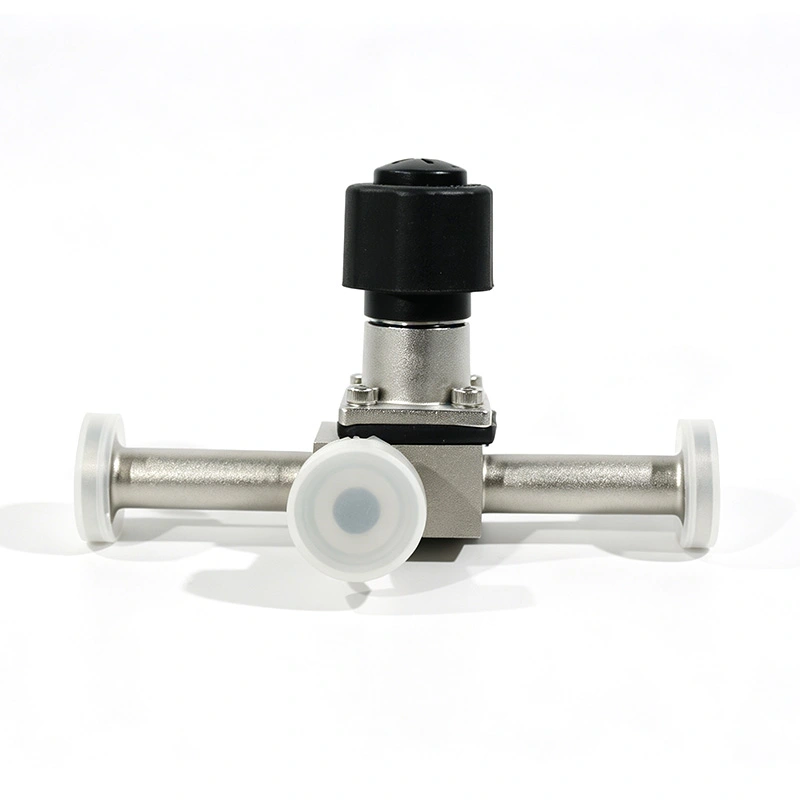
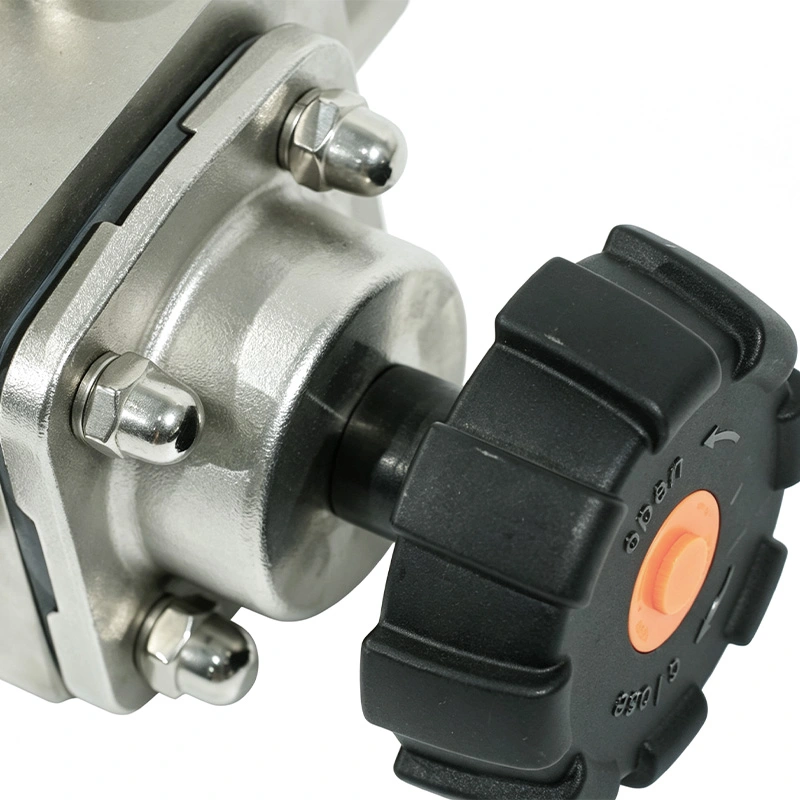
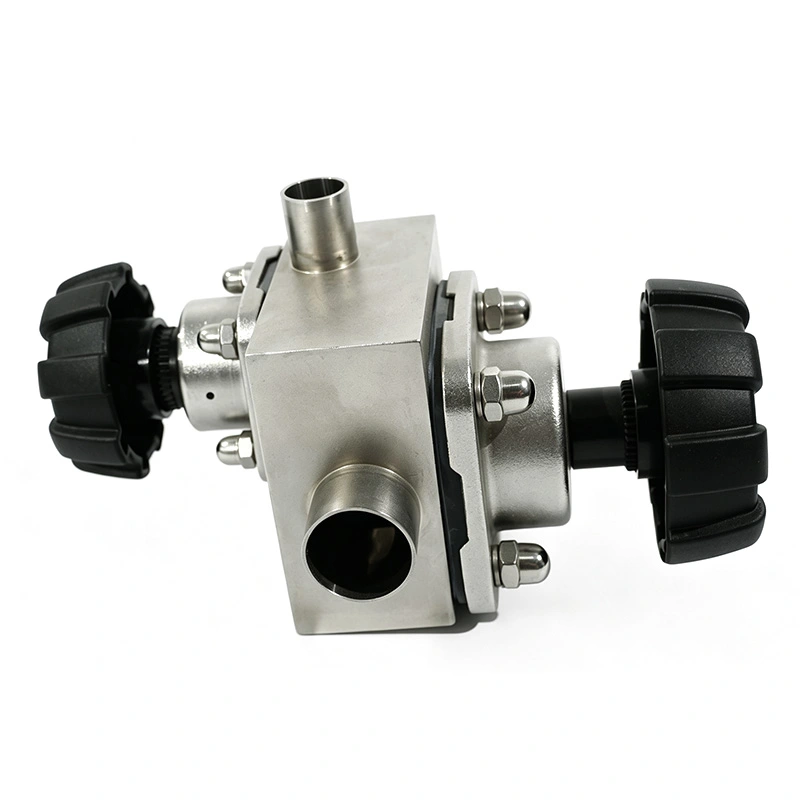
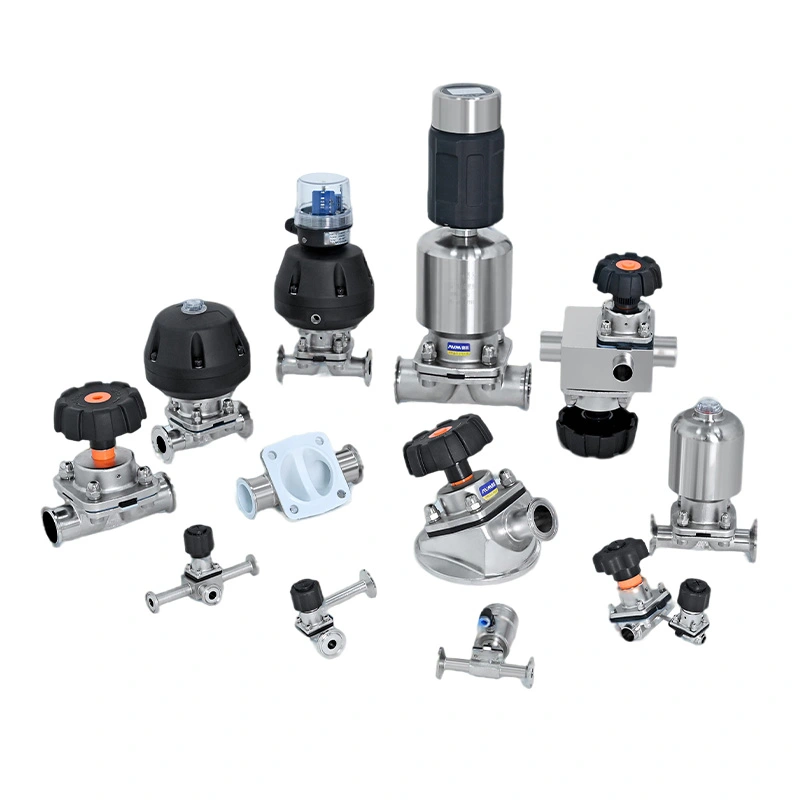
Unlike standard two-way diaphragm valves that only provide simple on/off control, the three-way configuration allows operators to divert, combine, or select process flow between different pipelines. The diaphragm creates a complete barrier between the process media and operating mechanism, helping prevent contamination and external leakage while supporting reliable CIP and SIP cleaning.
The Sanitary 3-Way Diaphragm Valve is manufactured from 316L stainless steel with smooth, electropolished product-contact surfaces and can be equipped with manual or pneumatic actuation for different process control requirements.
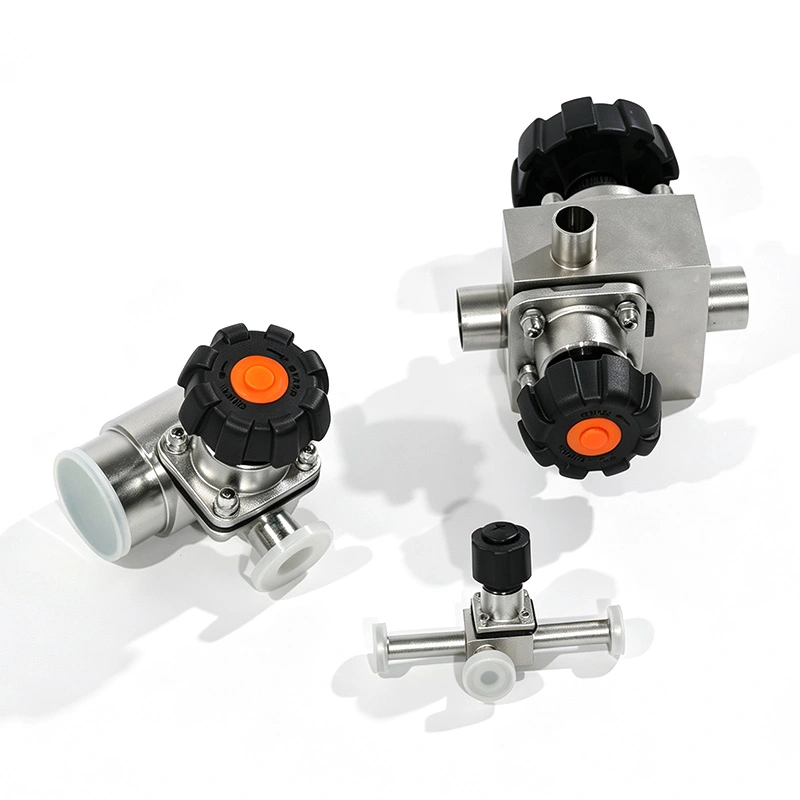
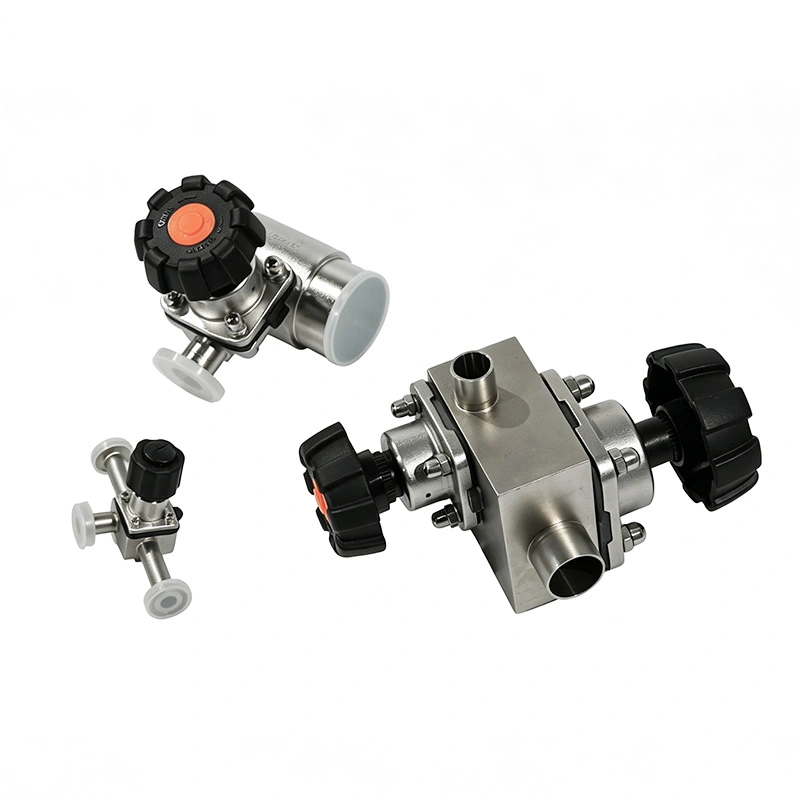
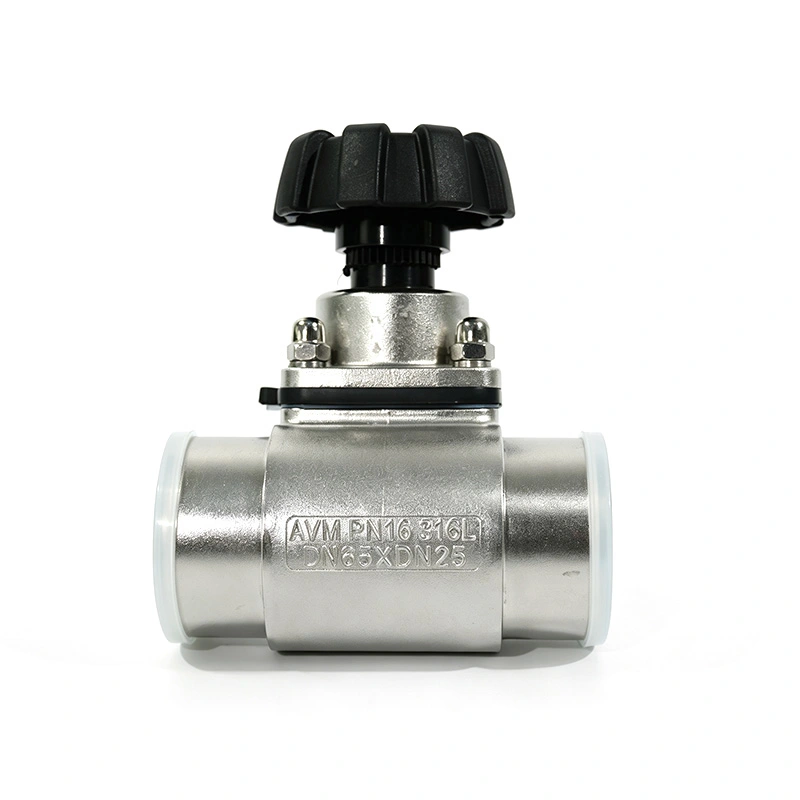
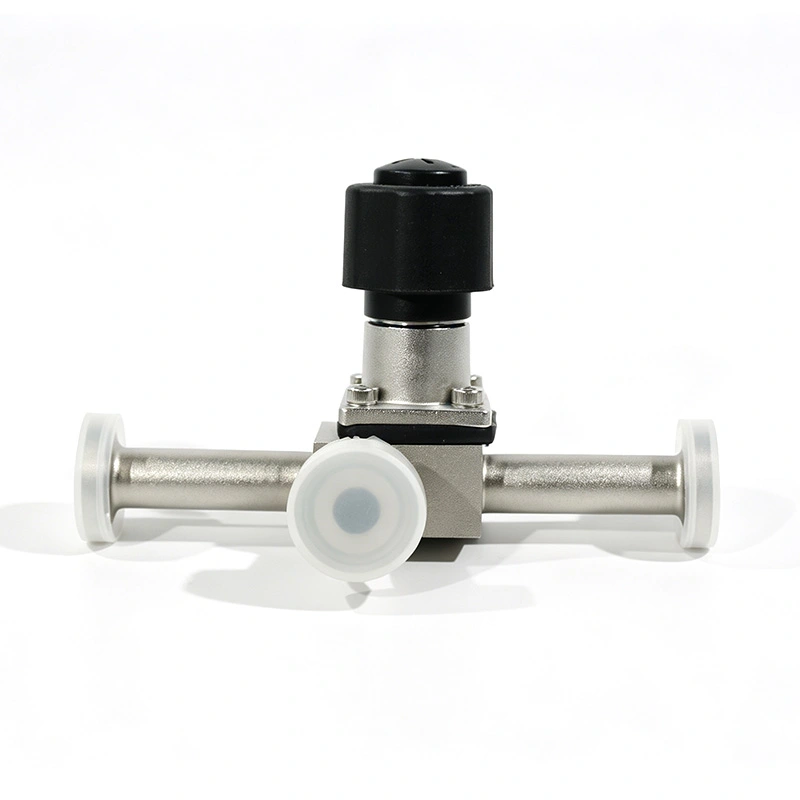
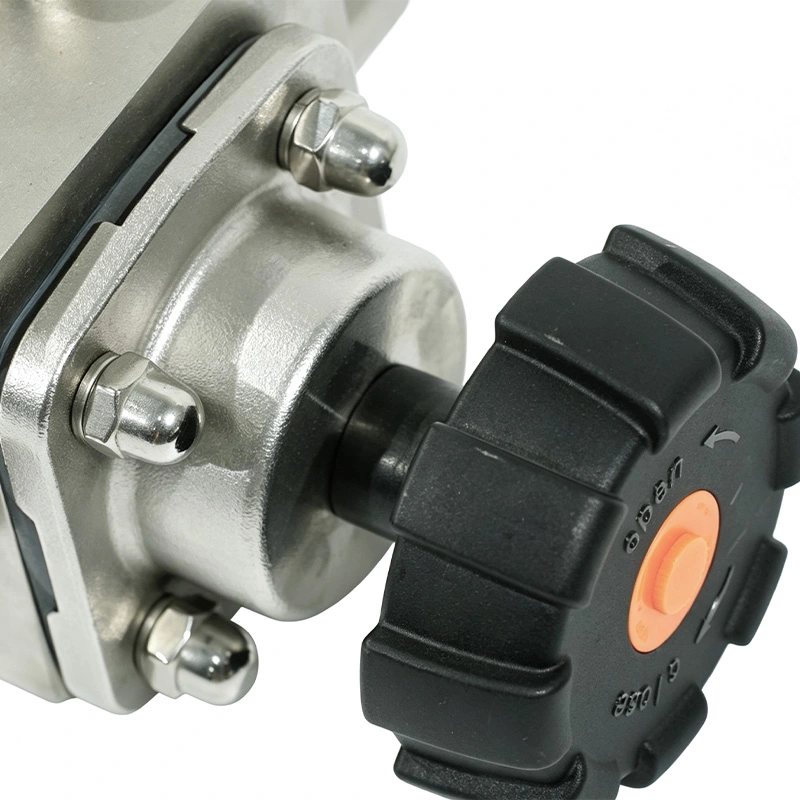
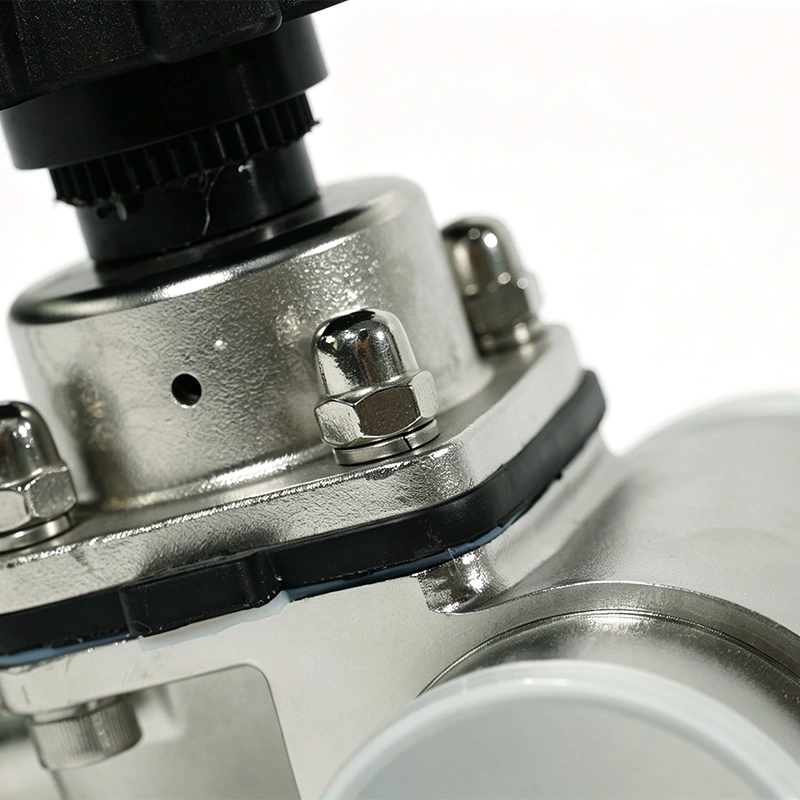
The three-port structure allows the AVM valve to manage multiple process routes from a single valve assembly. Depending on the selected body configuration and operating position, the valve can direct fluid from one inlet to either outlet or combine flow from different lines into a common outlet.
This configuration is particularly useful when production systems require frequent ingredient selection, media transfer, pipeline switching, or batch changeover without installing several individual shut-off valves.
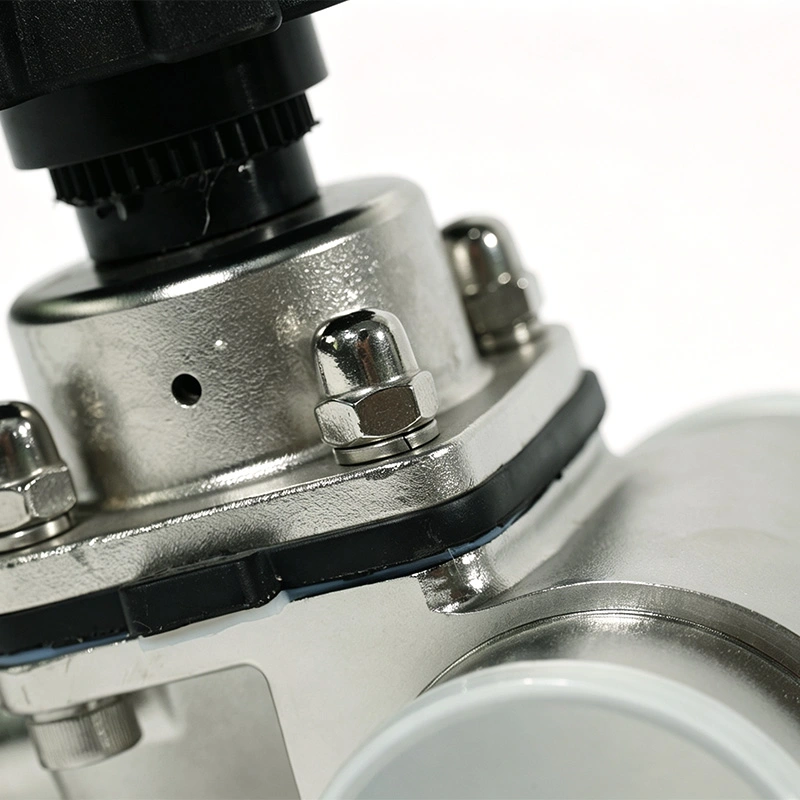
The flexible diaphragm separates the process fluid from the valve stem and actuator, creating a contamination-resistant sealing barrier. This design eliminates the need for conventional packing around the stem and helps prevent process leakage during repeated switching operations.
The smooth internal geometry also reduces areas where liquid can remain trapped, supporting easier cleaning and improved product recovery.
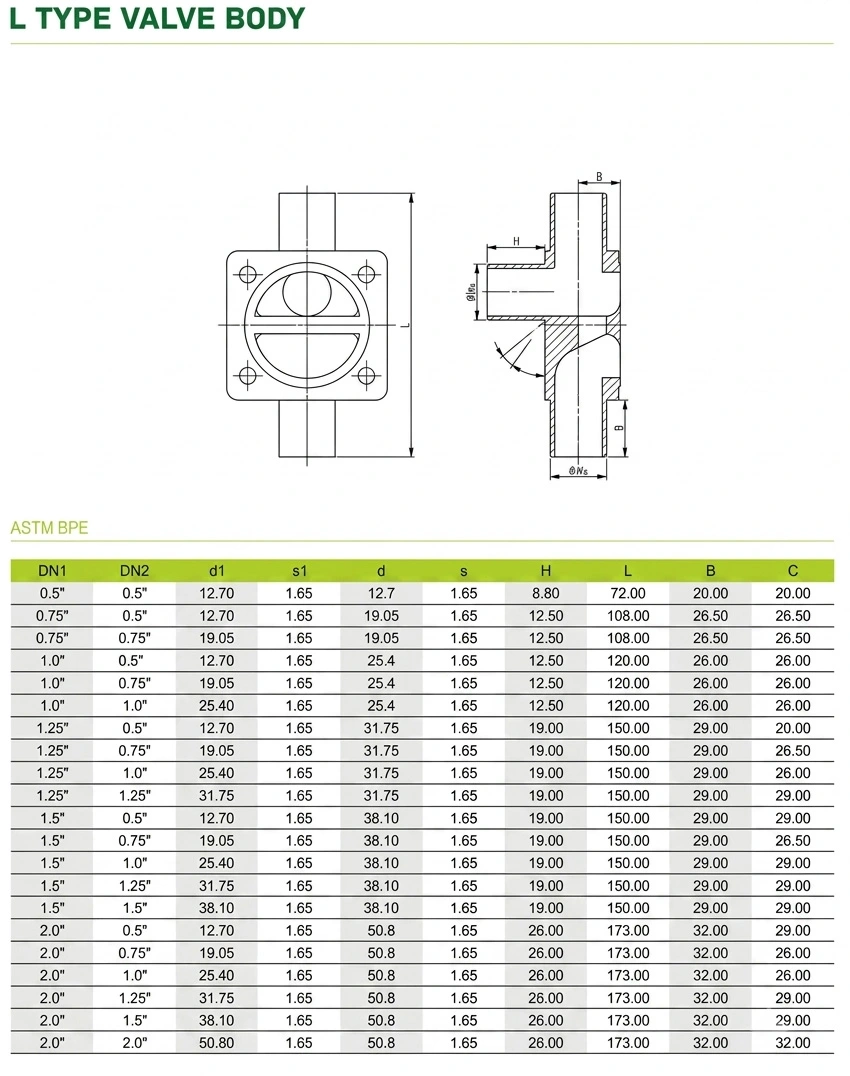
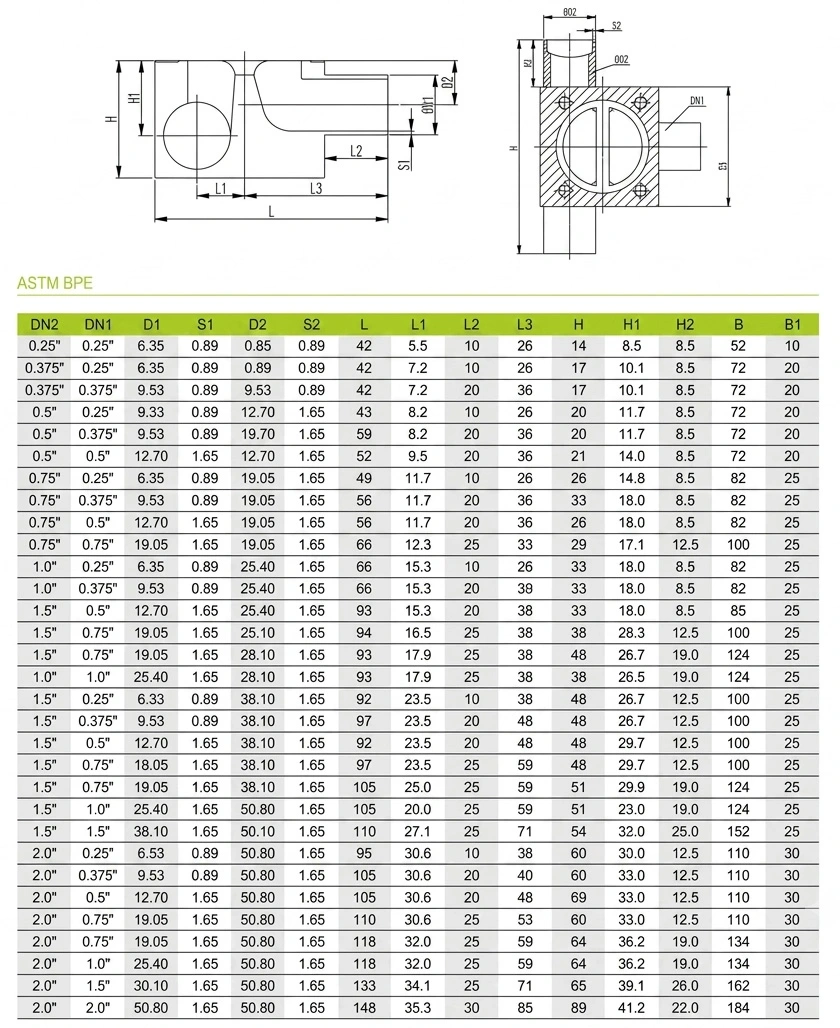
The AVM Sanitary 3-Way Diaphragm Valve is available in T-body and L-body designs to match different flow-routing requirements. The T-body configuration is suitable for distributing or combining flow between three connected pipelines, while the L-body configuration is better suited to applications requiring directional switching between two flow paths.
Sanitary Tri-Clamp or butt-weld connections simplify installation and maintenance. Product-contact surfaces can be electropolished to Ra ≤ 0.4 μm, helping reduce residue retention and supporting hygienic production.
The valve is compatible with CIP and SIP procedures, making it suitable for production lines where frequent cleaning and sterilization are required.
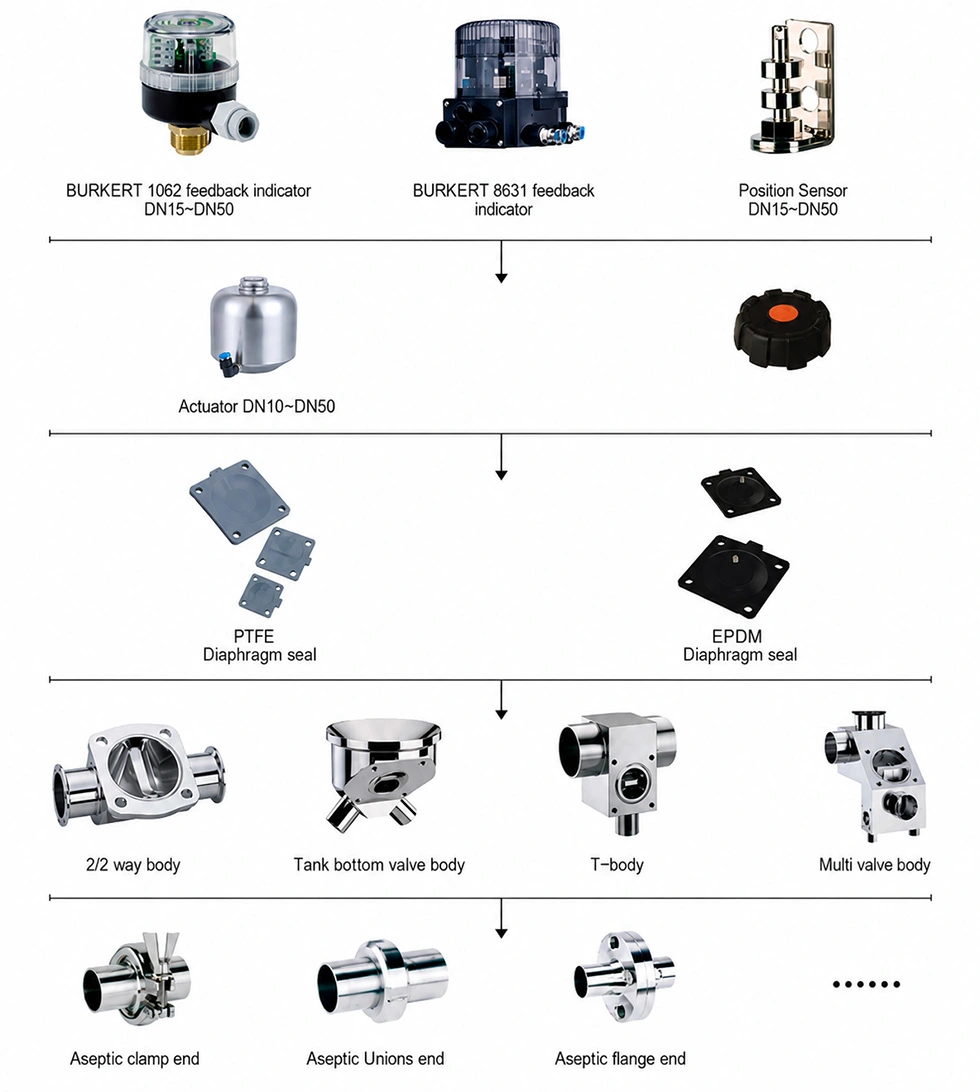
The valve can be operated manually for straightforward process systems or equipped with a pneumatic actuator for automated switching. Pneumatic operation allows integration with PLC-based control systems, making the valve suitable for automated batch processing and multi-line media distribution.
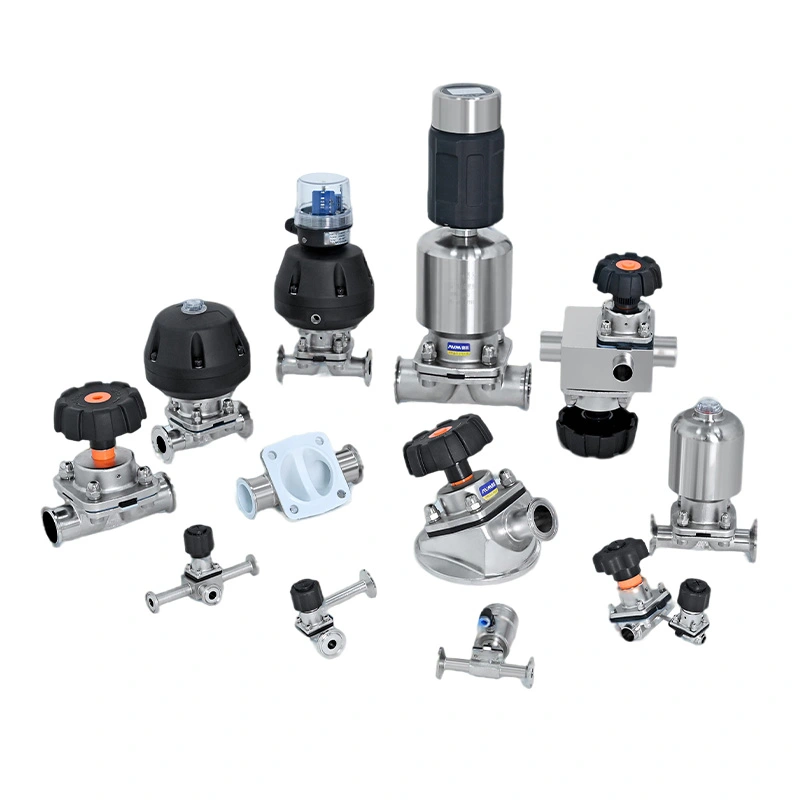
The AVM Sanitary 3-Way Diaphragm Valve is used for pharmaceutical liquid transfer, biotechnology processing, vaccine production, dairy processing, beverage manufacturing, food ingredient handling, and other aseptic fluid systems where hygienic flow distribution and reliable isolation are required.
| Parameter | Specification |
| Valve Type | Sanitary 3-Way Diaphragm Valve |
| Body Configuration | T-Body / L-Body |
| Available Size | DN10–DN50 (1/2"–2") |
| Maximum Working Pressure | 0.6 MPa (6 bar) |
| Body Material | SS316L Stainless Steel |
| Diaphragm Materials | EPDM, Silicone, FKM, EPDM + PTFE Composite |
| Diaphragm Compliance | FDA 21 CFR 177.2600 compliant elastomers; 3-A options available |
| Connection Type | Tri-Clamp, Butt Weld |
| Connection Standards | DIN, SMS, ISO, 3-A, BS |
| Working Temperature | -20°C to +150°C |
| Actuation | Manual / Pneumatic |
| Cleaning | CIP / SIP Compatible |
| Surface Finish | Internal and external electropolishing, Ra ≤ 0.4 μm |
A biopharmaceutical production line required one hygienic valve assembly to switch nutrient supply between multiple preparation vessels. The AVM Sanitary 3-Way Diaphragm Valve enabled operators to select different media sources while maintaining a closed and hygienic process path. The T-body configuration reduced the number of individual valves required and simplified pipeline cleaning during batch changeover.
It is used to divert, combine, or switch hygienic process fluids between three connected pipelines.
A T-body is suited to three-way distribution or combining flow, while an L-body is generally used for directional switching between two flow paths.
Yes. The AVM valve is designed for hygienic and aseptic applications and supports GMP-oriented processing, CIP, and SIP cleaning requirements.
Address
No. 373 Oufan Road, Dongtou District, Wenzhou City, Zhejiang Province, China
Tel