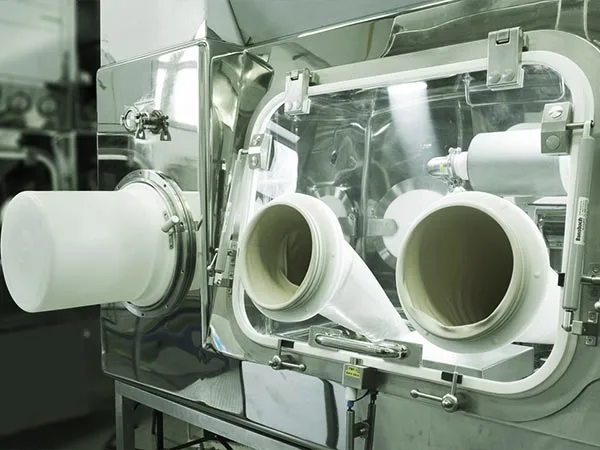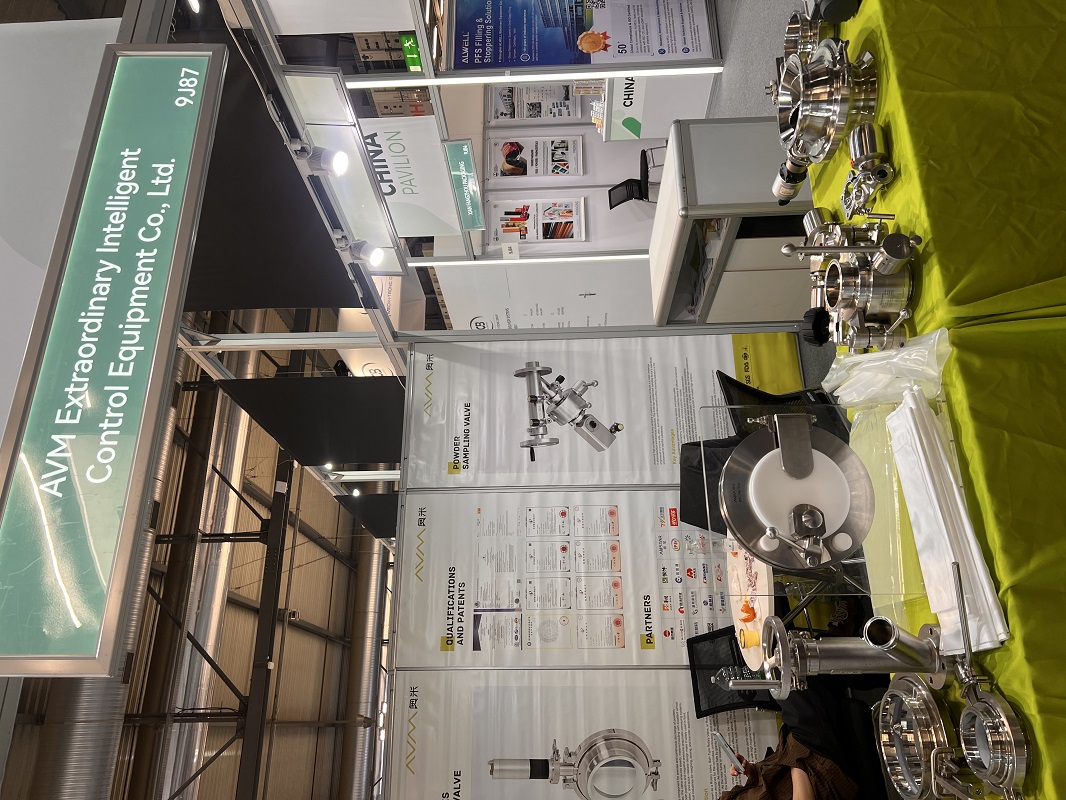

AVM's technical team has introduced two new products to its sales colleagues: a discharge valve and an air-sealed knife gate valve. Using engineering models and sectional views, the team brought the discussion beyond product names and into the components behind them.
For customers evaluating industrial valves, that connection matters. A useful product conversation should explain what equipment is being proposed, how its configuration relates to the application, and which details need engineering confirmation. AVM's training session offers a closer look at the new products and the technical preparation behind those conversations.
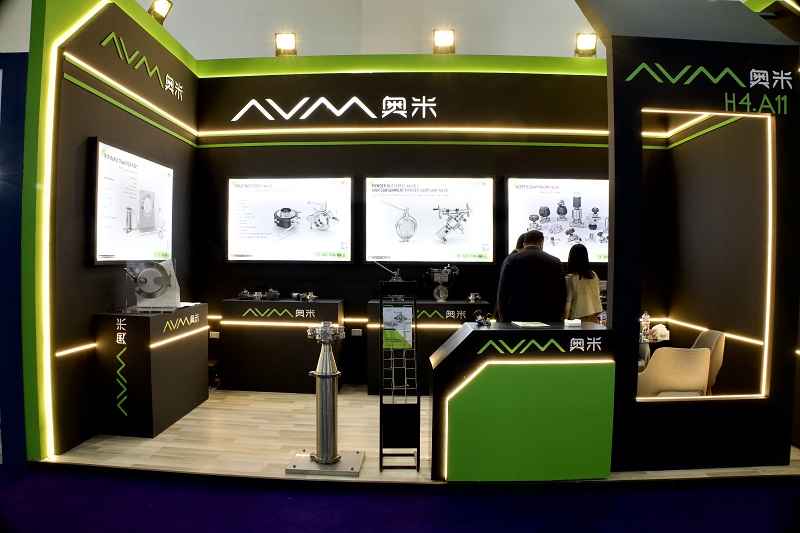
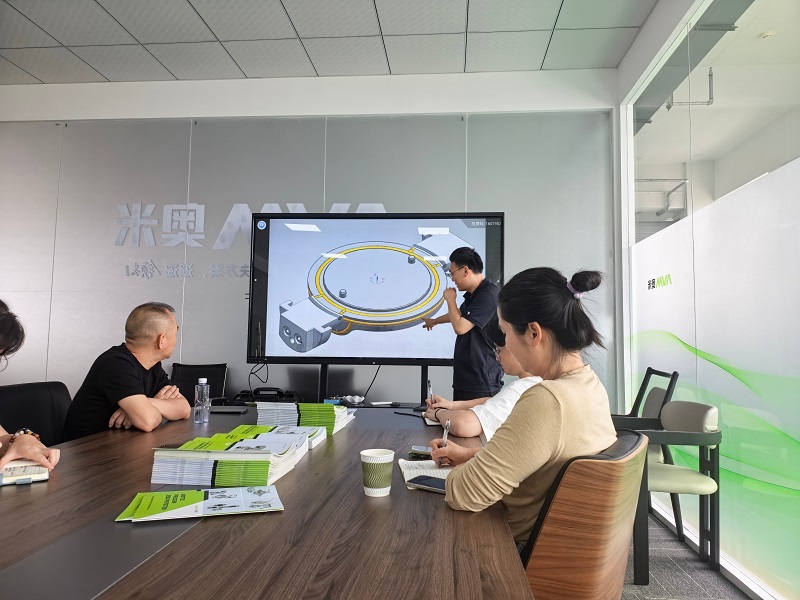
The training photographs show AVM colleagues gathered around a screen displaying valve designs. One view reveals an internal cross-section; another shows a complete assembly with its drive components. A further model highlights a circular sealing arrangement. Team members follow the presentation with notebooks and printed product materials at hand.
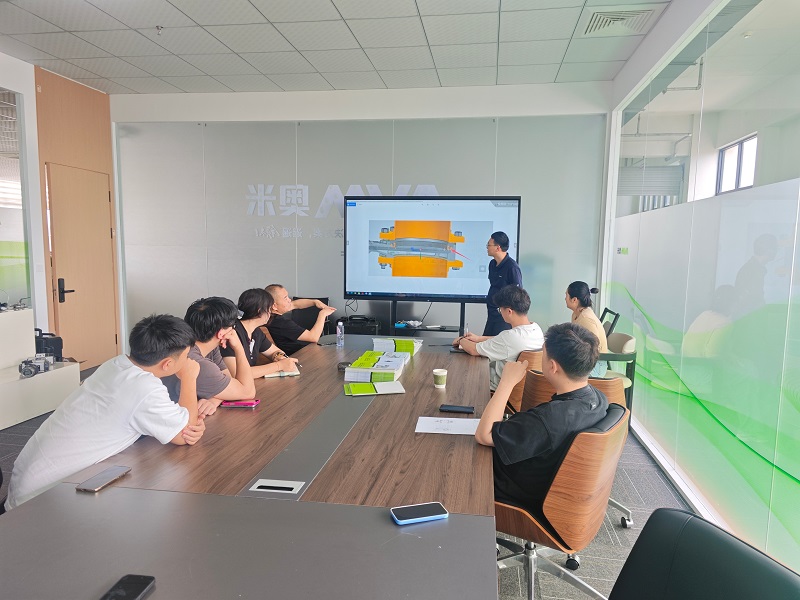
AVM's technical team uses a sectional view to explain the structure of a new product.
This format gives the discussion a concrete reference point. Instead of relying on a product photograph alone, colleagues can look at how components sit together and use the same drawing when asking questions. It is an opportunity to connect commercial product descriptions with the engineering details that support them.
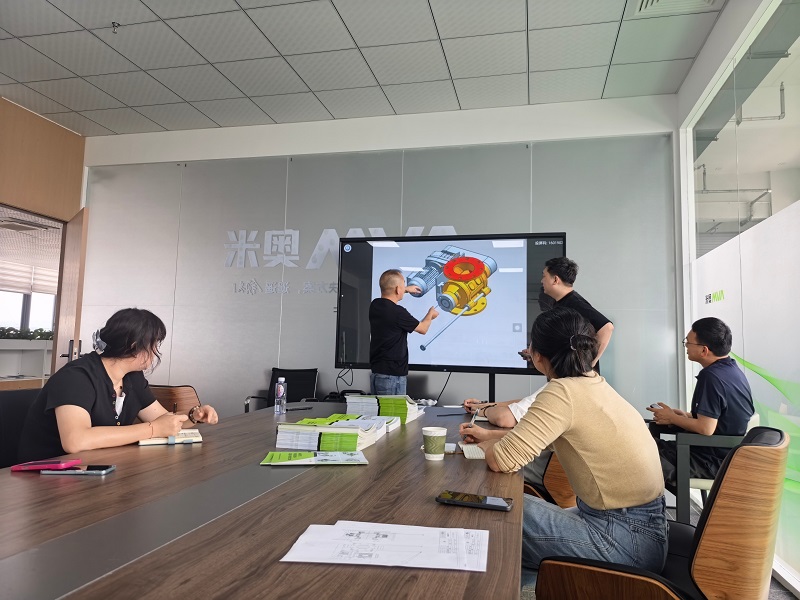
An assembly model provides a shared reference for the technical discussion.
For a buyer, the important question is what this preparation makes possible: a more specific discussion about the proposed valve. Asking about an installation constraint, a sealing requirement, or a maintenance task should lead to a review of the relevant configuration, rather than a general claim that one product suits every process.
The training session puts technical and sales colleagues around the same table. That is a useful starting point for keeping those customer conversations grounded in the product itself.
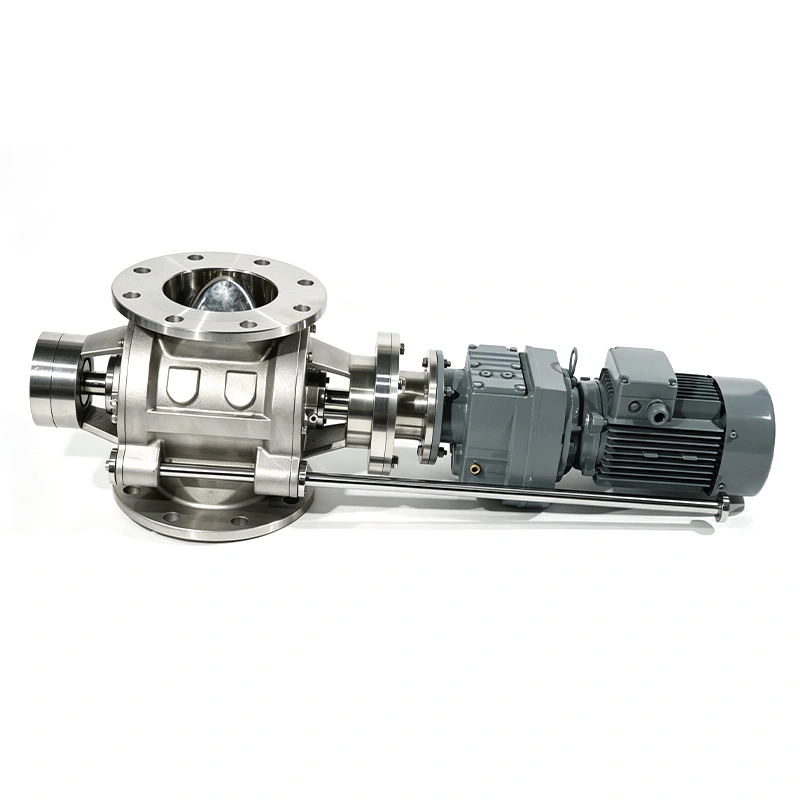
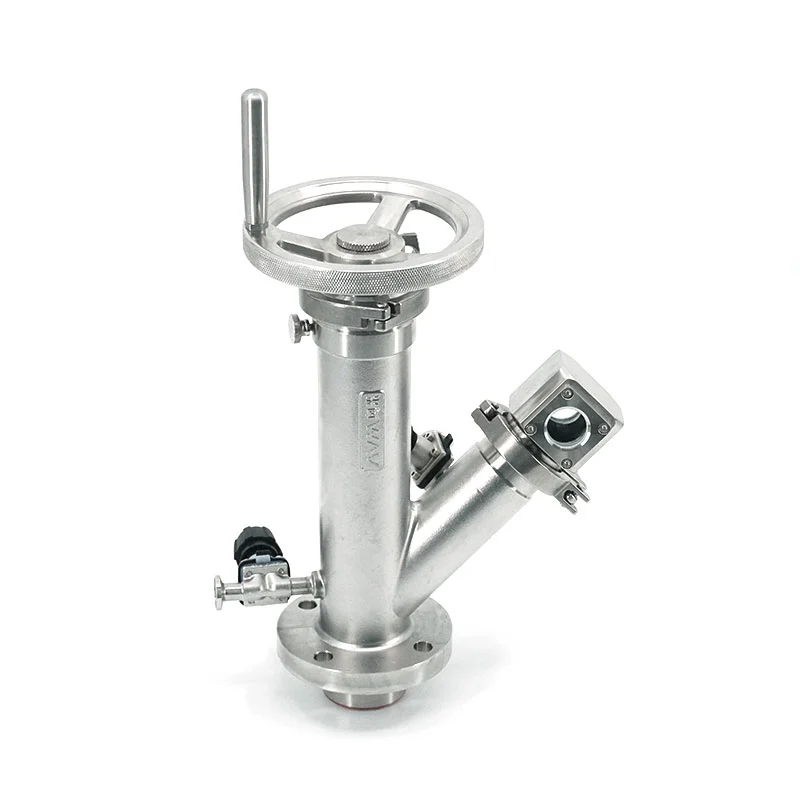
The discharge valve rendering shows a flanged body with an internal rotating element, a side-mounted motor and gearbox assembly, and an external rod extending alongside the body. These visible features give customers a starting point for discussing the proposed assembly and its installation envelope.
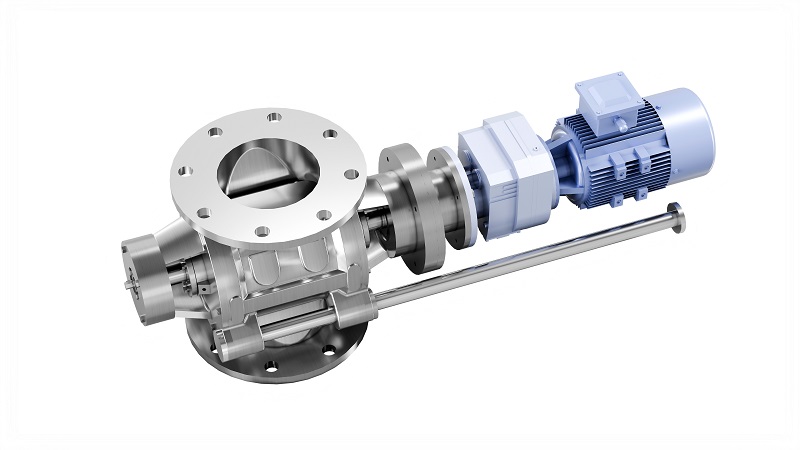
AVM's new discharge valve, shown with its drive assembly and flanged connections.
The next step is to relate the valve to the actual discharge task. What material will pass through it? Where will it sit in the equipment layout? What discharge behavior does the process require? Those answers should guide the review before a particular size or configuration is selected.
A practical discussion should cover the material description, required discharge capacity, connection dimensions, and available installation space. Buyers should also identify any cleaning or maintenance constraints so that the proposed arrangement can be reviewed against the way the equipment will be used.
The motor and gearbox shown in the rendering deserve their own questions. Request the proposed electrical requirements, operating arrangement, and dimensional drawing rather than assuming that a visually similar assembly will fit an existing installation.
For the AVM discharge valve, this turns a product introduction into an application-specific conversation. The rendering helps explain the layout; the agreed technical documentation should establish what will actually be supplied. Keeping those roles separate gives both the customer and the supplier a clearer basis for quotation and review.
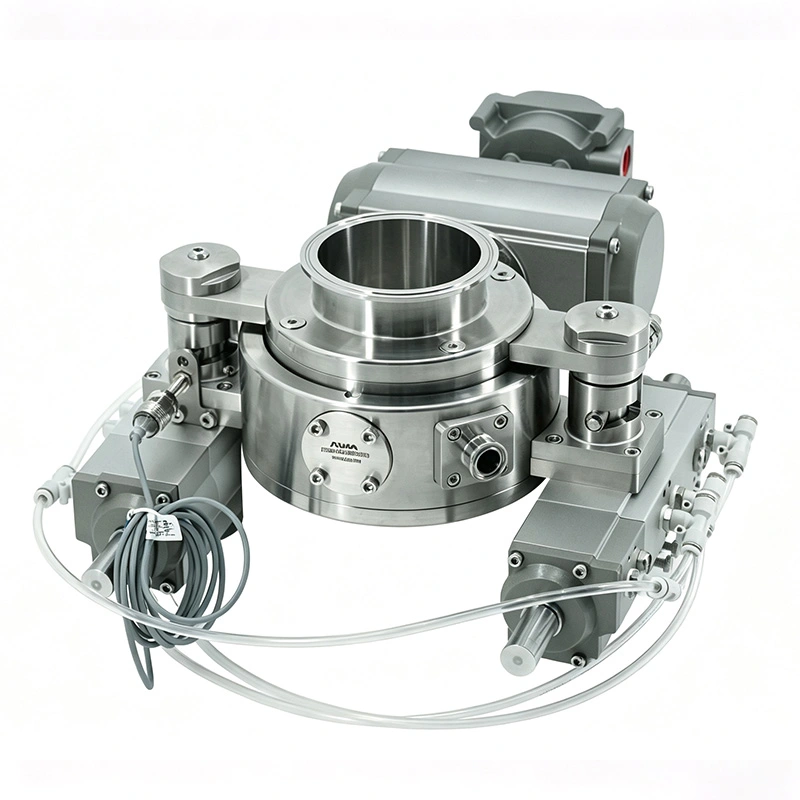
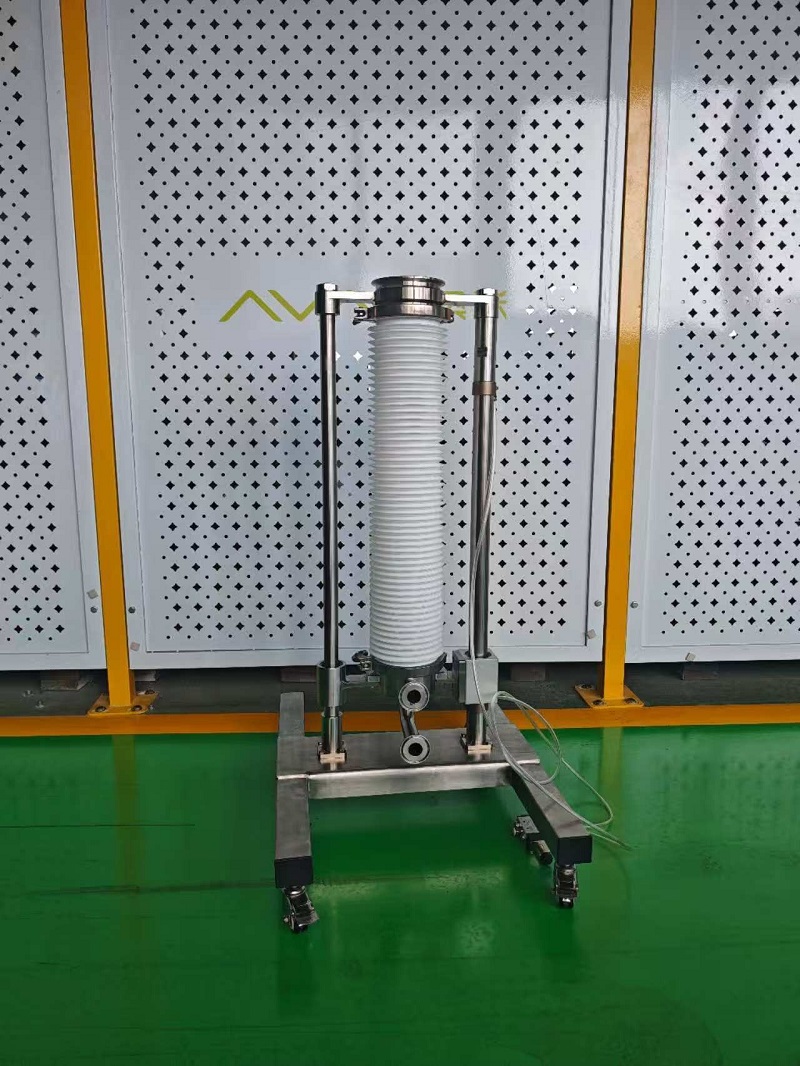
The second new product is an air-sealed knife gate valve. Its rendering shows a circular flow opening below a tall gate assembly, with a cylinder mounted above it and tubing visible along the side. The arrangement is visually distinct from the motor-driven discharge valve.
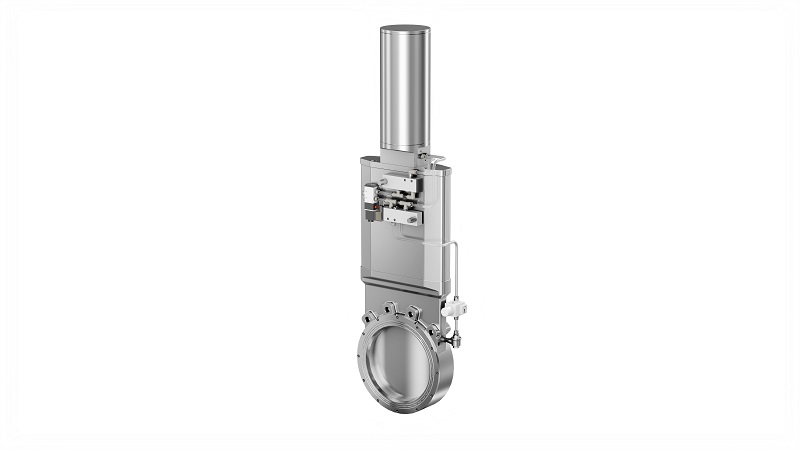
The new air-sealed knife gate valve, shown as a complete assembly.
For customers considering this product, the sealing requirement should be part of the initial conversation. Describe what needs to be contained, the operating conditions, and how acceptable performance will be assessed. A product name alone does not define an agreed leakage limit or a test procedure.
Ask how the proposed seal arrangement works and what utilities it requires. Review the operating sequence, control connections, and response to loss of the required utility supply. These are questions for the product's engineering documentation, not conclusions to draw from the external rendering.
Installation should receive the same attention. Ask for the complete assembly dimensions, including the space needed above and around the valve. Include access for inspection and maintenance in the layout review rather than checking the connection size alone.
This approach gives the air-sealed knife gate valve a clear place in the discussion: a product to evaluate against a defined operating and sealing duty. The resulting specification should describe that duty in terms both the customer and AVM can review.
The two new AVM products should not be compared by appearance alone. Their renderings show different assemblies, and the right discussion begins with the job the customer needs the equipment to perform.
For a discharge requirement, define the material transfer task and expected operating pattern. For an isolation requirement, state the conditions under which the closed valve must separate the relevant parts of the process. If the project involves both, identify each duty separately before requesting a recommendation.
| Review point | Discharge valve discussion | Air-sealed knife gate valve discussion |
|---|---|---|
| Initial requirement | Define the discharge task and material | Define the isolation and sealing duty |
| Visible assembly | Flanged body with side-mounted motor and gearbox | Circular opening, upper cylinder, and side tubing |
| Installation review | Request the full drive and body envelope | Request the full height and access envelope |
| Documentation to request | Proposed configuration, dimensions, and operating requirements | Proposed seal arrangement, dimensions, and operating requirements |
These are starting points for review, not a performance comparison or a claim that either design is suitable for a particular service. Buyers should ask AVM to confirm the proposed configuration against their actual conditions.
A clear comparison also records what remains undecided. If the material, connection standard, or acceptance requirement has not been established, keep it open in the technical discussion rather than allowing an assumption to become part of the order.
A useful inquiry gives the technical team enough context to ask focused follow-up questions. It does not have to begin with a fully completed specification, but it should describe the process and distinguish confirmed requirements from preferences.
Prepare the following information when discussing either of the new products:
• Process material: Describe what will pass through or contact the valve, including any behavior that affects handling or sealing.
• Operating conditions: Provide the expected temperature and pressure conditions, including relevant startup or shutdown conditions.
• Required task: Explain whether the valve is being evaluated for discharge, isolation, or another clearly defined duty.
• Connections and space: Share the required interfaces and a drawing or photograph of the installation area.
• Utilities and controls: Identify available electrical or air supplies and any control-system requirements.
• Maintenance expectations: Describe access restrictions and the cleaning or inspection tasks the installation must accommodate.
• Acceptance requirements: State what drawings, material documentation, or test records the project requires.
Where a value is unknown, mark it as an open question. That is more useful than copying a specification from a different installation simply because the connection size looks similar.
A detailed engineering model helps make component-level questions easier to discuss.
The same principle applies when reviewing a quotation: compare the proposed configuration with the inquiry, resolve any differences, and make sure the documentation refers to the assembly being considered. This keeps product selection tied to the application rather than to a catalogue image.
The training session introduces the products, while a project inquiry establishes the requirements for a particular installation. The following questions help connect those two stages without treating an introductory image as a complete technical specification.
The new products are the AVM discharge valve and air-sealed knife gate valve. The product renderings show their overall assemblies, while the training photographs show AVM's technical team explaining new product designs to sales colleagues using engineering models and sectional views.
No. The renderings illustrate the assemblies, but they do not establish material grades, pressure ratings, temperature limits, or verified sealing performance. Request the technical documents for the specific configuration under consideration. Any requirement that determines acceptance should be recorded explicitly in the project review.
Begin with a description of the process material, the valve's intended task, operating conditions, and the available installation space. Add existing drawings and control requirements where available. These details provide a more useful starting point than asking for a quotation based only on a product name or image.
Contact AVM with your application details to discuss the new discharge valve or air-sealed knife gate valve and request the relevant technical information for your project.