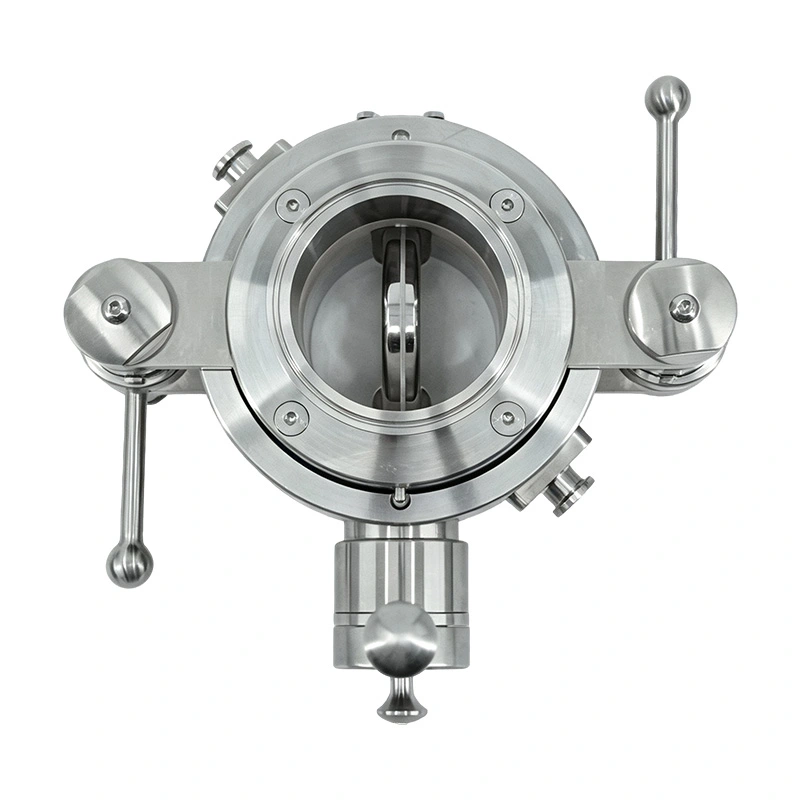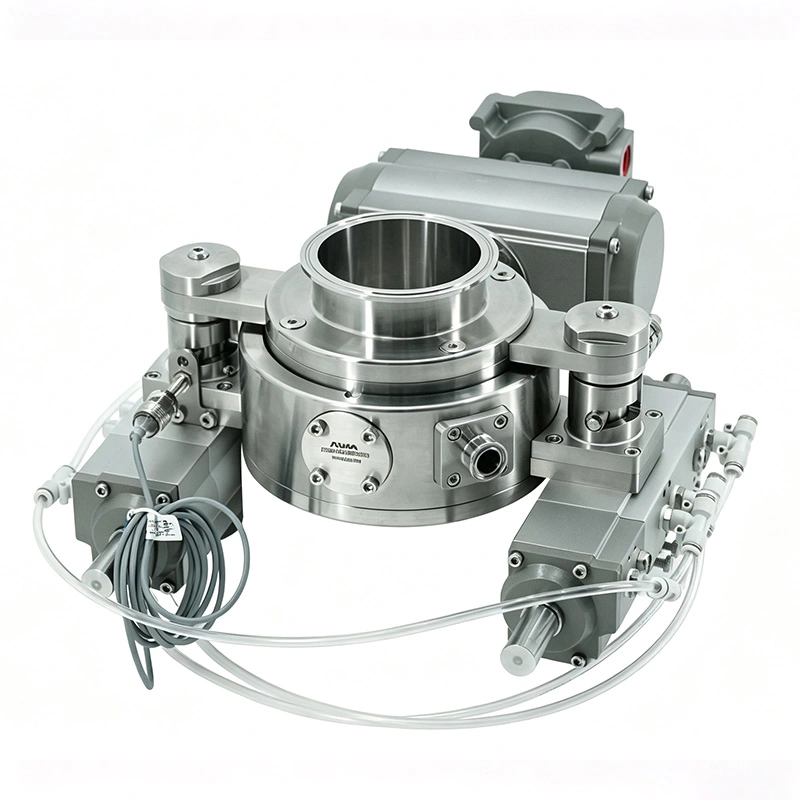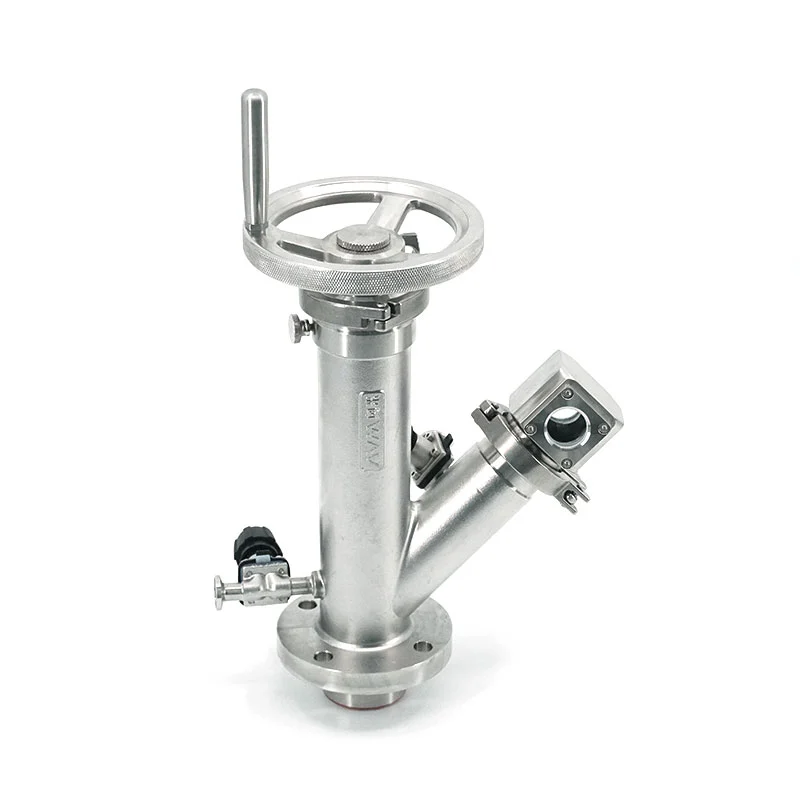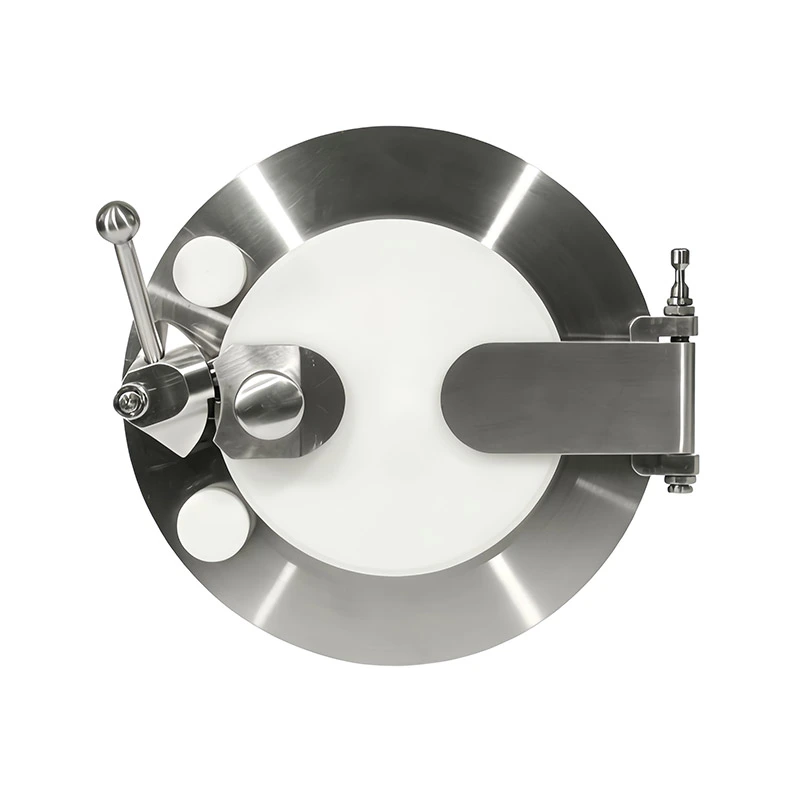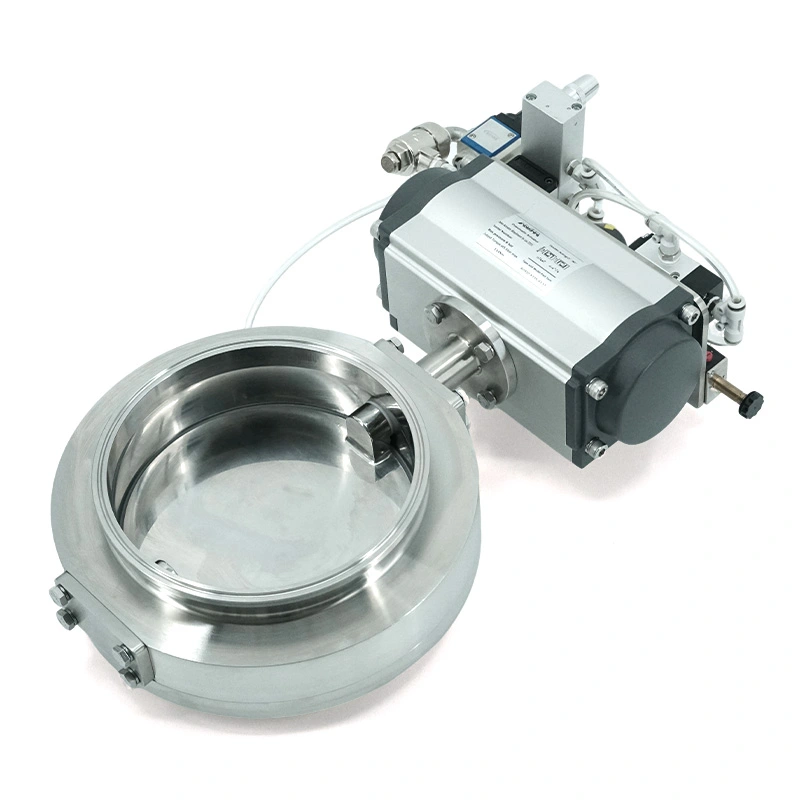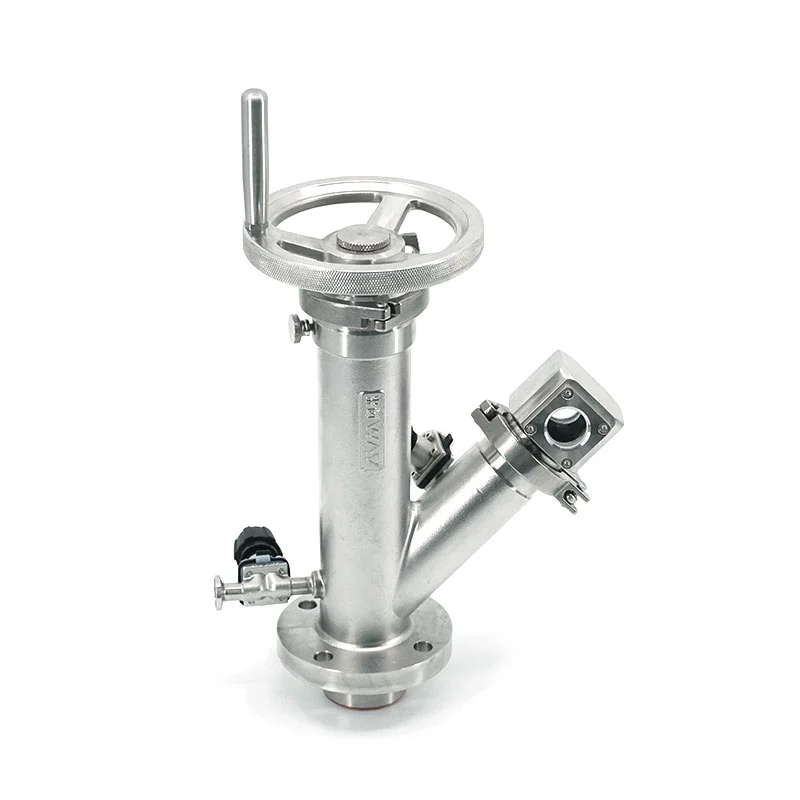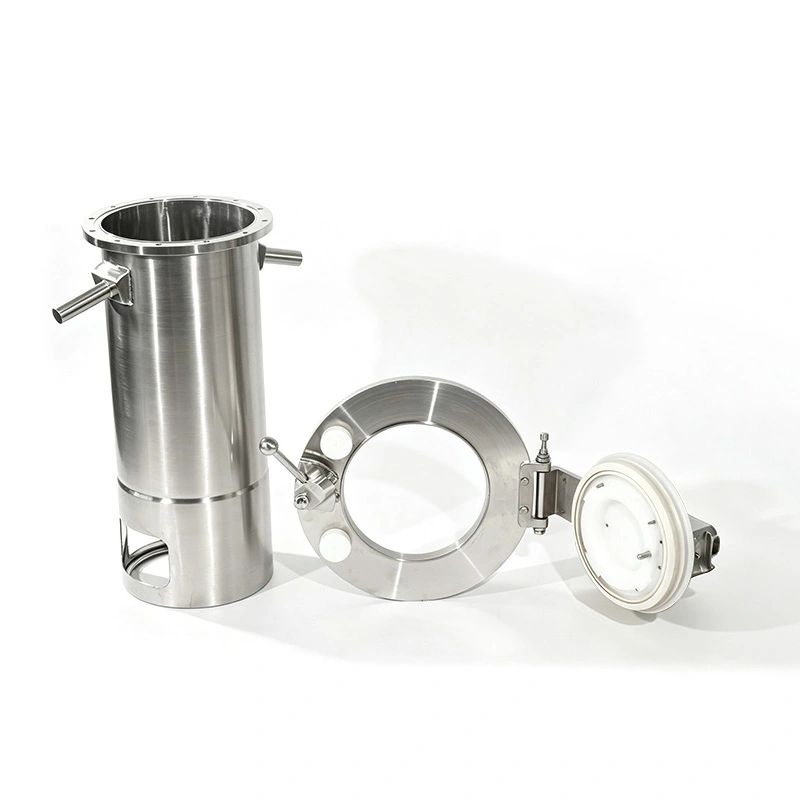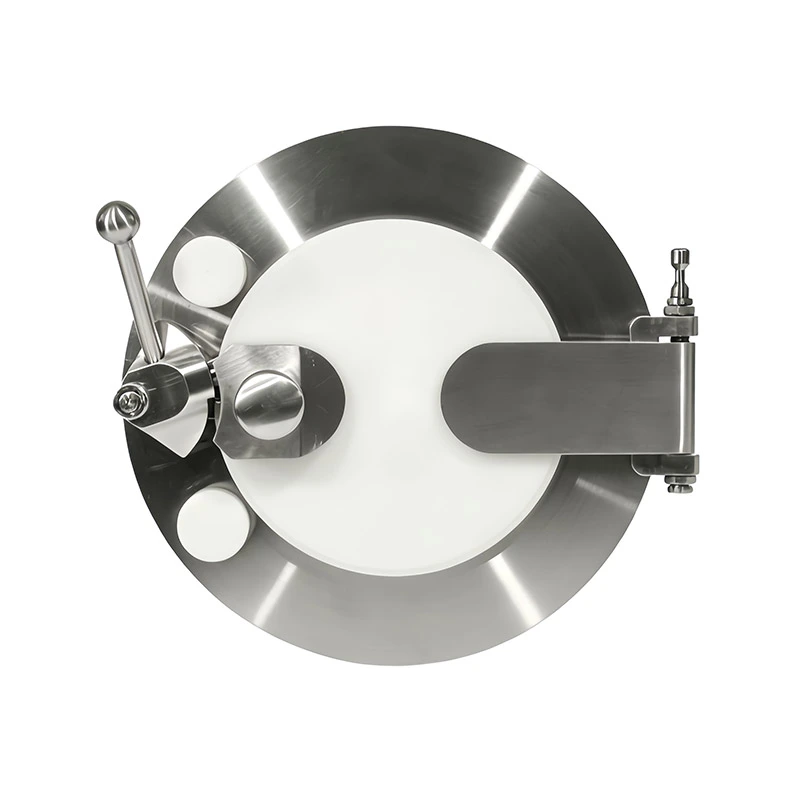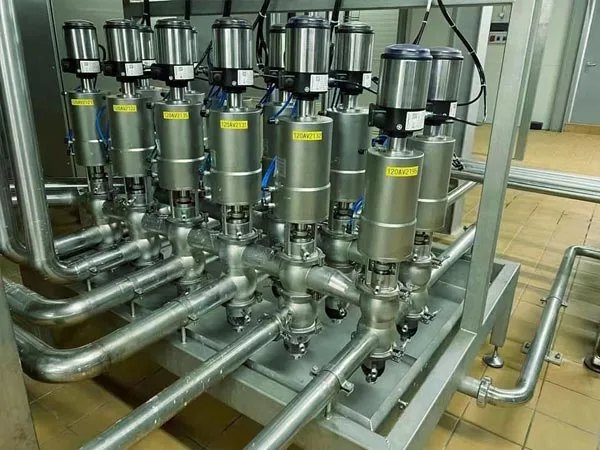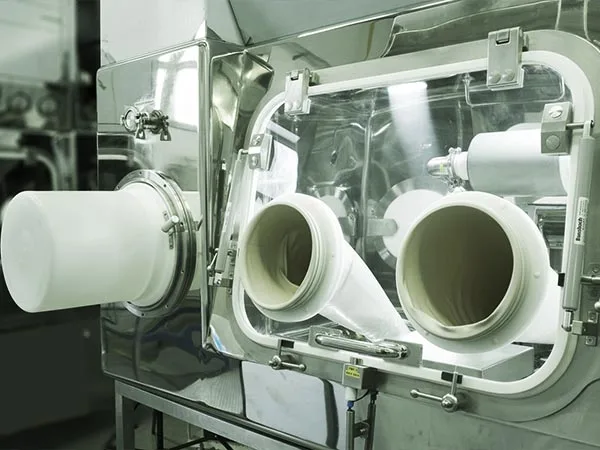
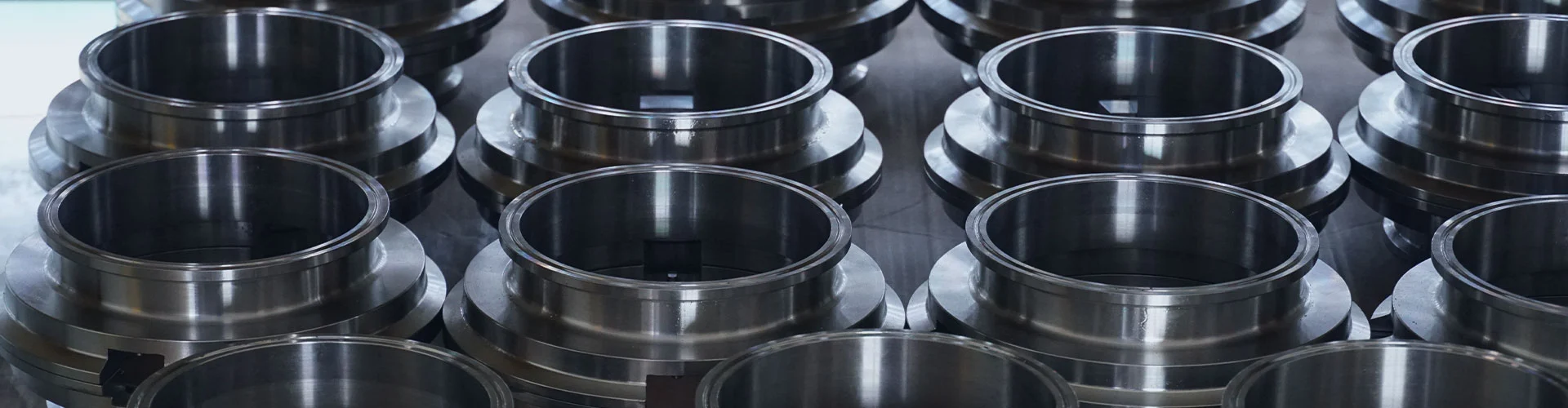
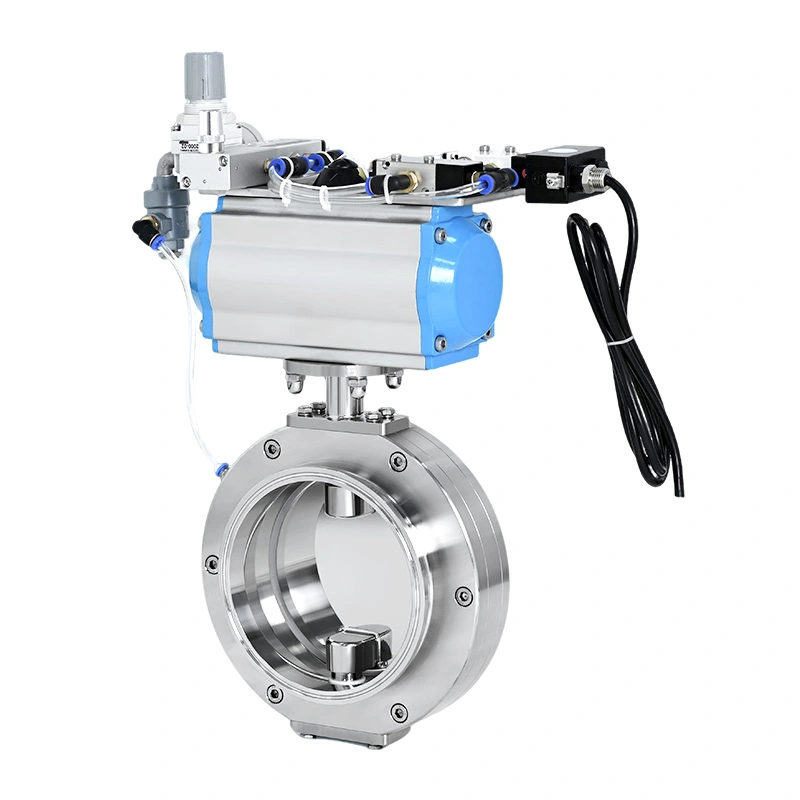
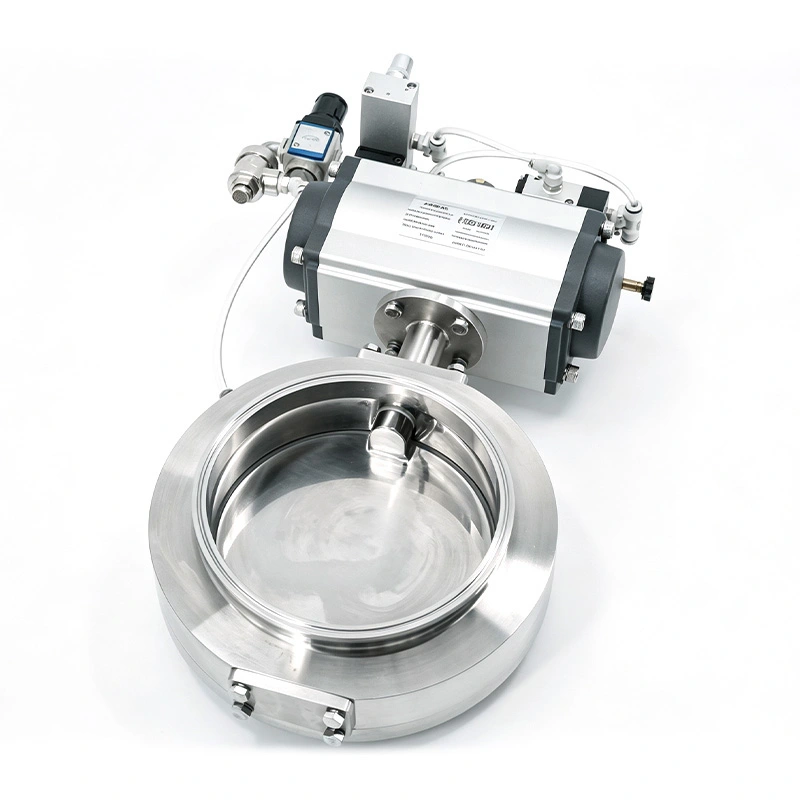
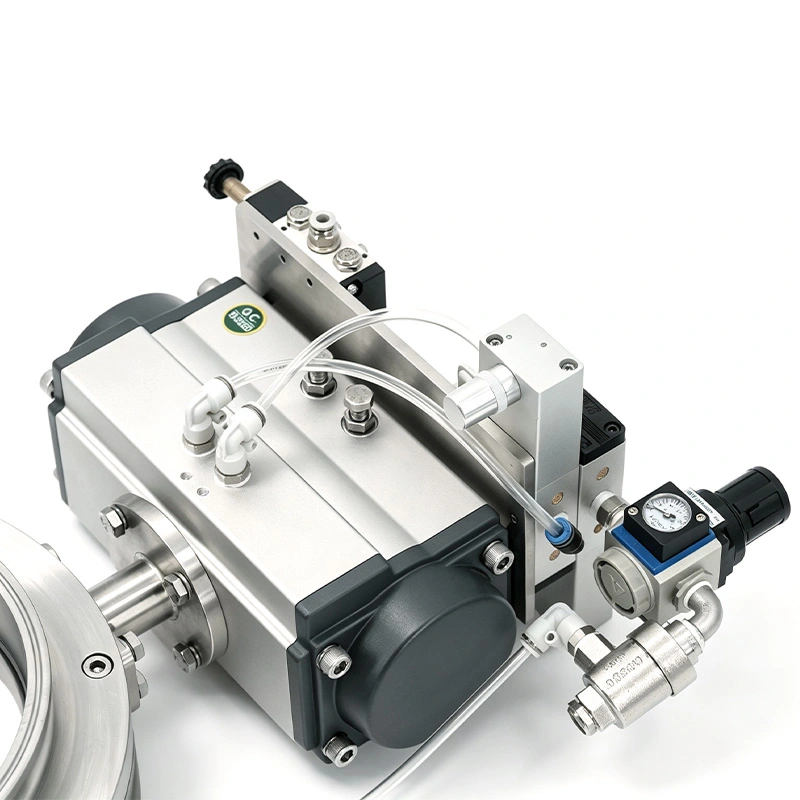
AVM Sanitary Inflatable Seal Eccentric Butterfly Valve With Smart Actuator is designed for automated isolation in powder and bulk-material processing systems. Its eccentric disc reduces contact with the sealing element during rotation, while the inflatable seat is pressurized only after the disc reaches the closed position.
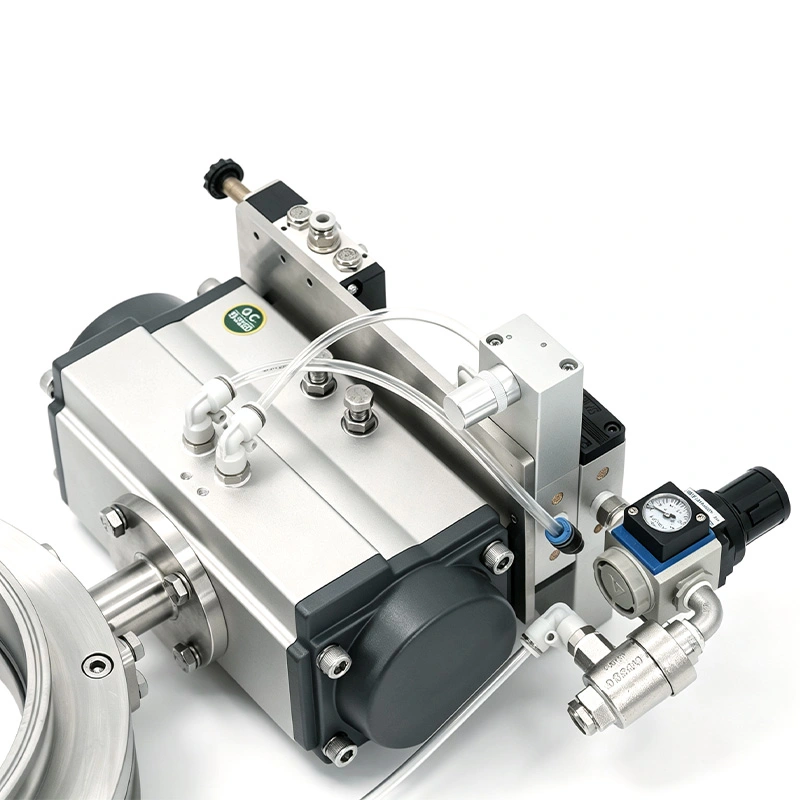
The pneumatic smart actuator provides automated operation and can be connected to PLC-based control systems. Optional position feedback allows the control system to monitor valve status, making the valve suitable for pharmaceutical, food, nutraceutical, battery-material and specialty chemical processes.
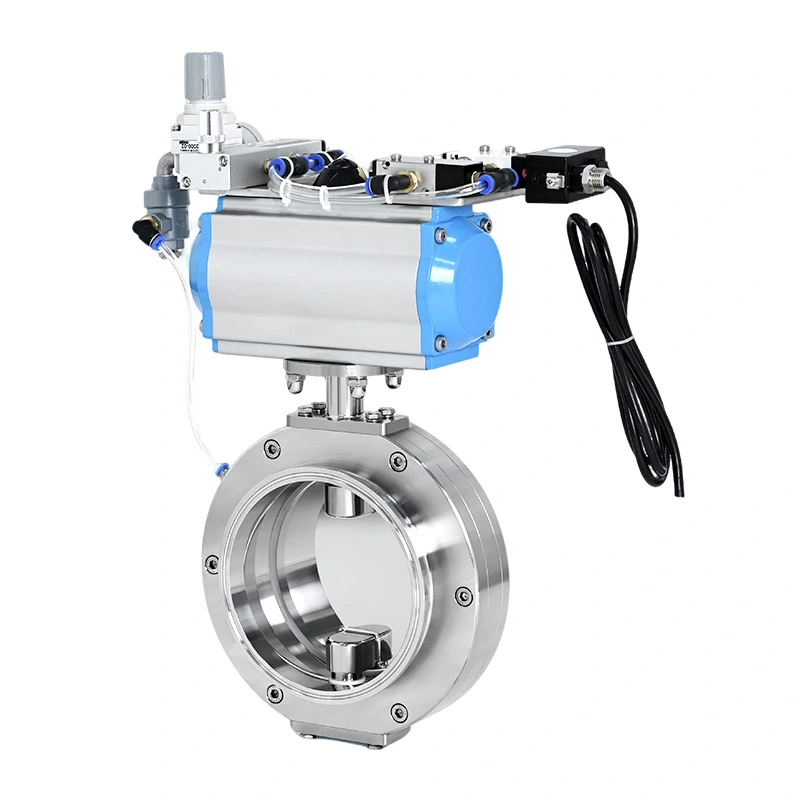
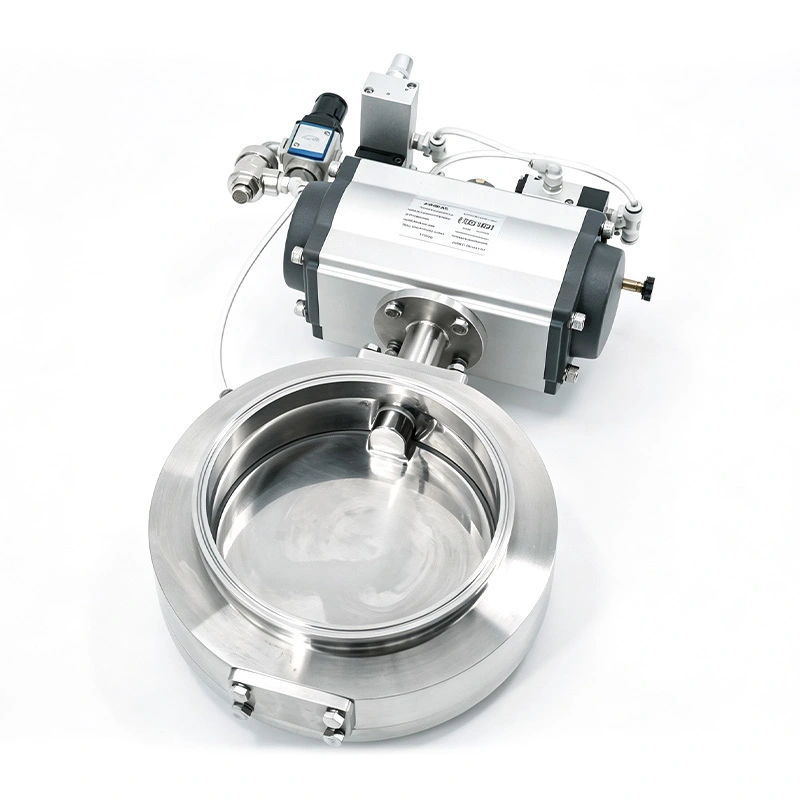
The Sanitary Inflatable Seal Eccentric Butterfly Valve With Smart Actuator uses separate actions for disc movement and seat sealing. This operating principle helps reduce friction during rotation while providing a controlled shut-off after the disc reaches its final position.
Before the disc rotates, pressure is released from the inflatable seat. The seat retracts from the disc, reducing contact resistance during opening.
The eccentric disc moves into the closed position without continuous compression against the sealing element. Once the disc reaches its position, the inflatable seat is pressurized to form the sealing interface.
The smart actuator can provide valve-position information through optional feedback components. This allows the PLC to confirm the valve state before starting the next stage of an automated process.
The eccentric disc and inflatable seat work together to address wear that can occur when a conventional butterfly disc remains in continuous contact with its seat during operation.
When the valve is cycling, the retracted seat allows the disc to move with less resistance. After closure, the inflatable element expands around the disc to provide the required sealing force.
This arrangement can help reduce seat abrasion, actuator load and maintenance caused by repeated disc-seat contact. It is particularly relevant to systems with frequent automated cycles or powder particles near the isolation point.
The smart actuator allows the valve to become part of an automated process rather than functioning as an isolated manual component. It can be integrated with PLC-based equipment and coordinated with conveying, weighing, discharging and other process operations.
The actuator can receive control signals from the production system for automatic opening and closing according to the programmed process sequence.
Optional sensors can report the valve position to the control system. This provides confirmation that the valve has reached the required open or closed position before another operation begins.
Valve-status signals can be incorporated into process interlocks. For example, the downstream conveying system can be prevented from starting until the valve reaches the required position.
An ATEX-compatible actuator package is available for installations where the equipment and control configuration need to meet applicable hazardous-area requirements.
The valve body is available in SUS304 or SUS316L stainless steel. Product-contact surfaces can be finished to Ra ≤0.4 μm to reduce material retention and support routine cleaning.
EPDM, Silicone and FKM/Viton sealing materials are available. FDA-compliant sealing grades can be selected for applicable pharmaceutical, food and nutraceutical processes.
The internal structure is designed for hygienic powder handling and can be supplied with CIP-compatible configurations according to the process requirements.
Used for isolating and controlling the transfer of APIs, HPAPIs, excipients and other pharmaceutical powders in automated production systems.
Installed beneath IBCs for controlled powder discharge, particularly where the valve needs to communicate with PLC control systems and downstream conveying equipment.
Suitable for isolation points in vacuum powder transfer lines where stable shut-off and repeated automated operation are required.
Used for cathode, anode and conductive powder transfer where material containment, sanitary construction and reduced seal wear are important.
Suitable for automated handling of dry ingredients and nutritional powders where stainless-steel construction and cleanable product-contact surfaces are required.
| Parameter | Specification |
| Valve Type | Sanitary Inflatable Seal Eccentric Butterfly Valve |
| Valve Size | DN50–DN300 |
| Body Material | SUS304 / SUS316L |
| Seal Material | EPDM, Silicone, FKM (Viton) |
| Product Contact Finish | Ra ≤0.4 μm |
| Operation | Pneumatic Smart Actuator |
| Connections | Tri-Clamp, Flange, Butt Weld |
| Automation | PLC-compatible |
| Position Feedback | Optional |
| Solenoid Valve | Optional |
| ATEX Actuator Package | Optional |
| FDA-Compliant Seals | Available |
| CIP Compatibility | Available |
| Item | Smart Actuated Configuration | Manual Configuration |
| Operation | Pneumatic automatic | Manual |
| PLC Integration | Supported | Not normally available |
| Position Feedback | Optional | Manual confirmation |
| Process Interlocking | Supported | Limited |
| Seat Inflation Control | Automatic | Manual/system dependent |
| Remote Operation | Supported | Not available |
Before installation, confirm the valve size, connection standard, actuator air supply and control interface. The valve should be installed with sufficient access for inspection of the inflatable seat, actuator and feedback components.
Routine maintenance should include checking the sealing element for wear or damage, verifying actuator movement and confirming that the position feedback operates correctly where fitted. The inflatable seat should also be checked for proper inflation and pressure retention according to the maintenance schedule.
For powder applications, cleaning frequency should be determined by the material characteristics and production cycle. CIP-compatible configurations can be used where the process requires automated cleaning.
A pharmaceutical manufacturer was upgrading an IBC powder discharge station and needed an isolation valve that could work with the existing PLC control system. The downstream conveying equipment could only start after confirmation that the discharge valve had reached the required position.
AVM supplied the Sanitary Inflatable Seal Eccentric Butterfly Valve With Smart Actuator with position feedback. The PLC received the valve-status signal and coordinated the discharge and conveying sequence automatically. The customer also reported reduced manual intervention and stable operation during repeated IBC discharge cycles.
AVM sanitary valve solutions can be supplied with applicable 3-A Sanitary Standards, ISO 9001, CE and FDA compliance. FDA-compliant sealing materials are available for applicable pharmaceutical and food applications.
For projects requiring hazardous-area equipment, an ATEX-compatible actuator package can be configured according to the applicable classification and project requirements.
The seat is depressurized and retracts before the disc moves. After the disc reaches the closed position, the seat is inflated to create the sealing interface.
The eccentric disc reduces continuous contact with the sealing element during rotation, helping lower friction, actuator load and seat wear.
Yes. The smart pneumatic actuator is compatible with PLC-based control systems, and optional position feedback can provide valve-status signals.
Yes. The Sanitary Inflatable Seal Eccentric Butterfly Valve With Smart Actuator is designed for pharmaceutical powders, food ingredients, battery materials and other dry bulk materials where hygienic isolation and automated operation are required.
Available options include EPDM, Silicone and FKM/Viton. FDA-compliant grades can be selected for applicable sanitary applications.
Yes. An ATEX-compatible actuator package is available according to the required hazardous-area classification.
Address
No. 373 Oufan Road, Dongtou District, Wenzhou City, Zhejiang Province, China
Tel