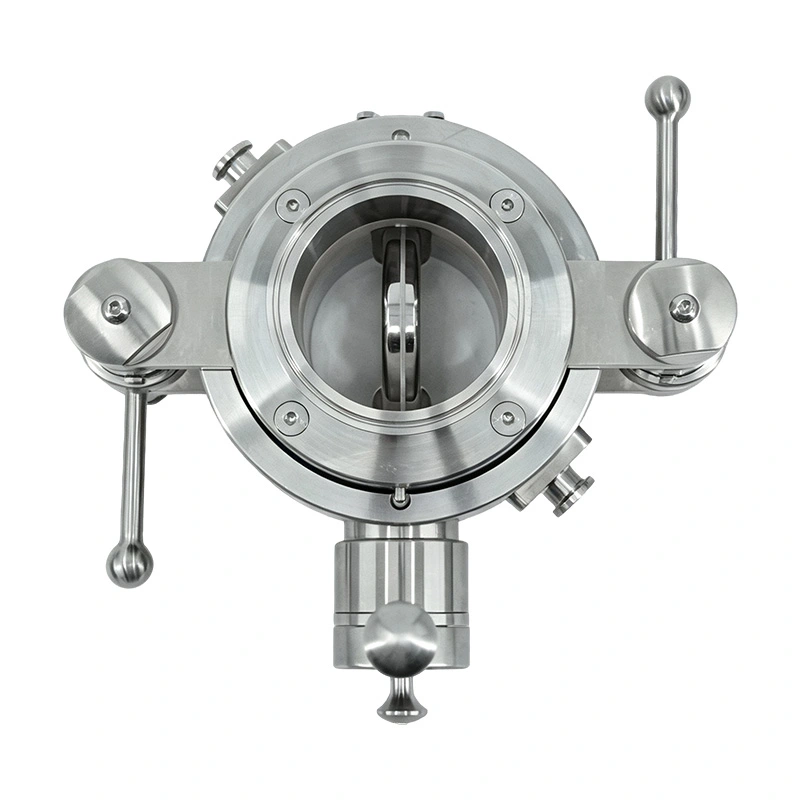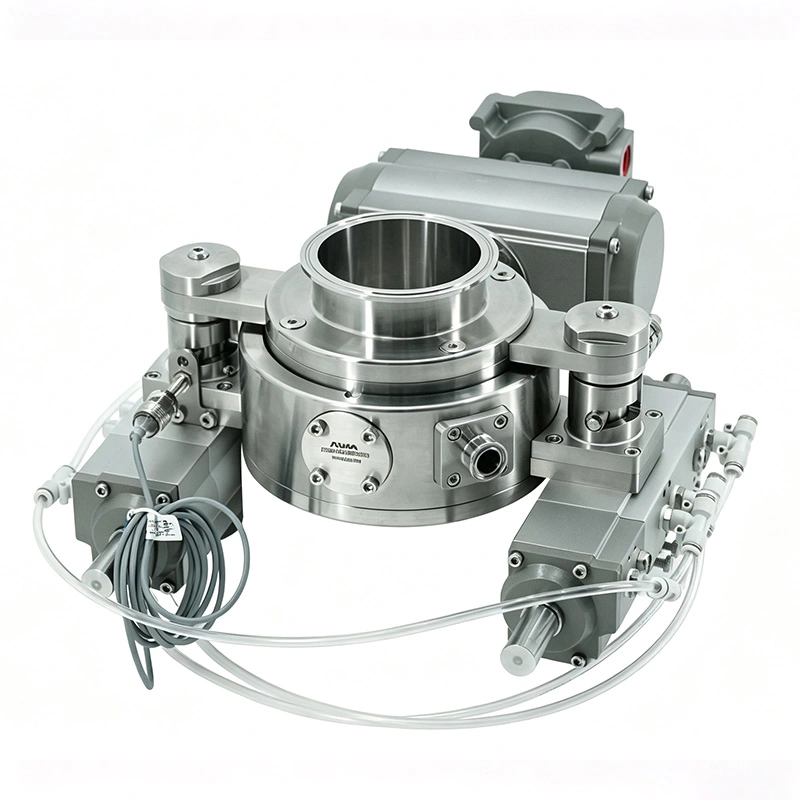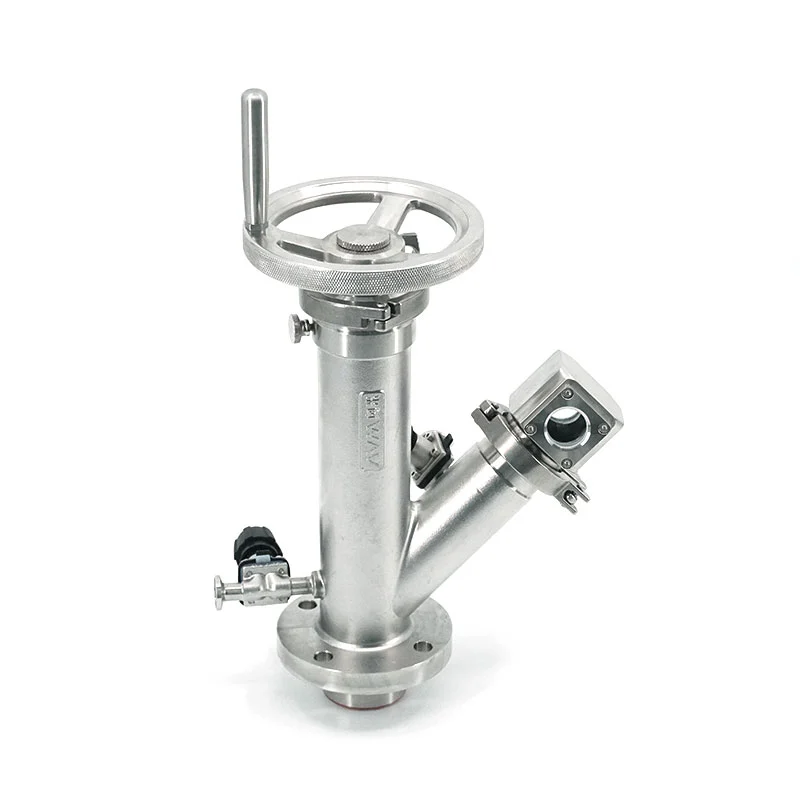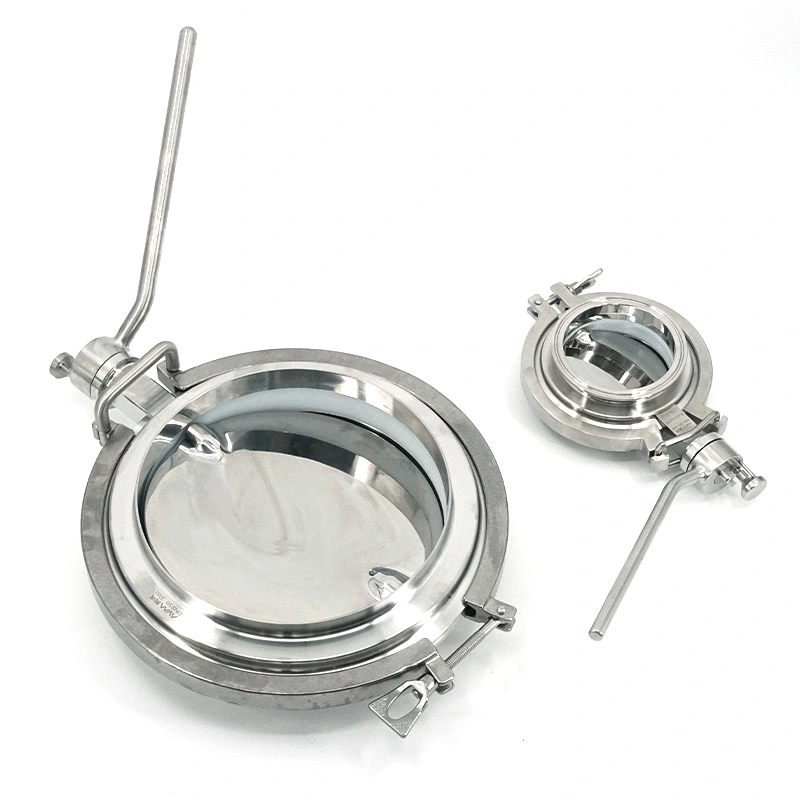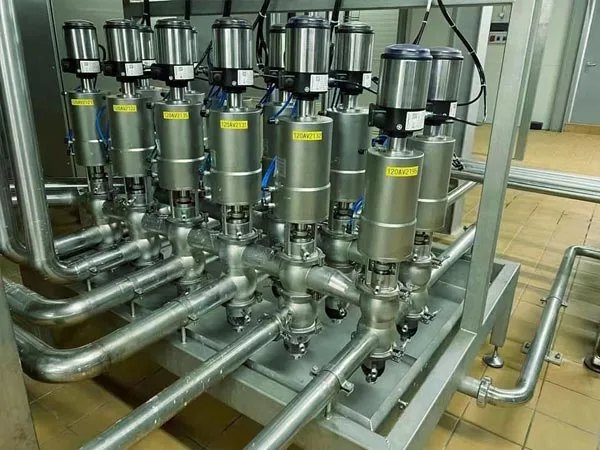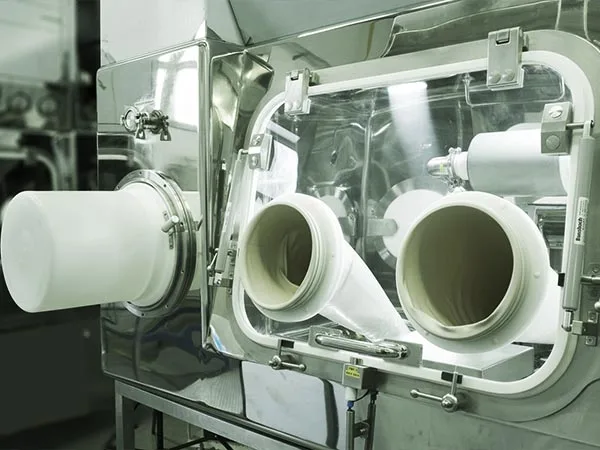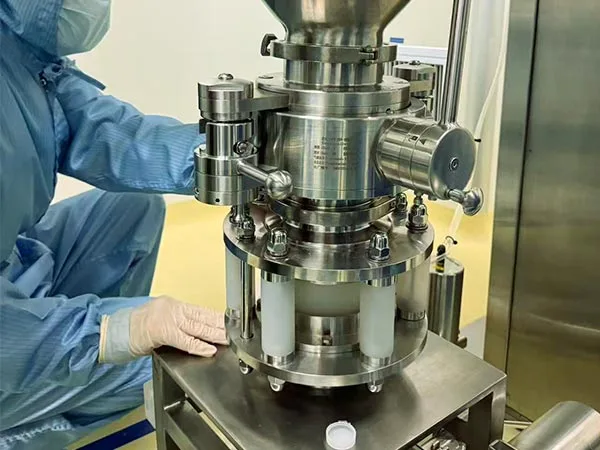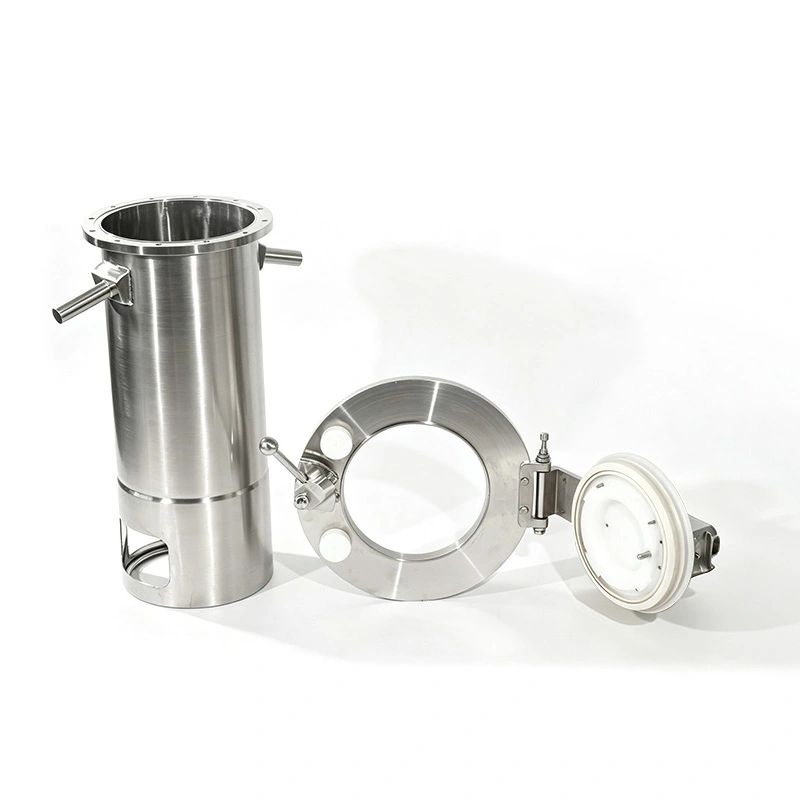
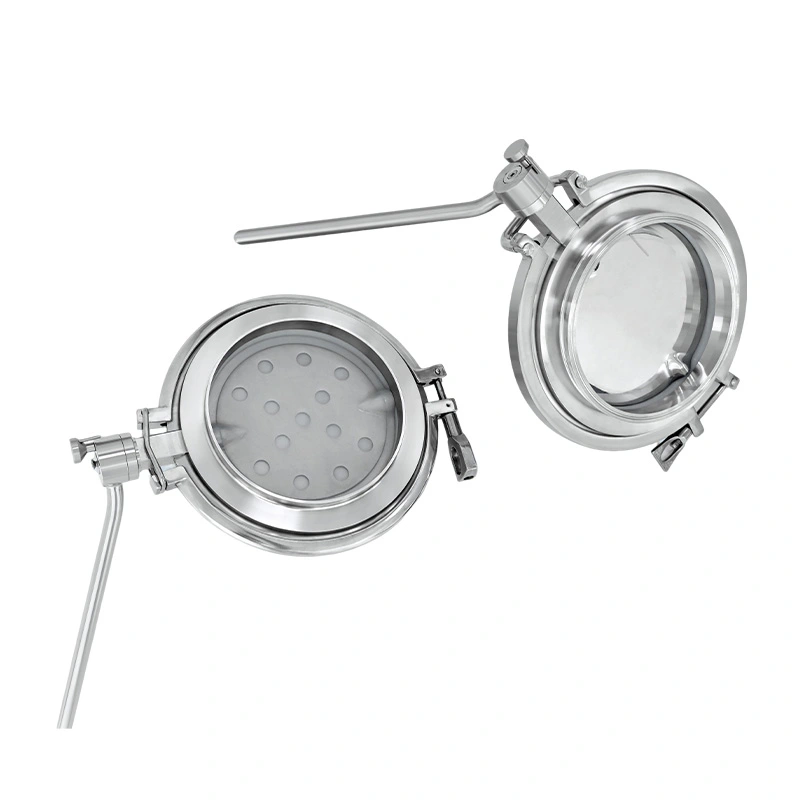
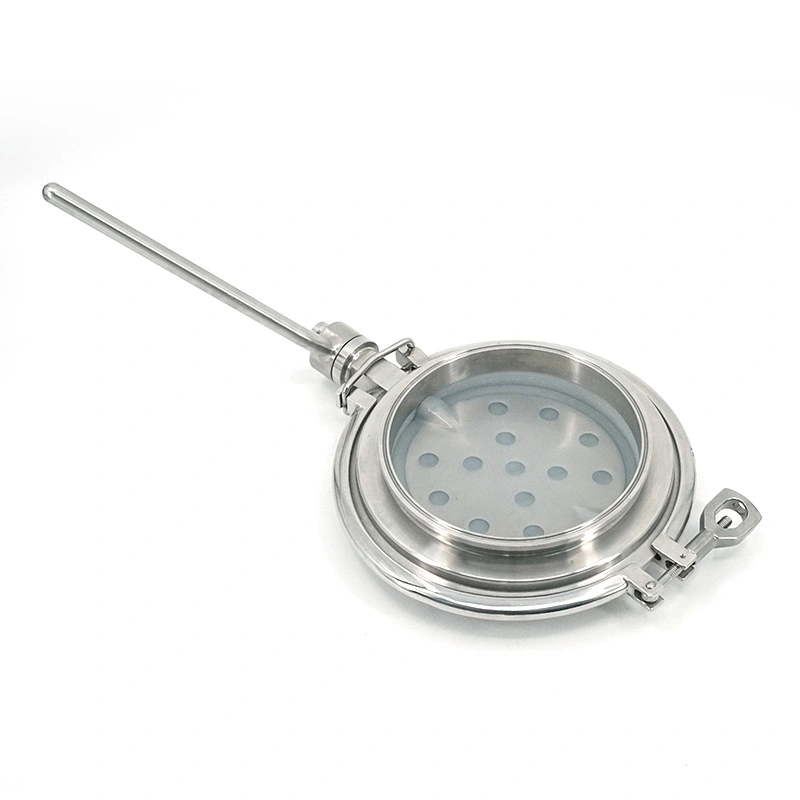
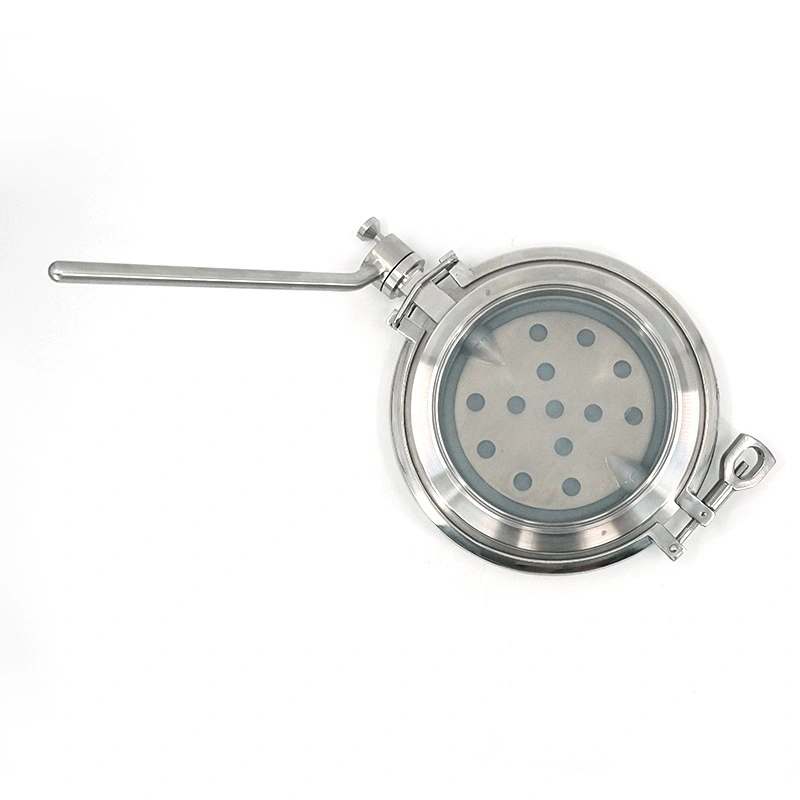
Sanitary Butterfly Valve for Tablet Handling can be installed between tablet presses, coating machines, IBCs, hoppers, vacuum conveying systems and packaging equipment, providing controlled product discharge while maintaining hygienic process conditions.
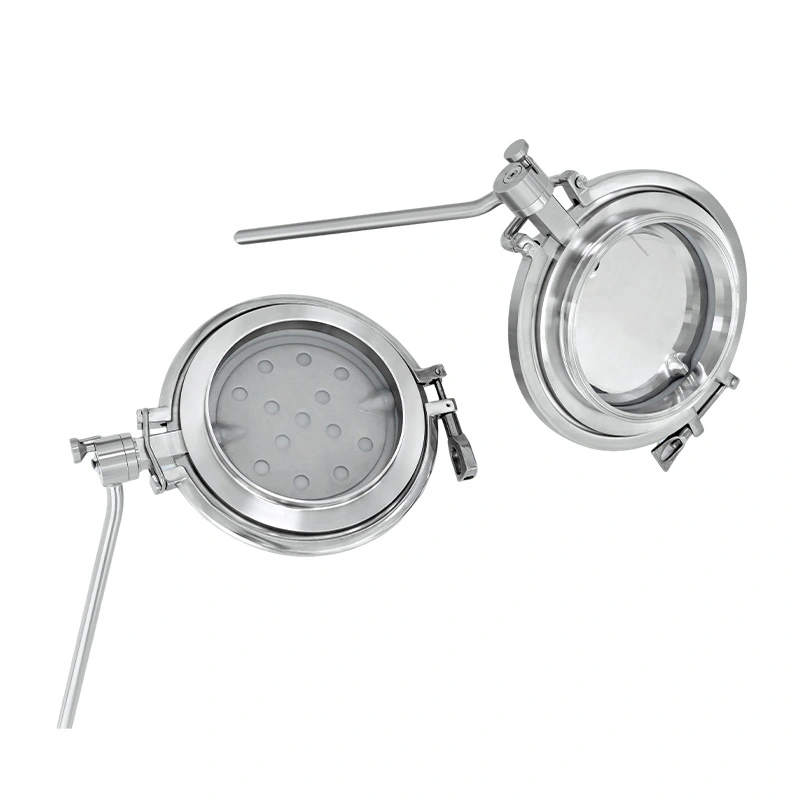
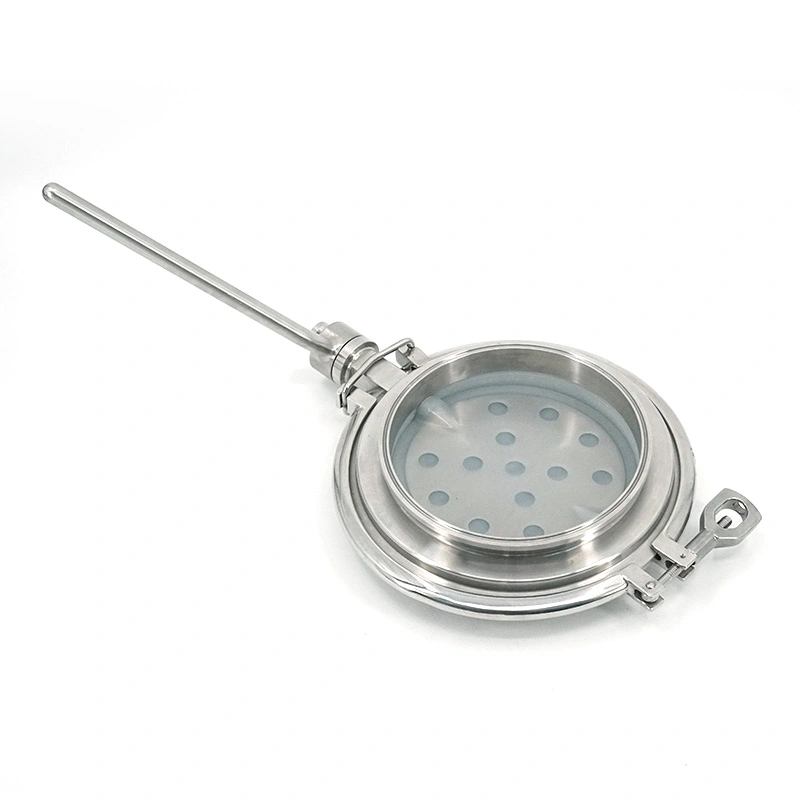
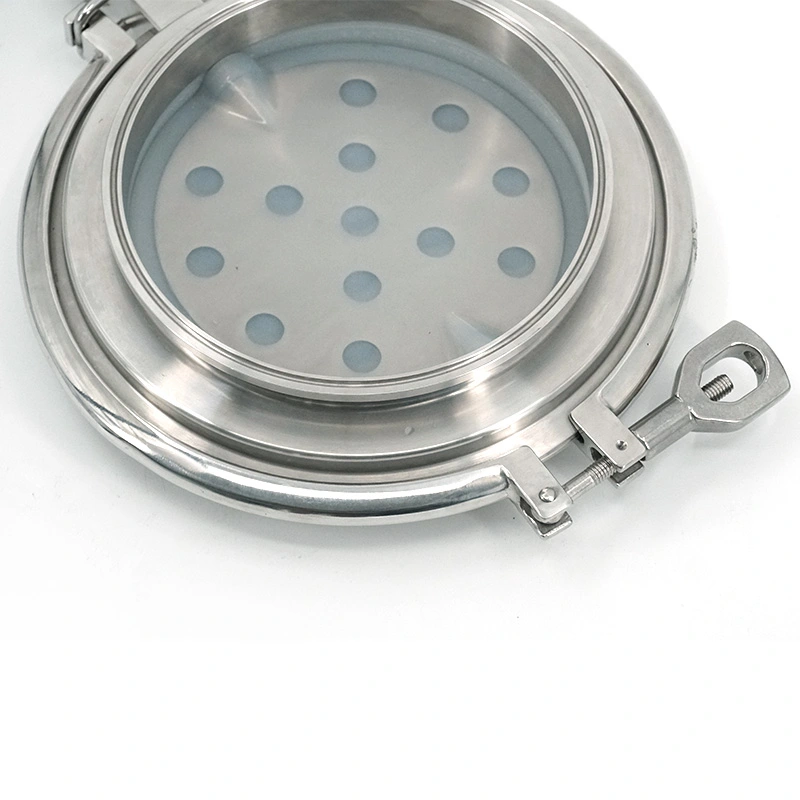
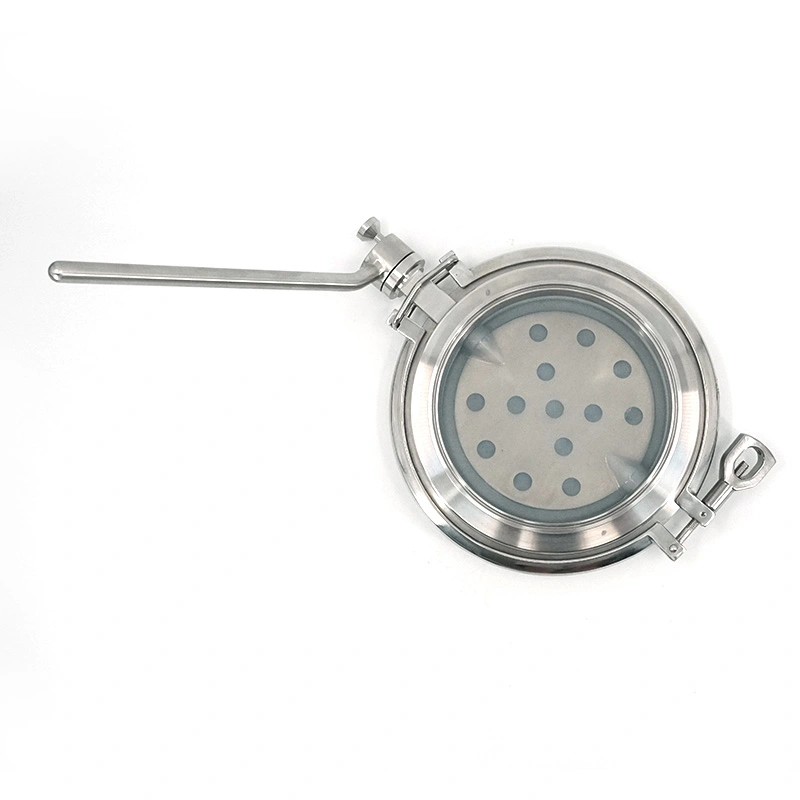
Tablets are more sensitive to impact and abrasion than conventional powders or granules. Excessive impact during discharge can cause broken edges, chipped tablets, coating damage and additional fines, affecting both product quality and production yield.
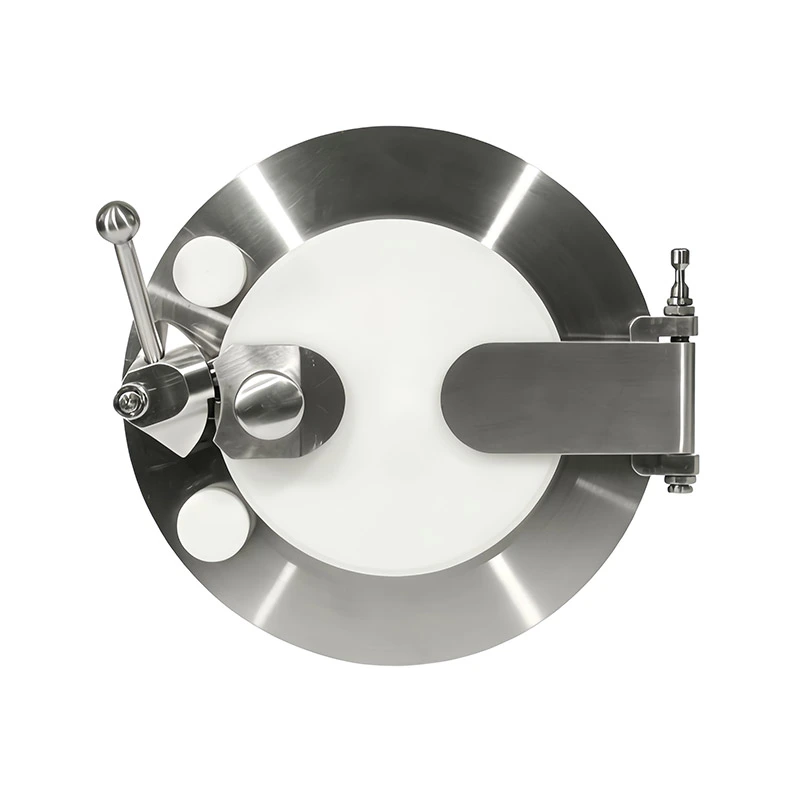
AVM optimizes the valve structure and provides optional silicone-coated disc surfaces to create a softer contact interface during tablet discharge. This configuration is particularly suitable for coated tablets and other products where surface integrity is important.
The Sanitary Butterfly Valve for Tablet Handling supports controlled transfer for both batch and continuous pharmaceutical production.
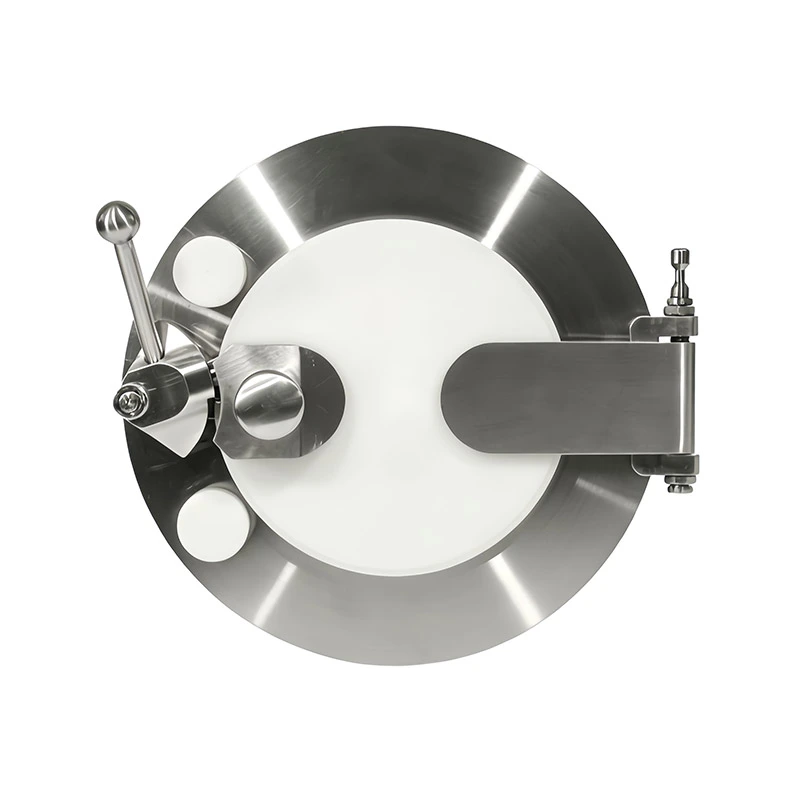
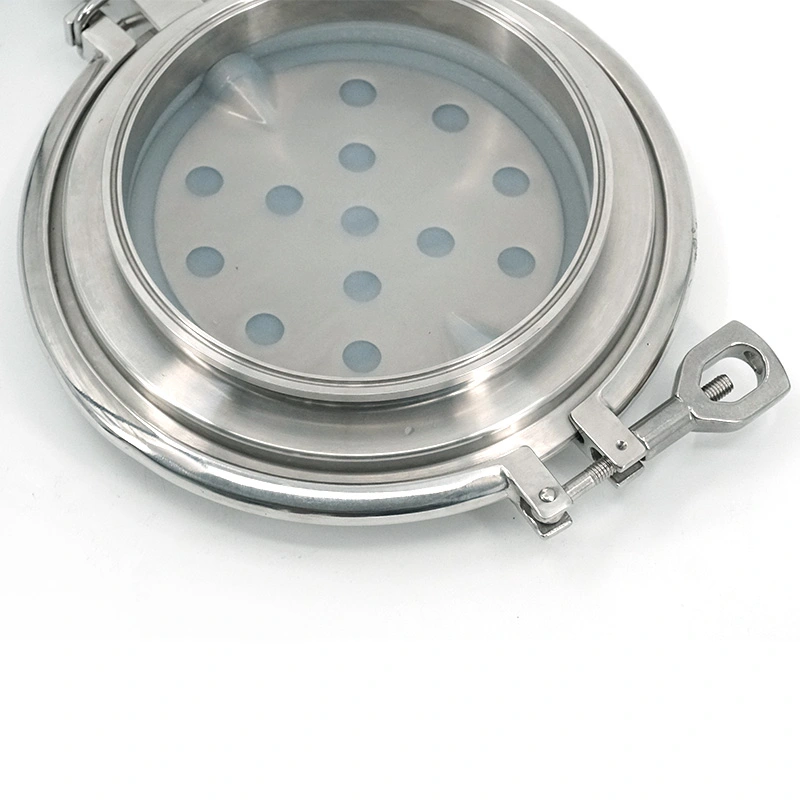
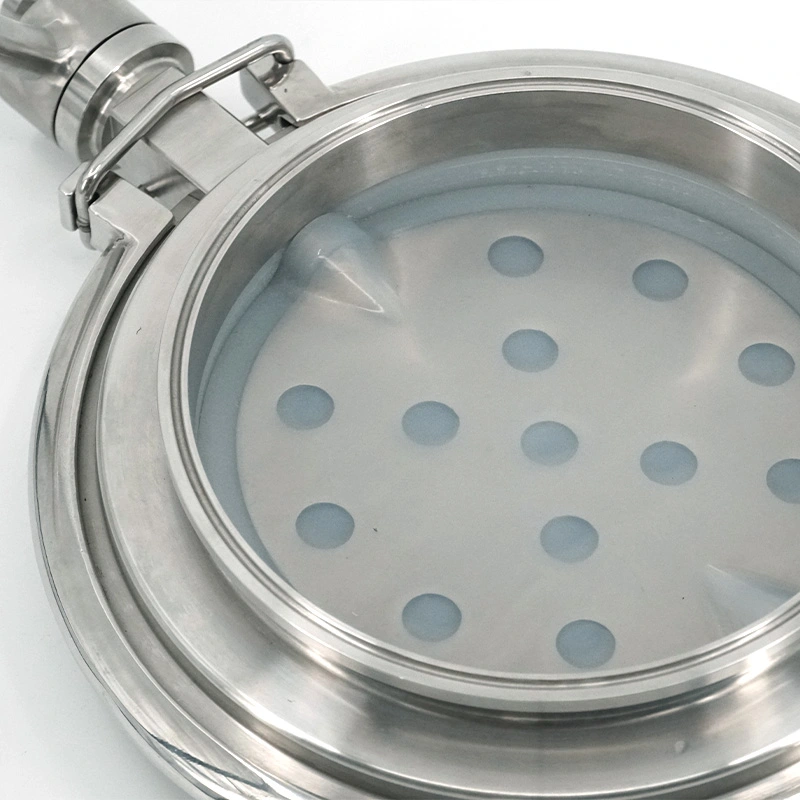
The disc can be equipped with a silicone coating to reduce direct contact between the metal disc and pharmaceutical products. This is especially useful when handling coated tablets or products with relatively fragile surfaces.
The softer disc surface helps reduce unnecessary friction and impact during product discharge, supporting better tablet integrity and reducing excessive powder or broken particles.
The disc coating can be customized according to the tablet type, product characteristics and operating requirements, allowing the valve to be matched to different pharmaceutical processes.
The Sanitary Butterfly Valve for Tablet Handling can serve as an isolation and transfer point between multiple pharmaceutical processing stages.
Installed below a tablet press, the valve controls discharge from the compression equipment into a collection hopper, bin or transfer container.
For coated tablet production, the valve provides controlled discharge while helping protect the coating surface during transfer.
The valve can be installed at IBC docking and discharge points to isolate containers and control product movement between processing stages.
For pharmaceutical vacuum conveying systems, the valve provides a controlled isolation point between the conveying equipment and downstream process equipment.
The valve can be positioned before filling and packaging equipment to control product discharge and isolate the upstream process when required.
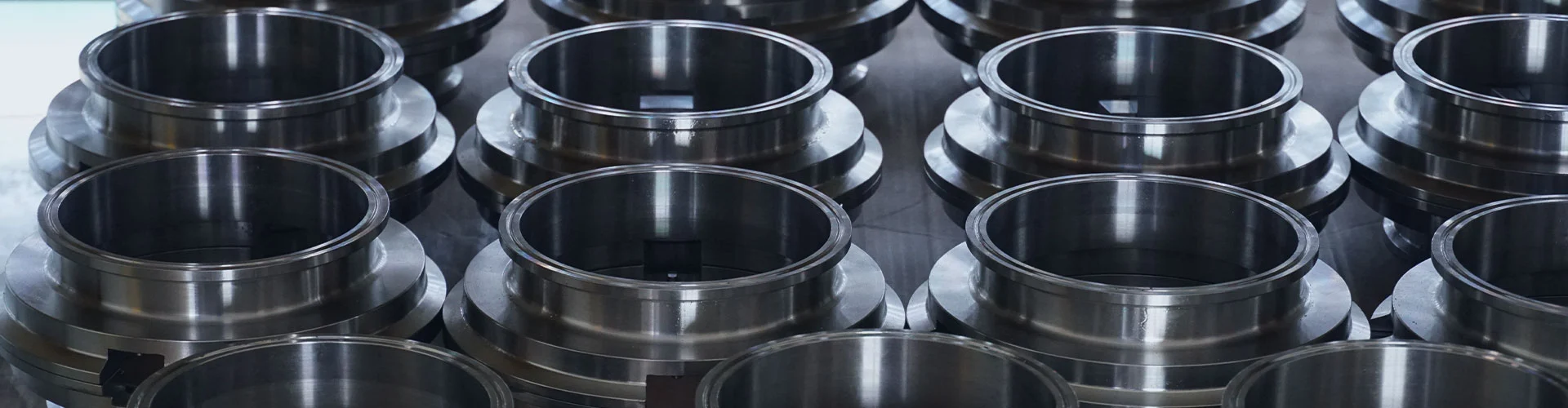
The Sanitary Butterfly Valve for Tablet Handling uses SS316L for product-contact parts and SS304 for non-product-contact components. Product-contact surfaces can achieve Ra <0.4 μm, reducing areas where pharmaceutical material can accumulate.
Silicone, EPDM and FKM sealing materials are available, with FDA-compliant grades offered for applicable pharmaceutical applications.
The sanitary construction supports cleaning requirements in pharmaceutical manufacturing and helps maintain consistent product-contact conditions between production batches.
| Specification | Details |
| Application | Tablets, Capsules, Pellets, Granules |
| Size | DN100–DN300 / 4"–12" |
| Product-Contact Material | SS316L |
| Non-Product-Contact Material | SS304 |
| Disc Lining | Silicone, FKM |
| Seal Material | Silicone, EPDM, FKM |
| Surface Finish | Ra <0.4 μm |
| Operation | Manual |
| Connection | Tri-Clamp, Flange |
| Standards | DIN, ISO 1127, BS4825, ISO, SMS |
| FDA-Compliant Seals | Available |
| Consideration | AVM Tablet Handling Valve | General Sanitary Butterfly Valve |
| Main Material | Tablets and capsules | General sanitary media |
| Product Protection | Focused on reducing tablet impact | General flow control |
| Disc Option | Silicone-coated disc available | Usually standard disc |
| Application | Tablet press, coating, IBC, conveying | General process isolation |
| Surface Finish | Ra <0.4 μm | Depends on configuration |
| Pharmaceutical Integration | Designed for tablet handling systems | General sanitary applications |
A pharmaceutical manufacturer needed to transfer compressed tablets from a tablet press to a collection system while reducing broken tablets and excessive fines during discharge. The customer selected the AVM valve with a silicone-coated disc because product protection was more important than simply achieving basic flow isolation.
During operation, the customer focused on three points: smooth tablet discharge, protection of tablet edges and reliable isolation when the downstream equipment required maintenance. The valve provided a controlled transfer point between the tablet press and collection equipment while maintaining the required sanitary conditions.
In a coated-tablet production line, the customer needed to avoid unnecessary contact that could damage the coating during discharge. The silicone-coated disc provided a softer contact surface, while the stainless-steel sanitary construction supported cleaning between production batches.
The customer feedback focused specifically on reduced concern about coating damage during valve operation and easier integration with the existing transfer line, rather than simply evaluating the valve as a conventional on/off device.
AVM maintains a quality management system based on ISO 9001 and provides applicable products with 3-A Sanitary Standards, CE and FDA compliance.
For pharmaceutical applications, the valve can be configured with FDA-compliant sealing materials and hygienic stainless-steel product-contact surfaces to support GMP-oriented manufacturing environments.
Relevant material and compliance documentation can be provided according to project requirements.
It is specifically designed around tablet and capsule handling, with attention to product impact, abrasion and coating protection. A silicone-coated disc is available for applications involving fragile or coated tablets.
Yes. Silicone coating is available for tablet discharge applications, and the configuration can be discussed according to the product and operating conditions.
Yes. The valve is suitable for coated tablet transfer, and the softer silicone-coated disc can help reduce unnecessary contact with the tablet surface.
Typical locations include tablet presses, coating machines, IBC docking stations, collection hoppers, vacuum conveying systems and packaging lines.
SS316L is used for product-contact parts, while SS304 is available for non-product-contact components.
The standard lead time is 2–4 weeks, depending on size, configuration and quantity.
Address
No. 373 Oufan Road, Dongtou District, Wenzhou City, Zhejiang Province, China
Tel