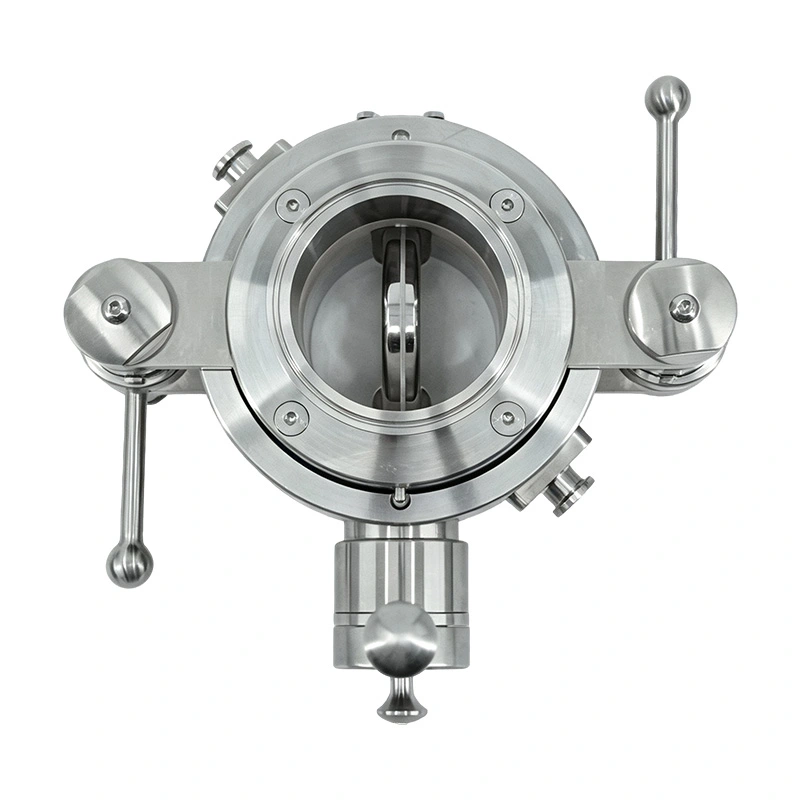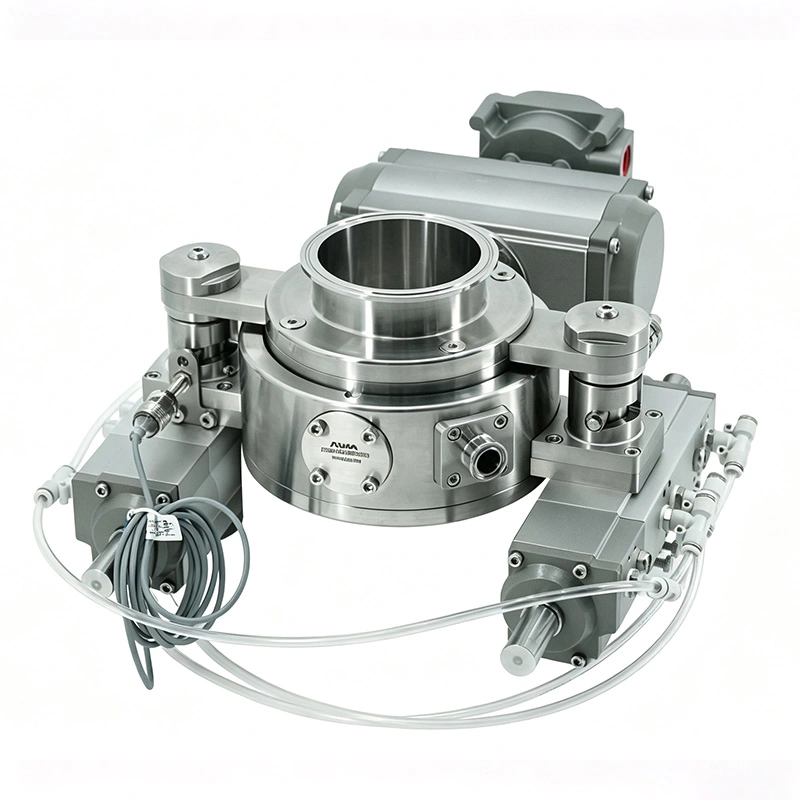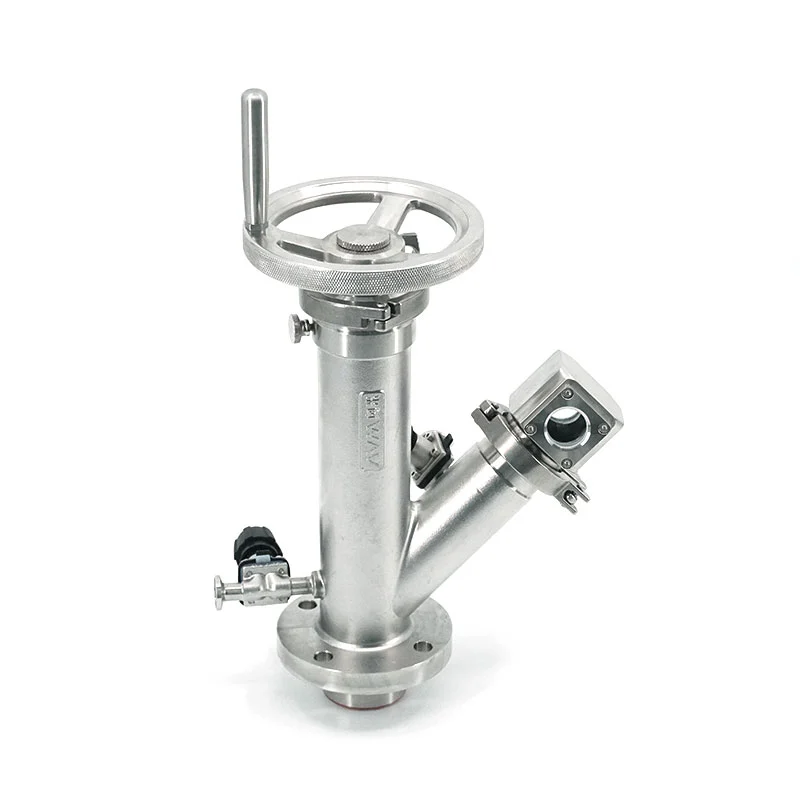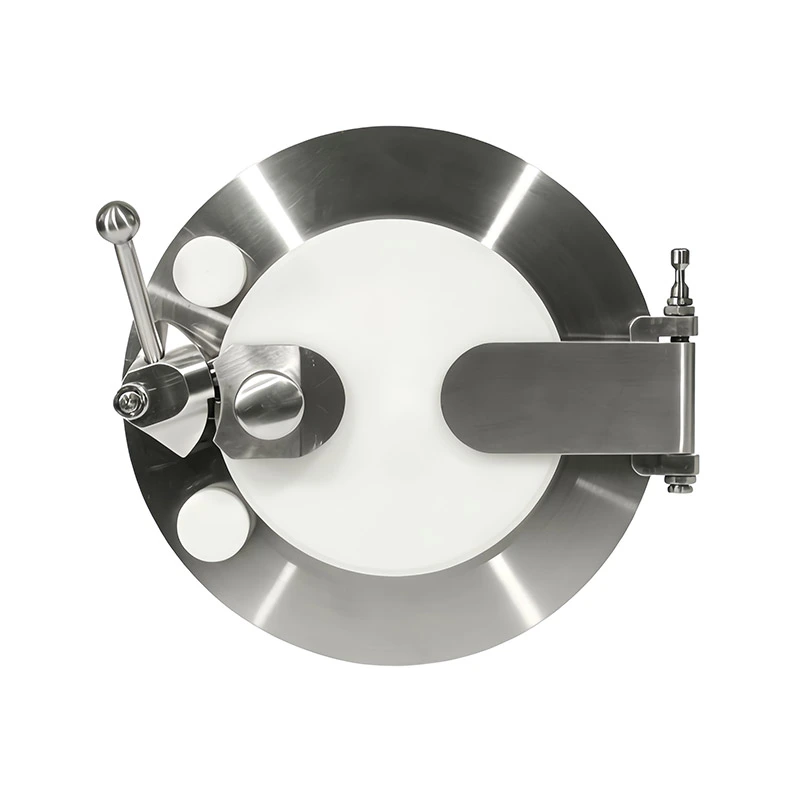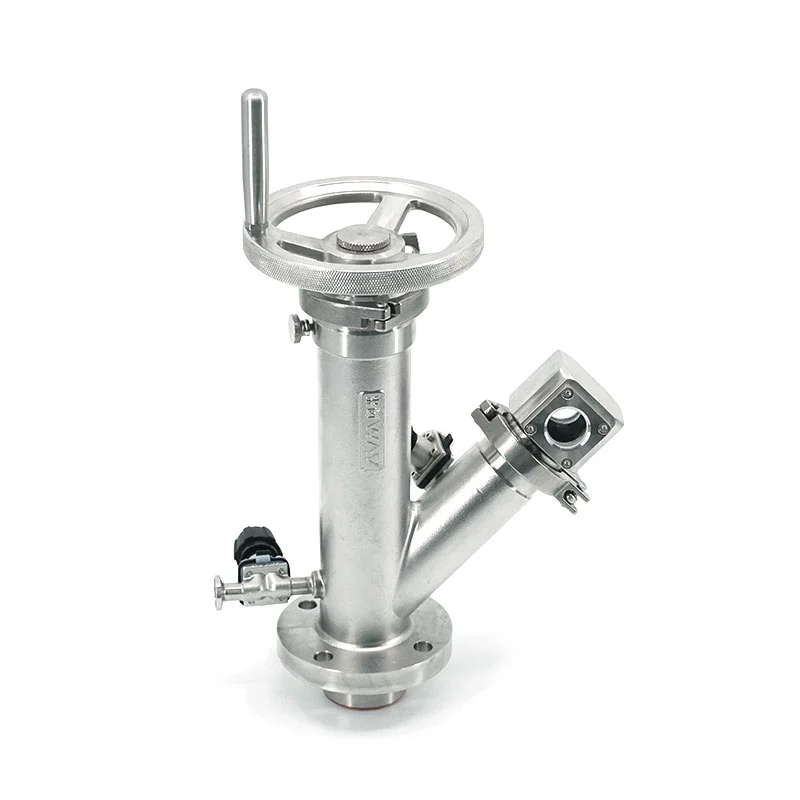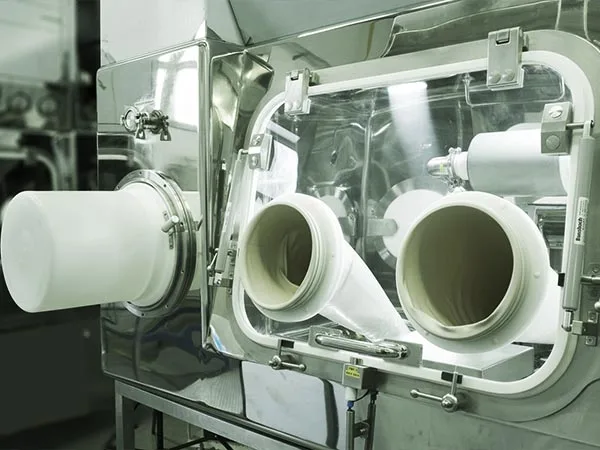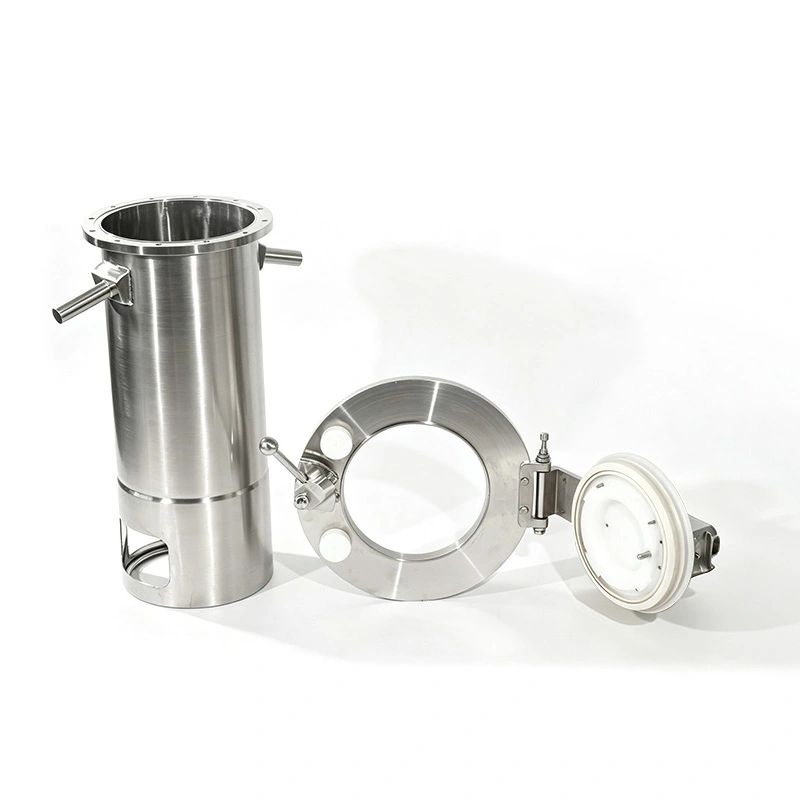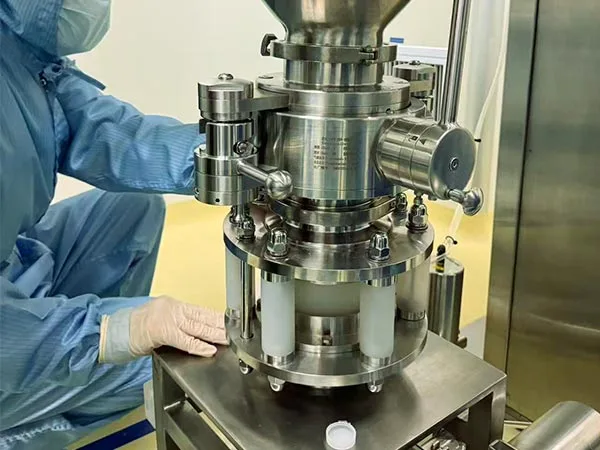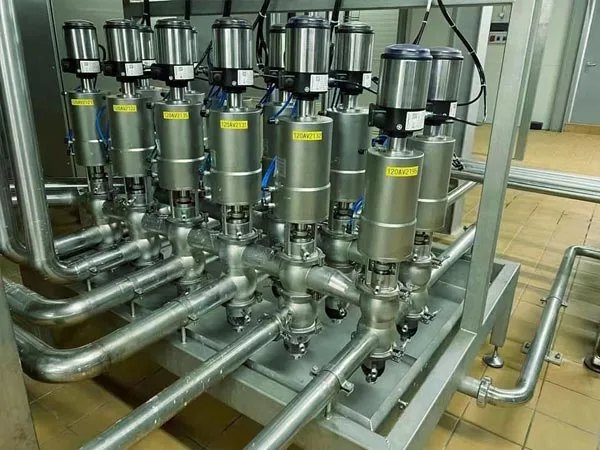
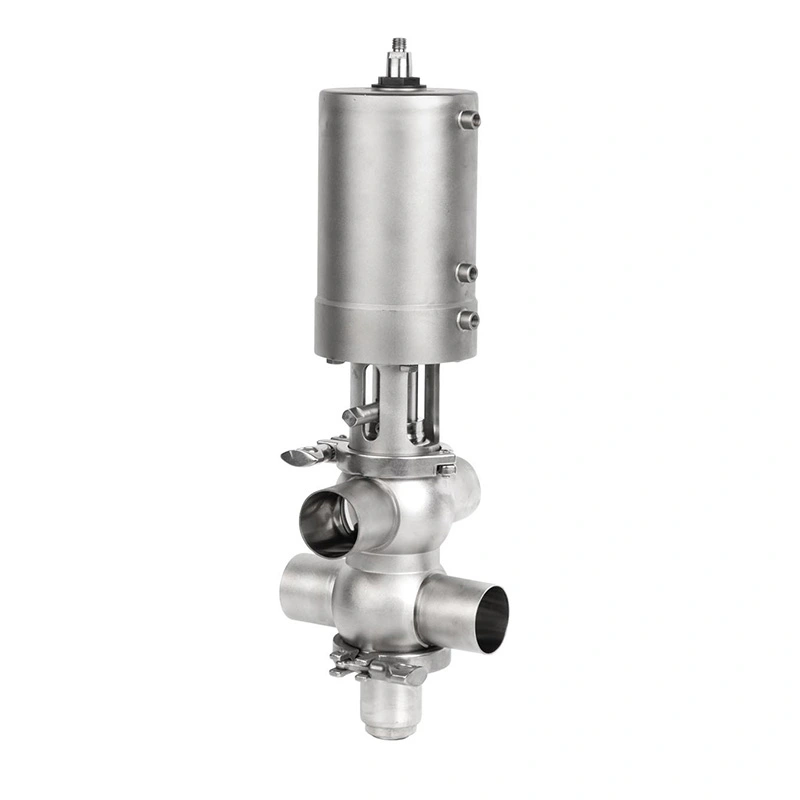
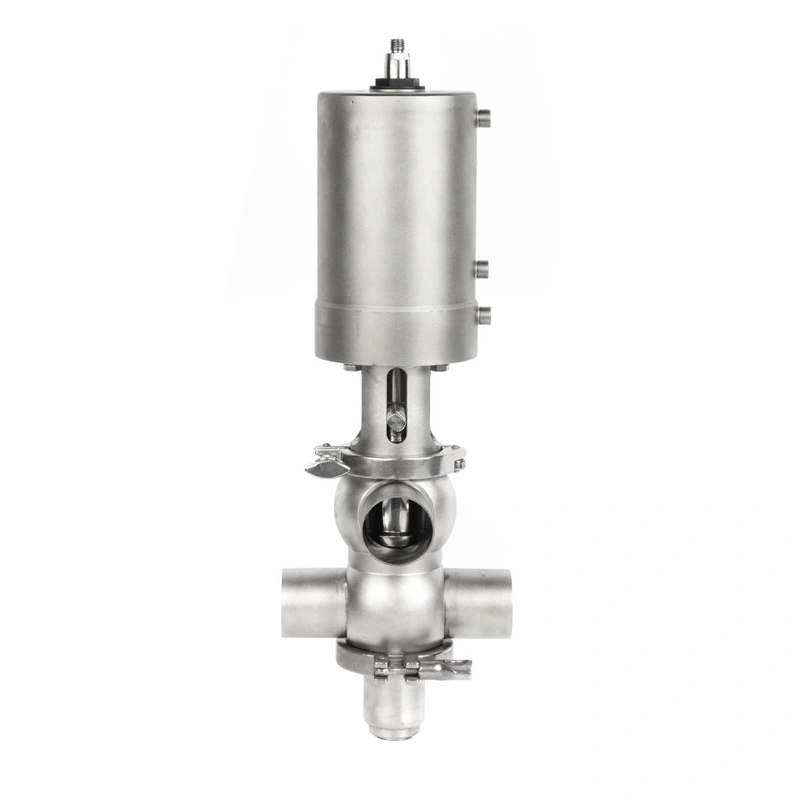
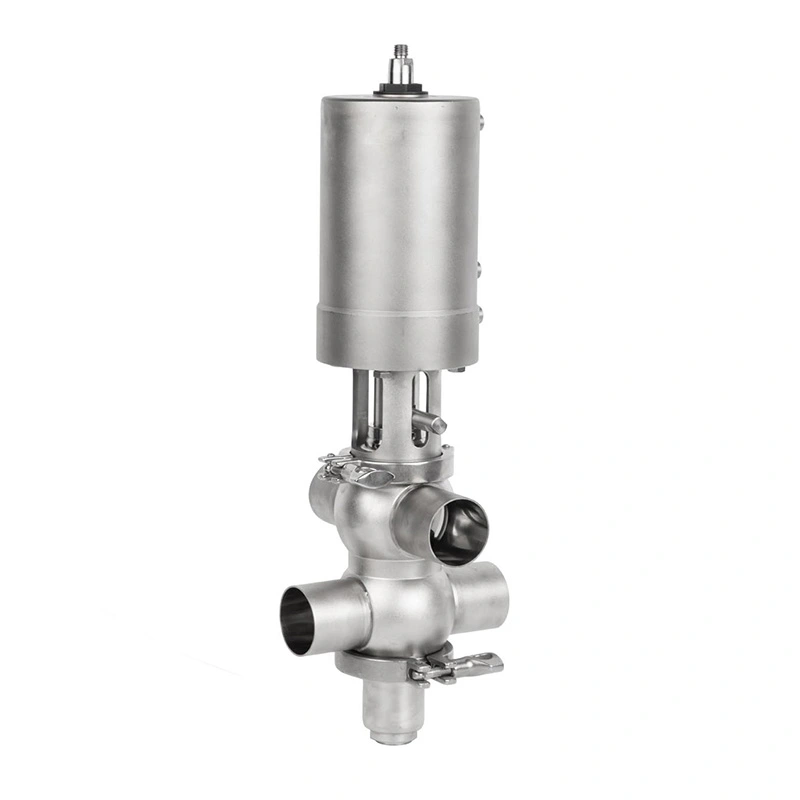
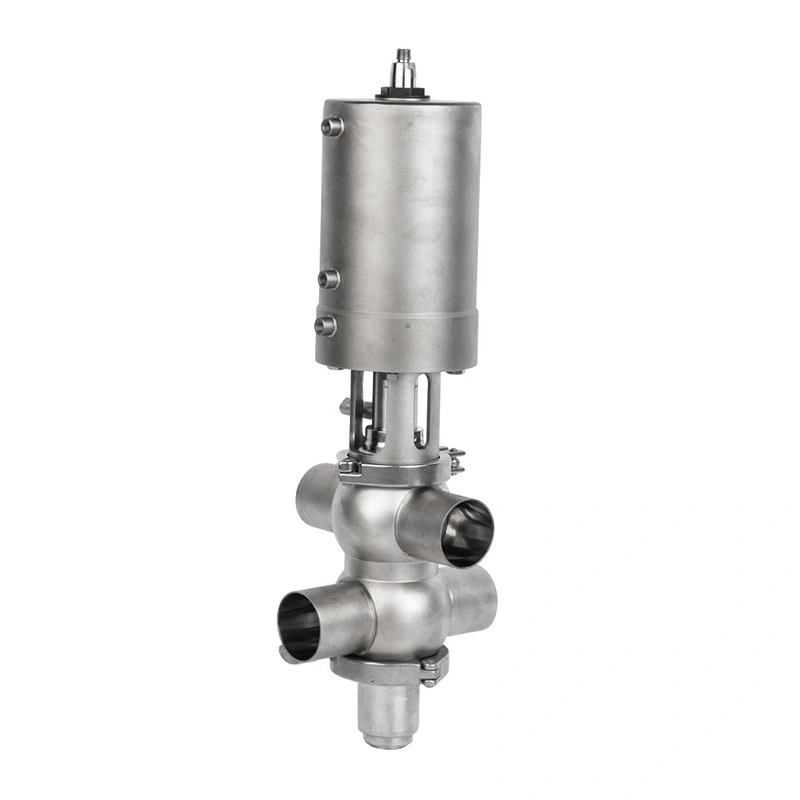
Compared with conventional single-seat valve arrangements, the AVM Sanitary Intelligent Double-Seat Mixproof Valve can simplify piping design, reduce the number of valves required, and support simultaneous product processing and CIP cleaning. It is suitable for demanding applications in food and beverage, dairy, brewery, pharmaceutical, biotechnology, and other hygienic processing industries.
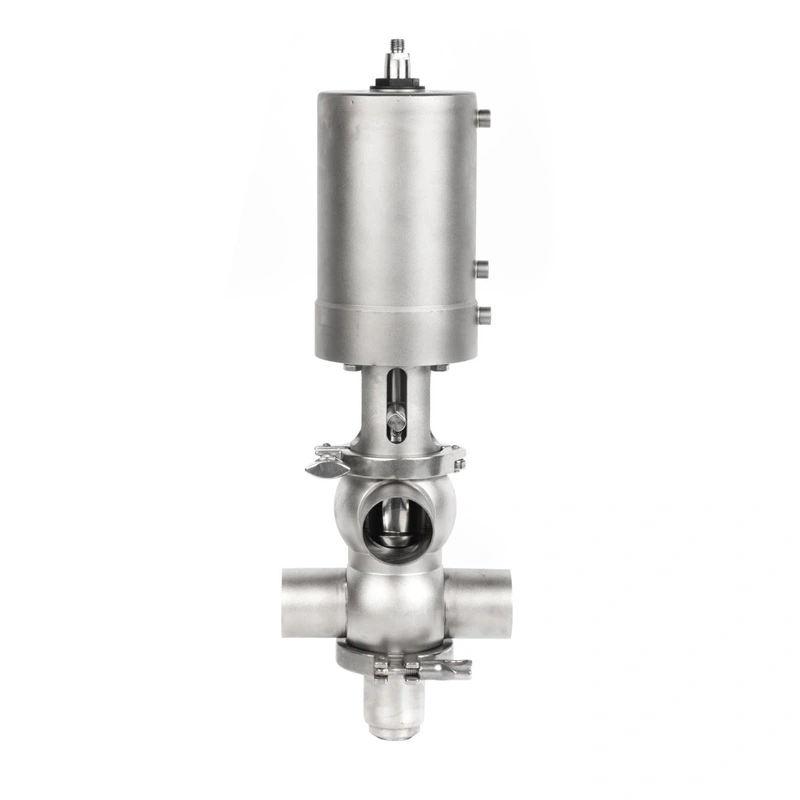
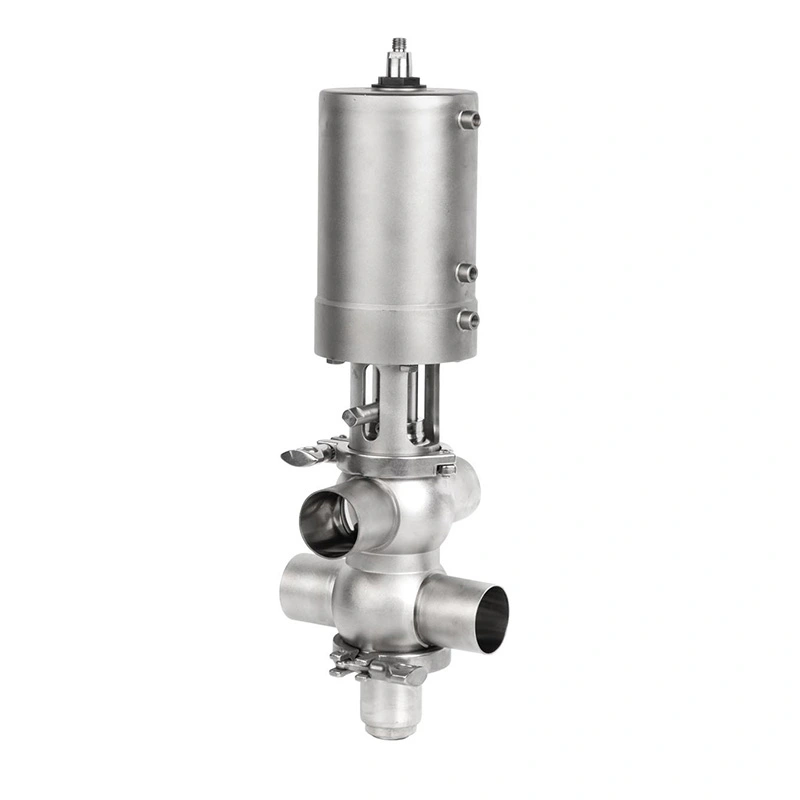
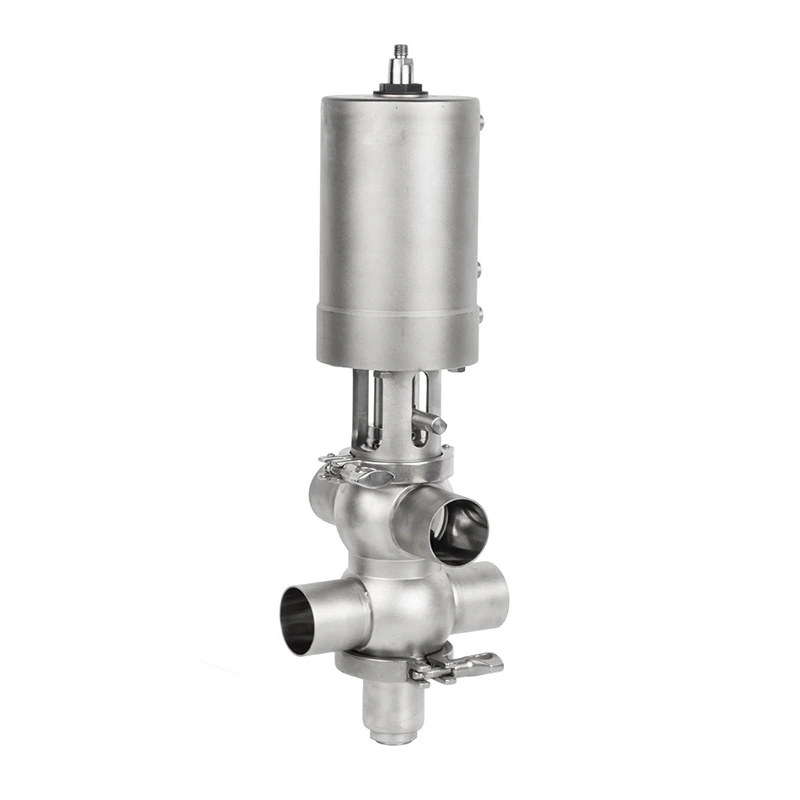
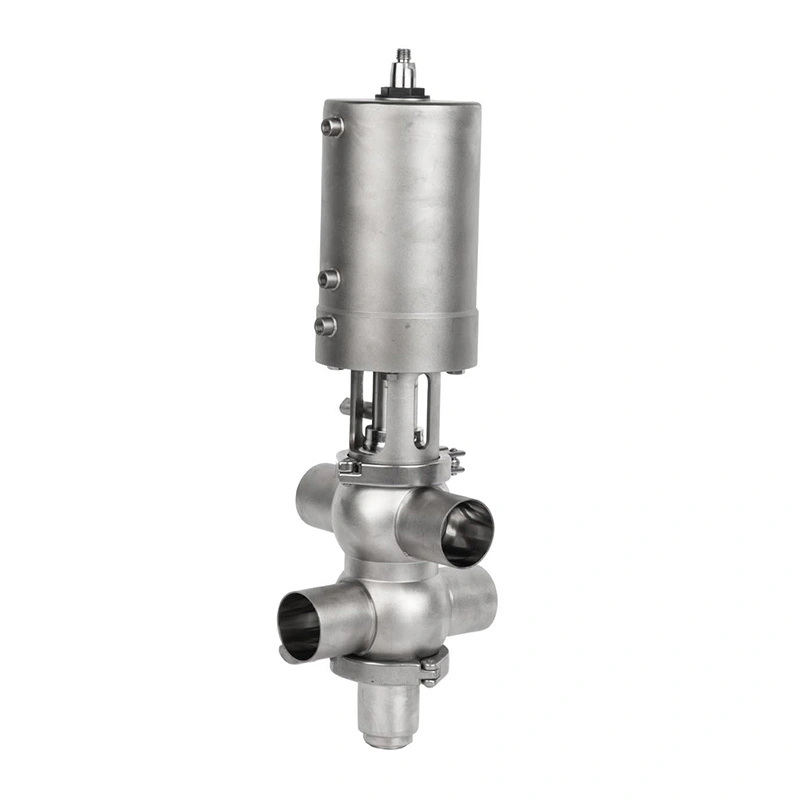
In hygienic processing, preventing product mixing is more important than simply controlling flow. A valve failure, damaged seal, or incomplete cleaning process can result in cross-contamination, production downtime, product loss, and additional maintenance costs.
The AVM double-seat mixproof design addresses these risks by creating a controlled leakage chamber between two independent sealing points. If one seal develops a leak, the medium is directed toward the atmospheric drain rather than entering the opposite process line.
This design provides buyers with a practical combination of media separation, leakage detection, hygienic cleaning, automation compatibility, and process efficiency.
The valve incorporates two independent seat seals. When the valve is closed, the upper and lower seals isolate the two process media and form a leakage chamber between them.
Under normal operating conditions, both seals remain closed and the two media remain completely separated.
The intermediate leakage chamber is connected to an atmospheric drain. If either sealing point fails, the leaking medium enters the chamber and is discharged through the leakage outlet.
This provides an important safety advantage: a seal failure can be detected before the leaking medium reaches the opposite product line.
Visible leakage at the drain can also provide an immediate indication that inspection or seal replacement may be required.
The AVM Mixproof Valve is designed for CIP (Clean-in-Place) and supports sterilization processes without requiring routine dismantling.
The upper and lower valve stems and leakage chamber can be cleaned and sterilized as part of the process cycle, helping reduce manual cleaning requirements and improve overall hygienic reliability.
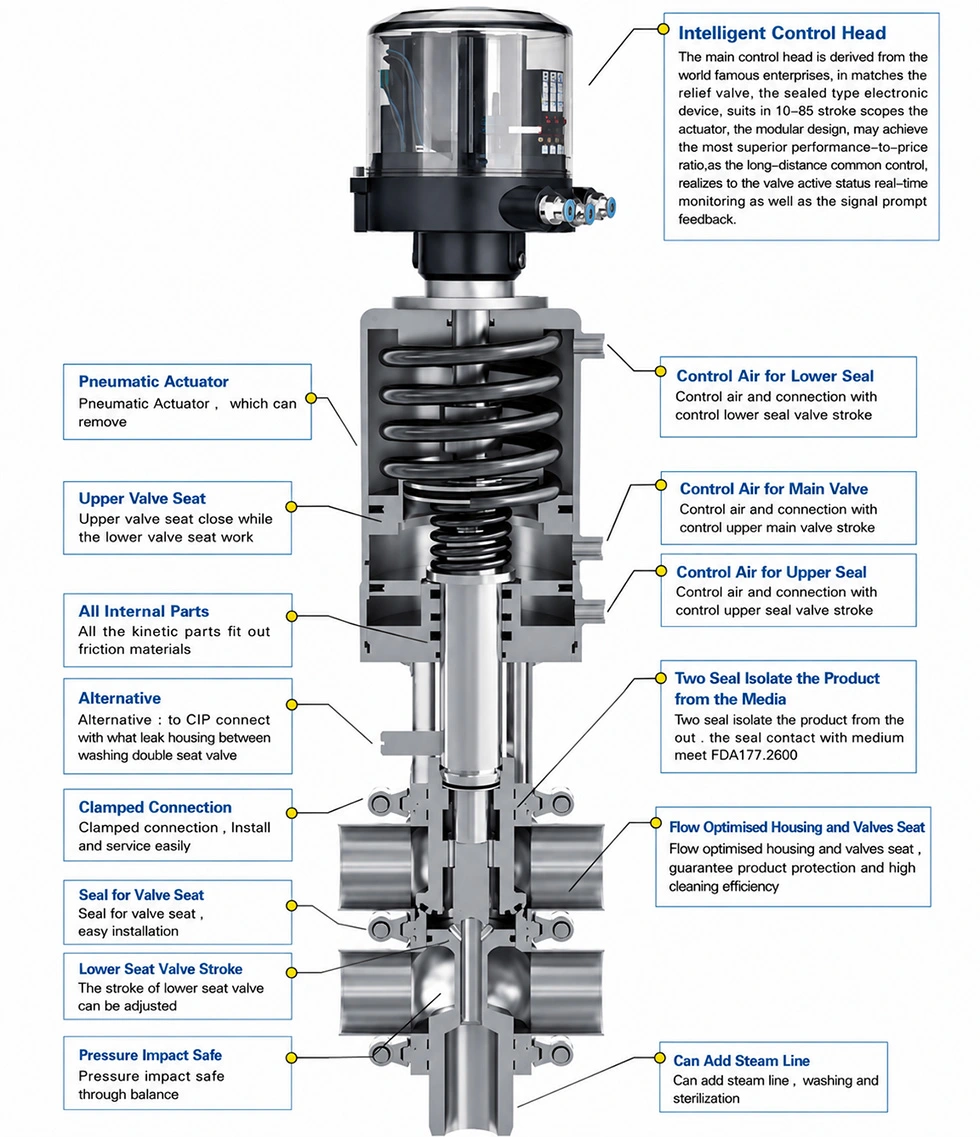
Two independent sealing positions separate different process media and reduce the risk of product-to-product or product-to-CIP cross-contamination.
This makes the valve particularly suitable for production lines handling different products or cleaning fluids within the same piping system.
The mixproof configuration can allow production and CIP operations to take place in different flow paths at the same time.
This can reduce production interruptions and improve equipment utilization compared with traditional valve arrangements that require more extensive process shutdowns.
A double-seat mixproof valve can replace the functional arrangement of two or more conventional single-seat valves in suitable piping configurations.
This helps reduce installation complexity, save space, and provide greater flexibility when designing hygienic process systems.
Smooth product-contact surfaces and a low-dead-leg design help reduce areas where product residue or microorganisms could accumulate.
The hygienic construction also supports efficient CIP cleaning and helps maintain consistent process conditions.
For automated processing lines, AVM offers optional intelligent controllers and position sensors.
These accessories can be integrated into automated valve control systems to provide reliable valve positioning and improve process monitoring.
AVM provides the Sanitary Intelligent Double-Seat Mixproof Valve with multiple connection configurations to match different hygienic piping requirements.
Tri-Clamp connections are widely used in hygienic food, dairy, beverage, pharmaceutical, and biotechnology piping systems. The design supports convenient installation, inspection, and maintenance.
Butt weld connections provide a permanent hygienic connection with a smooth internal transition. They are suitable for process lines where minimizing crevices and maintaining pipeline cleanliness are priorities.
Flanged configurations are suitable for process systems requiring robust mechanical connections and convenient equipment integration.
Threaded configurations can be used for compatible hygienic piping arrangements where compact installation and convenient connection are required.
Note: The appropriate connection type should be selected according to the existing pipeline standard, process medium, pressure requirements, and installation conditions.
| Item | Specification |
| Product | Sanitary Intelligent Double-Seat Mixproof Valve |
| Brand | AVM |
| Valve Size | DN40–DN100 |
| Maximum Working Pressure | Up to 5 bar |
| Working Temperature | -10°C to +135°C, depending on sealing materials |
| Product Contact Material | SS316L |
| Non-Product Contact Material | SS304 |
| Connection Types | Tri-Clamp, Butt Weld, Flange, Thread |
| Seal Materials | EPDM, FKM, Silicone |
| Seal Compliance | FDA 177.2600 compliant sealing materials |
| Cleaning | CIP |
| Sterilization | SIP / rated sterilization temperature |
| Optional Accessories | Intelligent Controller, Position Sensor |
The product-contact components are manufactured from SS316L stainless steel, providing a suitable material solution for hygienic processing environments where corrosion resistance and cleanability are important.
Non-product-contact components use SS304 stainless steel, providing a balance between mechanical performance and overall equipment cost.
The material configuration is designed to meet the requirements of sanitary process equipment while maintaining reliable operation during repeated cleaning and production cycles.
AVM provides EPDM, FKM, and Silicone sealing options according to the requirements of different process media and operating conditions.
The available sealing materials comply with FDA 177.2600 requirements, making them suitable for applications where elastomer compliance is an important purchasing consideration.
The final seal material should be selected according to the process medium, operating temperature, cleaning chemicals, sterilization conditions, and required service life.
For automated production lines, the AVM Sanitary Intelligent Double-Seat Mixproof Valve can be equipped with optional intelligent control components.
The intelligent controller supports automated valve operation, while the position sensor can provide valve position feedback to the control system.
This makes the valve suitable for integration into automated hygienic processing systems where accurate valve sequencing, process monitoring, and reduced manual intervention are required.
The valve can be used in hygienic product pipelines where different beverages, liquid foods, or cleaning solutions need to remain separated during production.
Dairy plants require strict control of product contamination and cleaning processes. The double-seat structure provides an effective solution for separating dairy products from CIP fluids.
Brewing processes involve multiple liquid media and frequent cleaning cycles. The AVM Mixproof Valve can help improve flow-path separation and support automated cleaning operations.
Pharmaceutical production requires high standards of cleanliness, process control, and contamination prevention. The hygienic construction and CIP/SIP capability make the valve suitable for compatible pharmaceutical process systems.
Biotechnology processes often require controlled media handling and strict hygienic conditions. The double-seat sealing design helps maintain separation between different process fluids.
Choosing the correct mixproof valve requires more than selecting the valve size. Buyers should confirm the following parameters with AVM:
1. Pipeline size: DN40–DN100
2. Process medium: product, water, CIP solution, or other compatible fluid
3. Working pressure: maximum up to 5 bar
4. Operating temperature: -10°C to +135°C depending on seal selection
5. Seal material: EPDM, FKM, or Silicone
6. Connection standard: Tri-Clamp, Butt Weld, Flange, or Thread
7. Cleaning method: CIP requirements
8. Sterilization requirements: SIP and rated sterilization temperature
9. Automation requirements: intelligent controller and/or position sensor
10. Material requirements: SS316L product-contact parts and SS304 non-product-contact parts
Providing these parameters before ordering helps AVM recommend the appropriate valve configuration and sealing solution.
| Comparison | AVM Double-Seat Mixproof Valve | Conventional Single-Seat Valve Arrangement |
| Media Separation | Double independent sealing structure | Depends on multiple valves and piping |
| Cross-Contamination Protection | Leakage chamber provides controlled discharge | Greater dependence on valve arrangement |
| Production + CIP | Supports suitable simultaneous operations | Often requires additional isolation |
| Leakage Detection | Atmospheric leakage chamber | Depends on system design |
| Valve Quantity | Can replace multiple single-seat valves in suitable applications | More valves may be required |
| Cleaning | CIP-compatible hygienic design | Depends on individual valve configuration |
| Automation | Optional intelligent controller and position sensor | Depends on selected control system |
| Installation Complexity | Can simplify suitable piping arrangements | May require more valves and connections |
AVM focuses on hygienic process valve solutions designed around the actual requirements of food, beverage, dairy, pharmaceutical, brewery, and biotechnology processing systems.
The Sanitary Intelligent Double-Seat Mixproof Valve combines SS316L product-contact construction, independent double-seat sealing, atmospheric leakage detection, CIP/SIP compatibility, and optional intelligent control.
For buyers looking for a reliable sanitary mixproof valve manufacturer and supplier, AVM can provide valve configurations based on pipeline size, connection type, process medium, seal material, operating conditions, and automation requirements.
A sanitary double-seat mixproof valve is a hygienic process valve designed to separate two different process media within the same valve body. Two independent seals create a leakage chamber between the media paths to reduce the risk of cross-contamination.
If one seal fails, the leaking medium enters the intermediate leakage chamber and is discharged through the atmospheric leakage outlet. This prevents the leaking medium from directly entering the opposite process line and provides a visible indication of a potential sealing problem.
Yes. The valve is designed for CIP cleaning, allowing the relevant internal flow areas, valve stems, and leakage chamber to be cleaned as part of the cleaning process without routine dismantling.
Yes. The hygienic design, SS316L product-contact material, CIP/SIP capability, and optional automated control make the valve suitable for compatible pharmaceutical processing applications. The complete system should be evaluated according to the customer's specific hygienic and regulatory requirements.
AVM offers EPDM, FKM, and Silicone sealing materials. The appropriate material depends on the process medium, temperature, cleaning chemicals, and sterilization conditions.
The standard size range provided is DN40–DN100. Buyers should confirm the required size according to pipeline flow rate, connection standard, and process requirements.
The maximum working pressure is up to 5 bar. Actual operating pressure should be confirmed according to the selected valve configuration and application conditions.
Yes. AVM offers optional intelligent controllers and position sensors for integration with automated process systems and valve position monitoring.
If your process line needs to handle two different media while minimizing cross-contamination risk, the AVM Sanitary Intelligent Double-Seat Mixproof Valve provides a practical solution for hygienic flow isolation.
Send AVM your pipeline size, process medium, working pressure, operating temperature, connection type, seal requirement, CIP/SIP conditions, and automation requirements. AVM can help determine a suitable mixproof valve configuration for your sanitary processing system.
Address
No. 373 Oufan Road, Dongtou District, Wenzhou City, Zhejiang Province, China
Tel