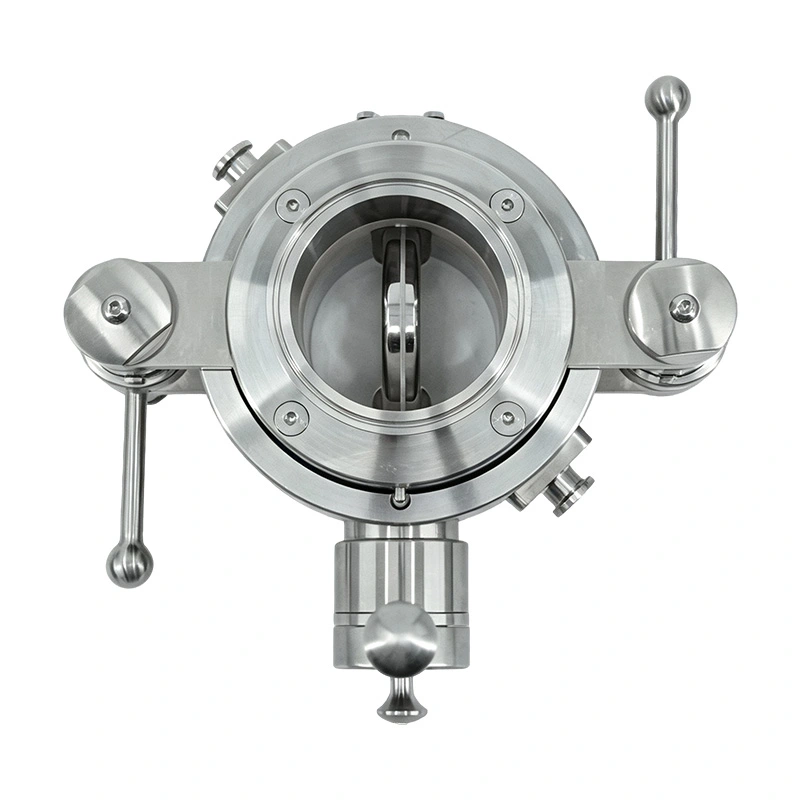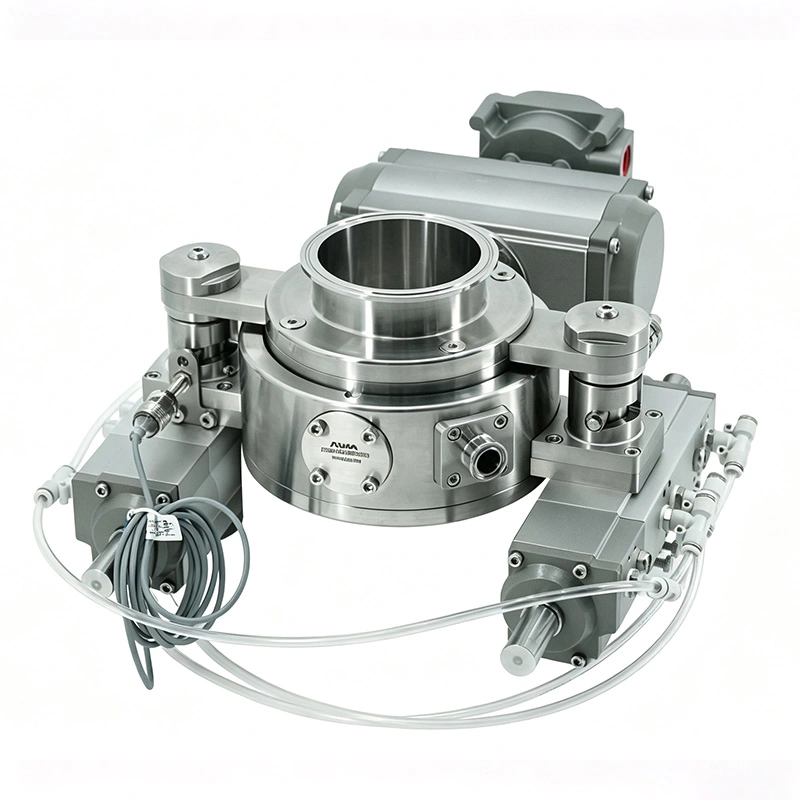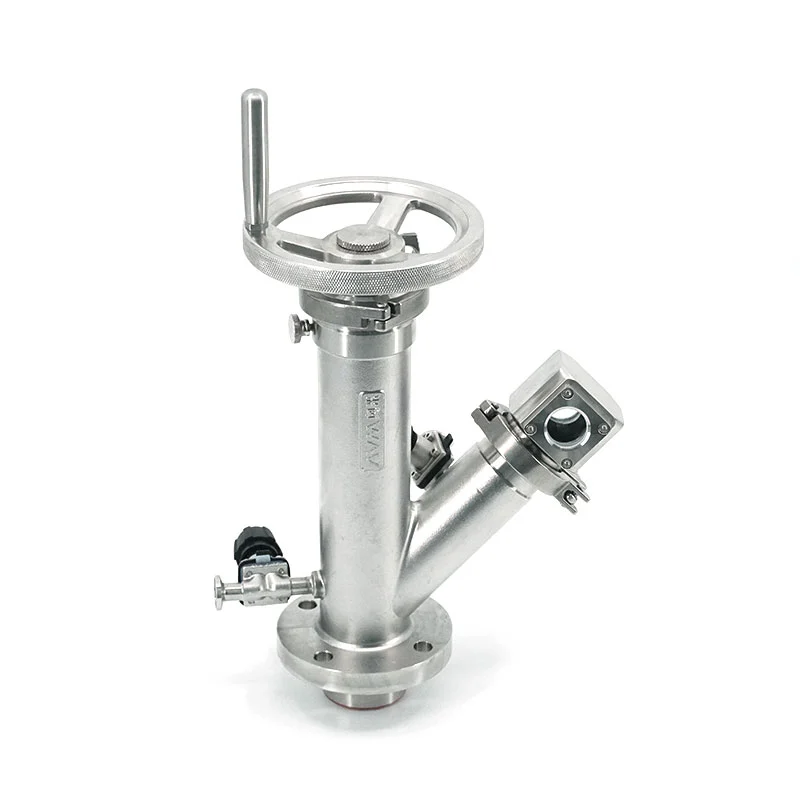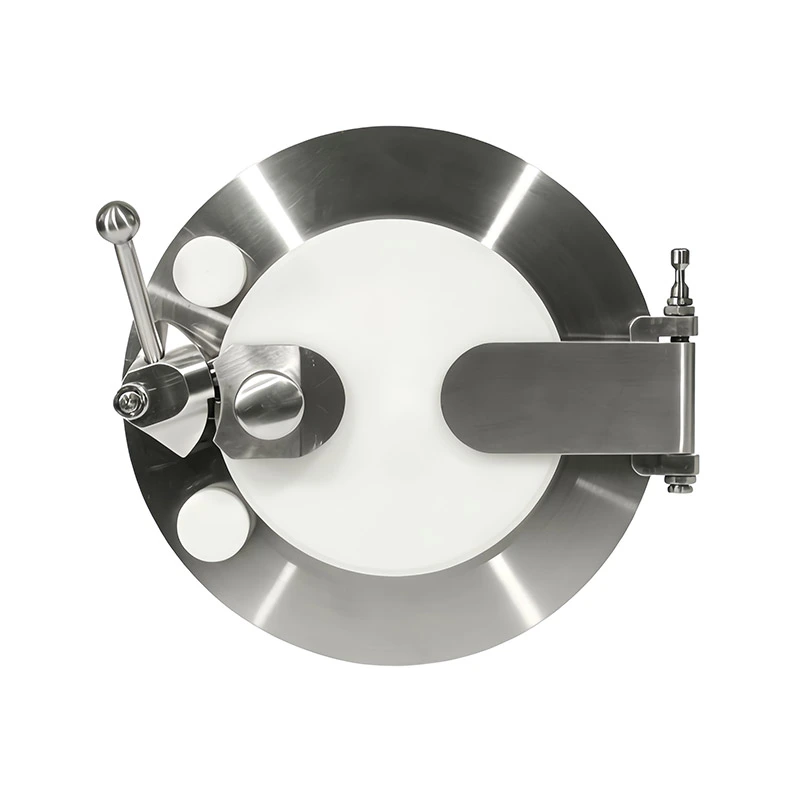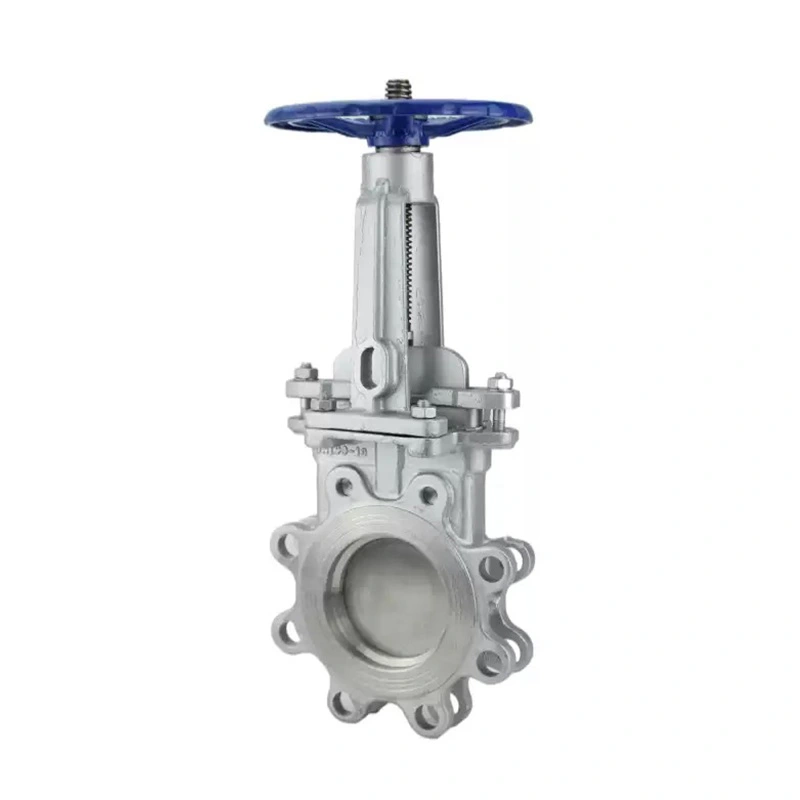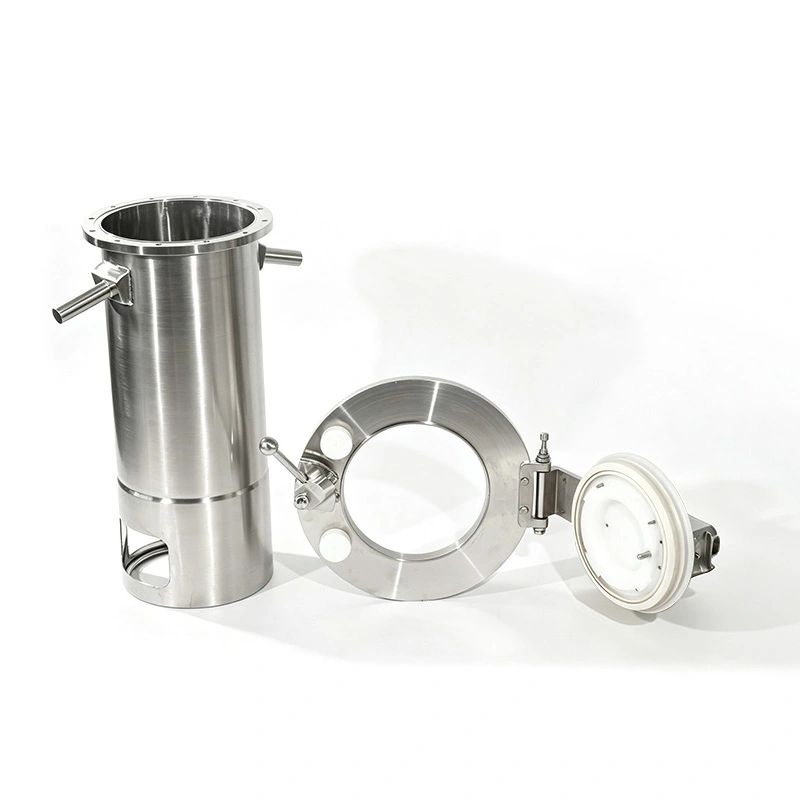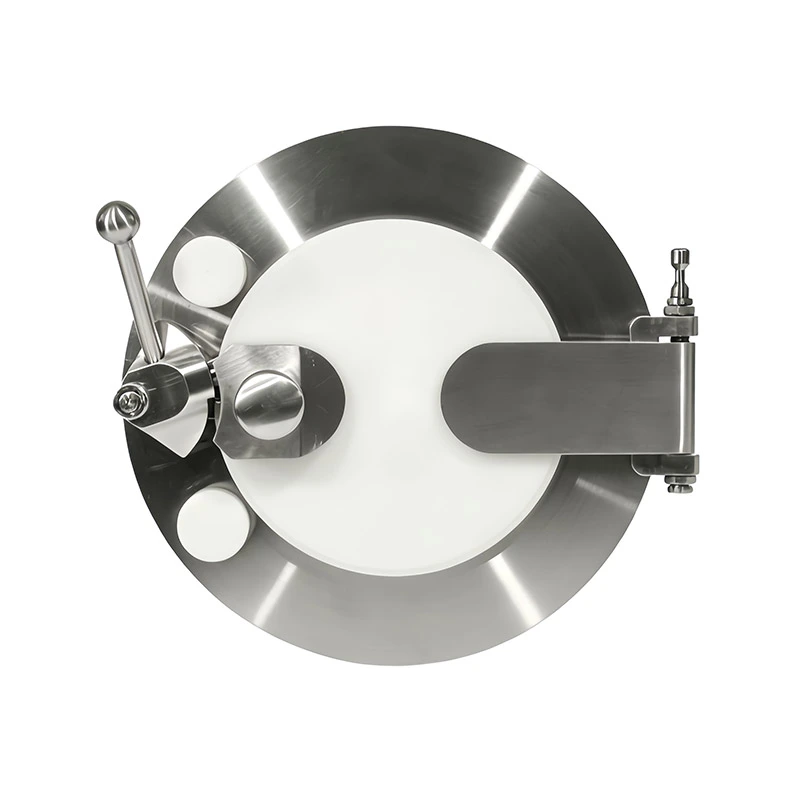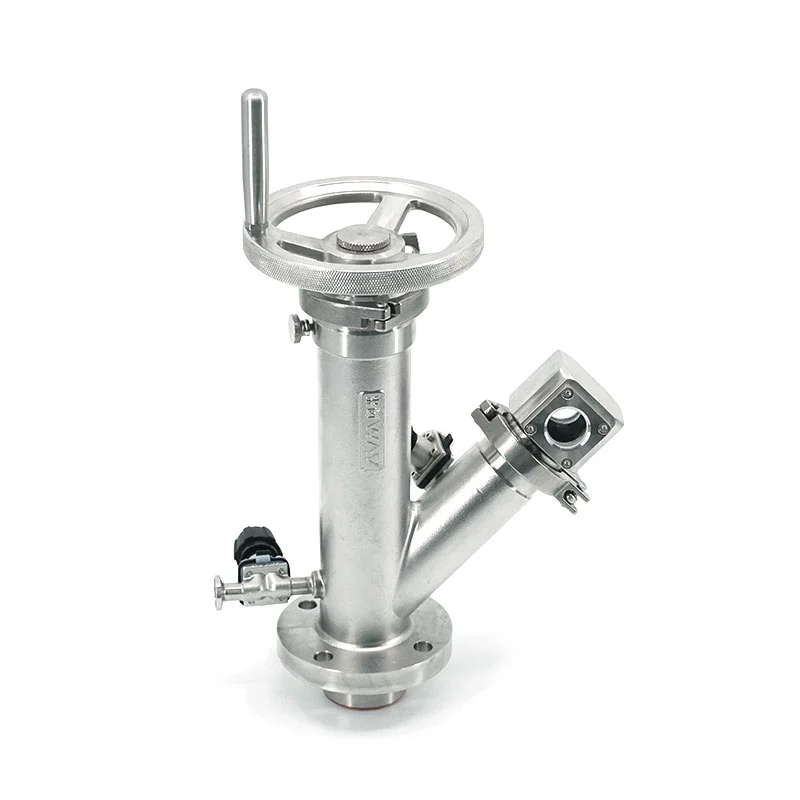
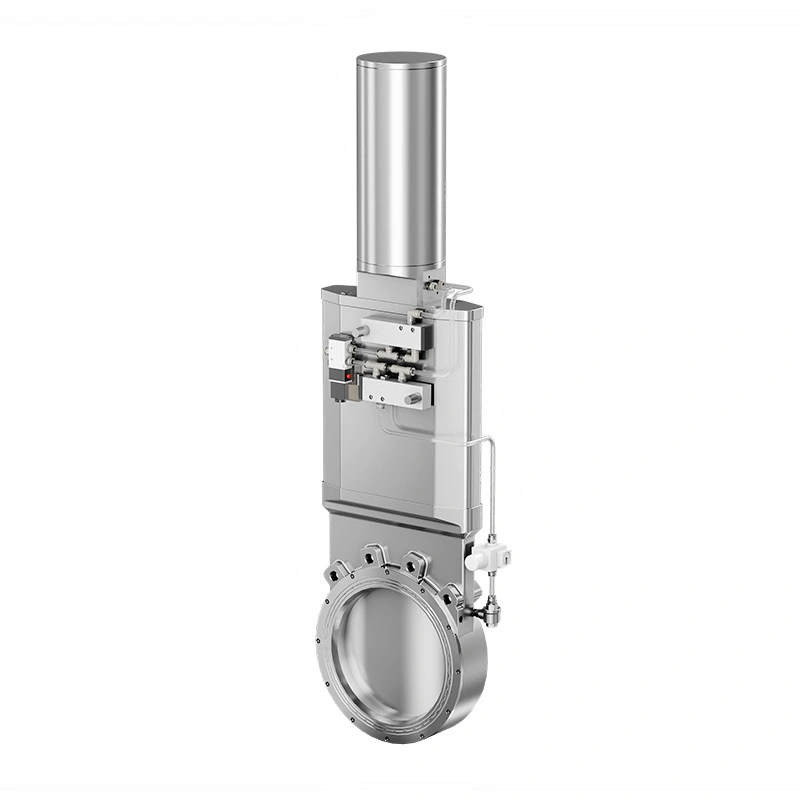
The AVM Sanitary Inflatable Knife Gate Valve for Powder and Bulk Material Handling is developed for powder and bulk-solid processes where material build-up, sealing reliability, and hygienic operation need to be considered together. The linear gate can pass through accumulated powder or fibrous material during closing, while the inflatable sealing element remains retracted during gate movement to reduce friction and wear.
After the gate reaches the closed position, the sealing element is pressurized to form a tight barrier around the gate. This structure is suitable for pharmaceutical powders, food ingredients, fine chemicals, battery materials, and other bulk solids that require controlled isolation and reduced dust leakage.
AVM supplies sanitary valve configurations using SS316L product-contact materials, FDA-compliant sealing options, and connection standards for different process layouts. The valve can also be configured according to the material characteristics, operating temperature, pressure, and cleaning requirements of the application.
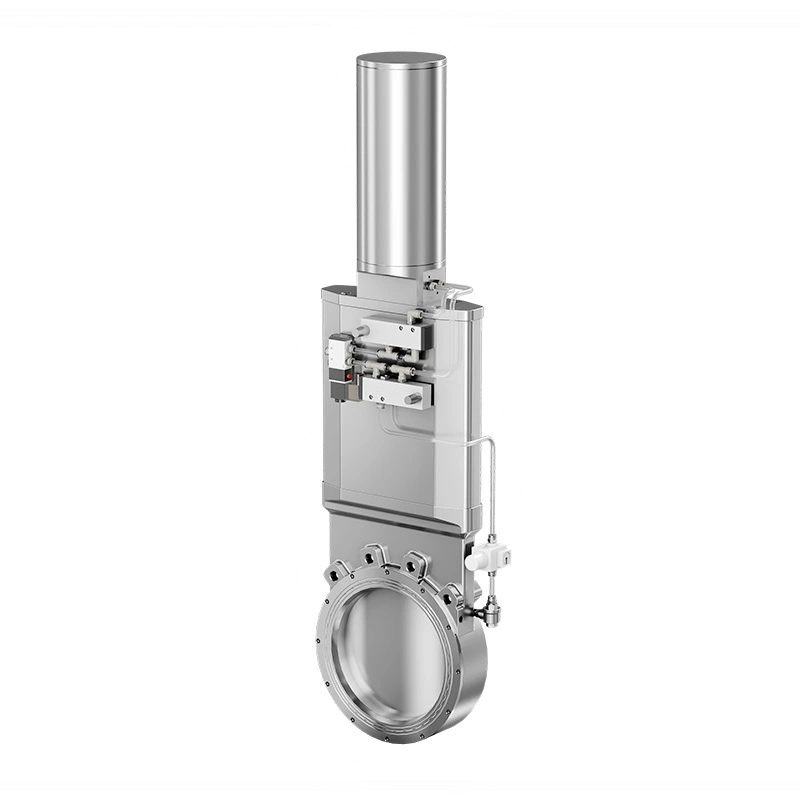
Unlike a butterfly disc that rotates across the material path, the gate moves linearly through the product stream. The sharpened lower edge can pass through powders, agglomerates, fibers, and other bulk materials that may collect above the valve.
When fully opened, the gate retracts from the main flow passage. This creates a relatively unobstructed opening for gravity discharge and powder conveying, helping limit additional resistance during material transfer.
The gate closes independently of the sealing action. Material isolation is completed first, after which the inflatable seal is activated around the gate. This sequence separates the mechanical movement of the gate from the sealing process.
Before the gate moves, compressed air is released from the inflatable sealing element. The seal retracts away from the gate surface, reducing direct contact during opening and closing.
Once the gate reaches its closed position, compressed air is introduced into the sealing chamber. The seal expands around the gate to create the required isolation barrier.
Because the sealing element does not remain continuously compressed against the moving gate, friction during gate travel is reduced. This can help limit abrasion caused by repeated operation and powder particles.
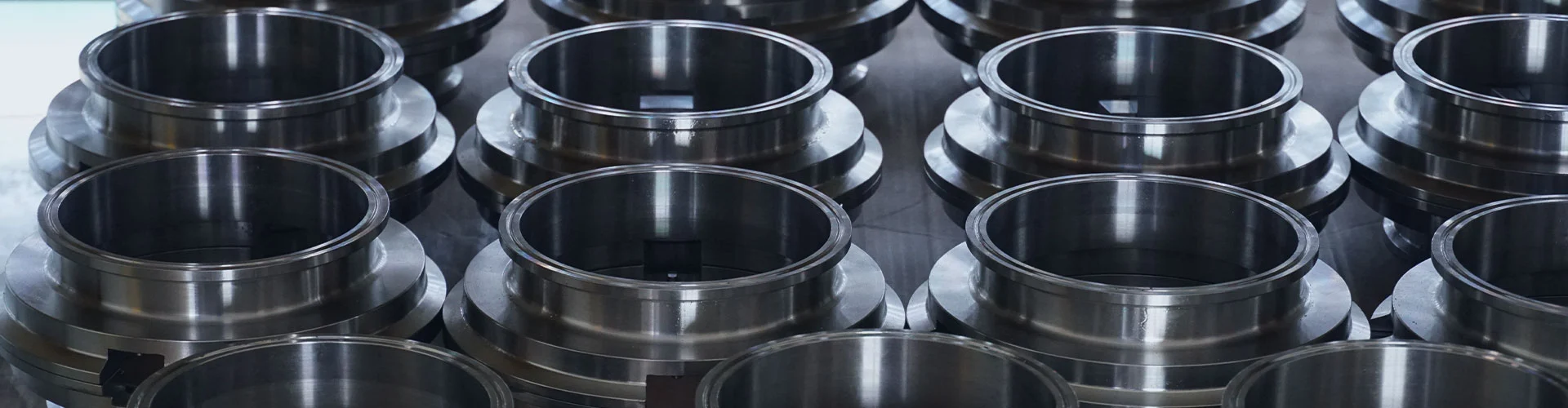
Product-contact components are available in SS316L stainless steel, with SS304 available for selected non-contact components. The material configuration is suitable for hygienic powder-processing environments.
The internal structure is designed to reduce unnecessary material retention around the flow passage and sealing area. This helps simplify routine cleaning and inspection, particularly when the valve is used between production batches.
FKM is available as the standard sealing material, with FDA 21 CFR 177.2600-compliant options. Silicone and EPDM seals can also be selected according to product characteristics, temperature, and cleaning conditions.
The valve can be considered for free-flowing powders as well as materials that tend to agglomerate, bridge, or accumulate near an isolation point. Application suitability should be confirmed according to particle size, moisture, bulk density, abrasiveness, and flow behavior.
The standard working pressure range is -0.1 MPa to +0.5 MPa. The valve can therefore be used in selected vacuum, gravity-discharge, and low-pressure powder transfer systems when the complete process configuration is suitable.
The standard operating temperature range is -20°C to +150°C. Seal selection should be matched with the actual process temperature and cleaning conditions to maintain reliable operation.
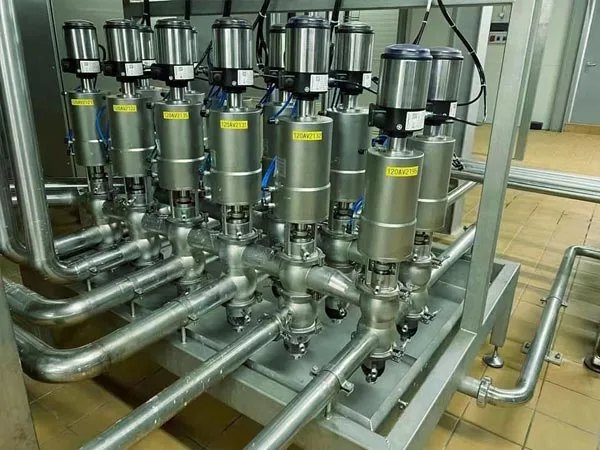
The Sanitary Inflatable Knife Gate Valve for Powder and Bulk Material Handling can be installed at powder discharge outlets, hopper connections, storage vessel outlets, conveying lines, feeding equipment, and intermediate transfer points. It is particularly useful where the isolation point may experience material accumulation and where conventional sliding seals could be exposed to excessive abrasion.
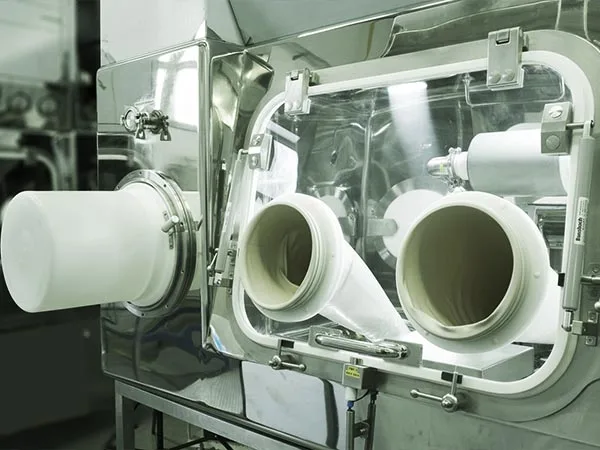
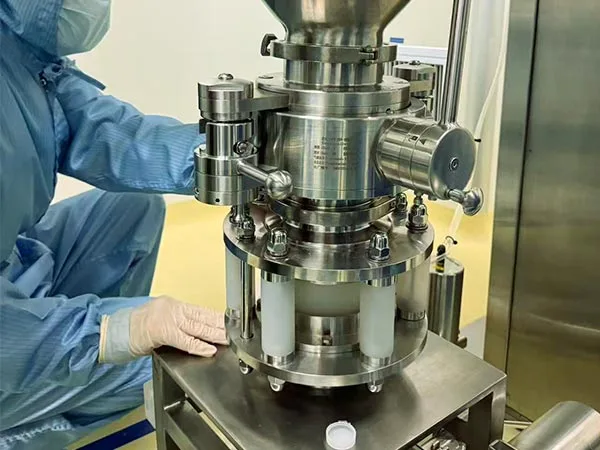
In pharmaceutical systems, typical uses include API and excipient discharge, contained powder transfer, tablet and capsule production, and intermediate material isolation. Food applications can include flour, starch, sugar, seasonings, and dairy powders. Battery and chemical processes may use the valve for selected cathode, anode, pigment, additive, and fine-powder handling operations.
| Parameter | Specification |
| Valve Type | Sanitary Inflatable Knife Gate Valve |
| Valve Size | 4"–10" (DN100–DN250) |
| Working Pressure | -0.1 MPa to +0.5 MPa |
| Air Supply Pressure | 0.6 MPa |
| Working Temperature | -20°C to +150°C |
| Product Contact Material | SS316L / SS304 |
| Non-Contact Material | SS304 |
| Standard Seal | FKM, FDA 21 CFR 177.2600 Compliant |
| Optional Seals | Silicone, EPDM |
| Operation | Manual |
| Connection Type | Wafer |
| Connection Standards | HG20592, DIN PN10, 3A, GB PN10, JIS 10K |
Before selection, evaluate whether the material is free-flowing, cohesive, fibrous, abrasive, or prone to agglomeration. The knife-edge gate is particularly relevant where material build-up may interfere with conventional isolation valves.
The seal should be selected according to product composition, cleaning agents, operating temperature, and required hygiene level. FKM, silicone, and EPDM configurations are available for different process conditions.
The wafer-style body can be matched with applicable piping configurations using HG20592, DIN PN10, 3A, GB PN10, or JIS 10K standards. The final connection should be confirmed against the existing pipeline and equipment interface.
Routine maintenance should focus on the gate surface, inflatable seal, air circuit, and product-contact areas. Operators should inspect the seal for deformation, cracking, or loss of elasticity and check whether the gate moves smoothly through its complete stroke.
After processing sticky, abrasive, or fine powders, cleaning frequency should be determined according to material characteristics and production requirements. If abnormal sealing pressure, air leakage, or increased gate resistance is observed, the sealing element and pneumatic circuit should be inspected before continued operation.
A pharmaceutical manufacturer required an isolation valve below a powder discharge point where material could accumulate during production. The customer was concerned about conventional sealing components being exposed to repeated contact with the moving gate.
The AVM Sanitary Inflatable Knife Gate Valve was configured for the application. The seal retracted before gate movement, while the knife edge passed through accumulated powder during closure. The customer reported smoother operation and more stable isolation during repeated discharge cycles.
A battery-material processor required isolation of a powder conveying line while limiting material leakage around the sealing area. The inflatable sealing configuration was selected because the sealing element remained separated from the gate during movement.
After installation, the customer focused on the unobstructed flow path during normal transfer and the stable sealing performance after repeated opening and closing operations.
AVM Sanitary Inflatable Knife Gate Valve for Powder and Bulk Material Handling can be configured for hygienic processing requirements using SS316L product-contact materials and FDA-compliant sealing materials. The product range is supported by ISO 9001 and CE certification, with FDA-compliant material options available for applicable pharmaceutical and food-processing applications.
Material certificates, seal documentation, and technical information can be supplied according to project requirements to support equipment selection, quality review, and validation activities.
It is suitable for powders, granules, agglomerated materials, fibers, and selected bulk solids. Final selection should consider particle characteristics, moisture, abrasiveness, and flow behavior.
The sealing element retracts before the gate moves and inflates after the gate reaches the closed position. This reduces friction during gate travel and provides isolation after closure.
Yes. The linear knife gate is designed to pass through accumulated powders and certain agglomerated or fibrous materials during closing.
Yes. SS316L product-contact construction, sanitary surfaces, and FDA-compliant sealing options make it suitable for applicable pharmaceutical powder-processing systems.
FKM is the standard option, with FDA 21 CFR 177.2600-compliant grades available. Silicone and EPDM can also be selected according to process requirements.
The standard working pressure is -0.1 MPa to +0.5 MPa, with an operating temperature range of -20°C to +150°C. Actual limits depend on the selected sealing material and process conditions.
Address
No. 373 Oufan Road, Dongtou District, Wenzhou City, Zhejiang Province, China
Tel